
Replace your skylight now if the glazing or seals have failed or the flashing is compromised, and if a reroof is coming, replace it at the same time. Syncing the two is industry best practice because it lets one water-control plan cover both. Act soon if you notice leaks or fogging between the panes.
TL;DR:
- Fog between panes signals failed insulated glass; a worn gasket may need only replacement, but a rotting curb calls for a complete unit.
- National installation estimates run from $1,000 to $3,000; size, roof access, unit type, hidden rot, and job complexity can move the final quote.
- Choose a roofing contractor who can explain in writing how new membrane and metal flashing will connect to the underlayment after framing is inspected.
- For Florida homes, compare glazing U factors and sun exposure, since heat gain matters more than cold; vented models can release trapped hot air.
- Check Tampa Bay permit rules locally; replacement generally requires inspection, and the licensed contractor should pull the permit in their own name.
Table of Contents
- How do you know your roof skylight needs replacing?
- Should you replace the skylight when you reroof?
- What skylight replacement options exist?
- What does skylight replacement cost and how long does it take?
- What should a proper skylight replacement involve?
- How do you choose a skylight installer?
- What do skylight warranties cover?
- How does a new skylight affect energy efficiency and insulation?
- What permits and codes apply to skylight work in Tampa Bay?
- How do you keep a new skylight working longer?
- A roofer’s view on skylight mistakes
- Let us coordinate your skylight replacement with your roof
- FAQ
- Sources
How do you know your roof skylight needs replacing?
Start inside the house. Persistent leaks, brown stains on the ceiling around the well, soft or discolored drywall, and fog trapped between the panes all point to trouble. Condensation between the panes means the insulated glass unit has failed, and no amount of cleaning will fix that. Worn or missing weather stripping and leaks at frame joints are other common signs, and mildew or discoloration outside suggests long-term moisture that can rot the structure beneath.
- Cracked, punctured or yellowed domes and panes are a replacement call, not a repair.
- Failed gaskets or weather stripping on an operable unit can sometimes be swapped alone.
- Drafts near the well or a sudden bump in cooling bills suggest the seals are letting air through.
- A cloudy view that returns days after cleaning means the glass unit has failed.
Pro Tip: Run a hose test before you pay for anything, because the leak may be coming from old roof flashing rather than the unit. Our skylight leak diagnosis guide walks through it.
If the glass is clear and only a gasket has worn out, a seal replacement may be enough. If the glass has failed or the curb is rotting, replace the whole unit.
Should you replace the skylight when you reroof?
Yes, in most cases. Skylights and shingles rarely wear out on the same schedule, so manufacturers recommend replacing old skylights during a reroof to save time and money and to coordinate warranties. Doing both at once means fewer penetrations through new roofing and one unified flashing strategy, instead of cutting into a roof you just paid for.
Syncing pays off most when:
- the skylight is old or already has known flashing failures
- you want better glazing or a different unit size
- the roofing crew can integrate the new flashing into fresh underlayment from the start
A standalone swap is realistic when the skylight is fairly new and in good shape. Expect more work than most people assume. Installers must cut back shingles and underlayment to tie new flashing into the roof’s water-control layers, and interior drywall patching may follow if the unit size changes.
What skylight replacement options exist?
The first choice is how the unit mounts. Deck-mounted skylights sit flush on the roof deck and use their own flashing, while curb-mounted units sit on a raised frame. The mounting style changes how the flashing is built, and compatible flashing kits differ by mounting style and model. Deck-mounted units generally need more shingle removal around them, which is one more reason to pair them with a reroof.
Then pick the type by what you need from it:
- Fixed: light only, no opening, fewest moving parts.
- Vented: opens for fresh air, by hand, solar power or electric motor.
- Tubular: a small unit that carries light through a tube to tight spaces and small wells.
- Flat-roof models: built for low slopes, where pitch and mounting style affect suitability.
Glazing matters as much as the frame. Laminated Low-E glass with argon fill and gasket systems built to reduce condensation show up in product specifications, and many skylights last roughly 20 to 30 years.
For placement, avoid valleys and eaves, think about sun orientation for daylight and heat gain, and note any trees that shade the spot.
What does skylight replacement cost and how long does it take?
National estimates put installation at roughly $1,000 to $3,000, with the final number shaped by size, type, installation complexity and how difficult the roof is to work on.
Typical installation cost nationwide: $1,000 to $3,000. Your quote will land somewhere inside or outside that band depending on the roof and the unit.
The main price drivers:
- skylight type and size
- mounting style and the flashing kit it needs
- roof pitch and roofing material
- rotted framing or decking that must be replaced first
- whether the work is combined with a reroof, which can cut duplicated labor
The timeline follows the work. First comes the inspection and quote. Then the old unit comes out, the opening is inspected and flashing is installed. Interior repairs come last if the opening changes size. Combining the job with a reroof usually shortens the total disruption, because the crew is already on the roof and the schedule is shared.
What should a proper skylight replacement involve?
A skylight leaks where water management fails, so the flashing details are the real work. Retrofit guidance calls for removing the old unit to inspect what is underneath, repairing damaged framing or sheathing, and then re-installing or replacing the unit with new flashing layers integrated into the roof assembly.
Here is the sequence you should expect:
- Remove shingles and underlayment around the opening as needed.
- Inspect the framing and sheathing and repair anything damaged.
- Replace the unit, or build a new curb if the design requires one.
- Wrap the sill and install a self-adhered membrane, then slit the underlayment diagonally at the head so the membrane can integrate with it.
- Install metal flashing over the membrane, integrated with the roof’s underlayment.
- Weave the shingles back in with the proper cutback so water sheds over every layer.
For context, roof water-barrier guidance recommends metal flashing over membrane around penetrations, plus peel-and-stick membrane in valleys and intersections.
Pro Tip: Ask the installer to show you the flashing sequence on paper before work starts. A contractor who can’t describe it step by step probably hasn’t built it many times.
Watch for red flags during the work: old improper flashing, hidden rot and inconsistent underlayment. Each one needs a repair, not a cover-up. Our guide to attic signs of roof deck trouble shows what to look for from inside.
How do you choose a skylight installer?
Hire someone who does roofing, not only windows, since water management is a roofing skill. Check the basics first:
- a current license and proof of insurance
- roofing experience, not just window installation
- manufacturer certifications where they apply
Then ask questions that reveal how they work:
- Which flashing materials will you use, and in what order?
- How will the new flashing tie into the roof underlayment?
- What warranty covers the workmanship, and what covers the product?
- Who patches the ceiling if the opening changes size?
Get the answers in writing: a scope that spells out the flashing detail, a timeline, the warranty language and proof of insurance. Our inspection guide lists problems a good inspector should spot along the way.
If the skylight failed in a storm, document everything before repairs begin. When coverage is in question, a public adjuster’s repair-versus-replacement guide explains how to frame the claim.
What do skylight warranties cover?
Ask about the warranties that apply to the product and the installation. The manufacturer’s warranty covers the product itself, typically things like the glass unit, seals and frame, and its terms differ by brand and model, so read the actual document rather than relying on a summary. The installer’s warranty covers workmanship, including flashing and leaks that trace back to how the unit was set.
This is where syncing with a reroof helps. Because skylights and roofs wear on different schedules, coordinating warranties at replacement time keeps responsibility clear: the roofing warranty and the skylight warranty start together instead of leaving a gap where each party blames the other.
Before you sign, get answers to these:
- Does the manufacturer warranty cover labor, or only the replacement part?
- Does it require installation by a certified installer to stay valid?
- Is flashing covered, and for how long?
- What does the workmanship warranty say about leaks at the curb or curb-to-roof junction?
- Is the warranty transferable if you sell the house?
Keep the written warranty, the invoice and photos of the finished flashing together. If a claim ever comes up, that paper trail settles questions fast. A warranty is only as good as the installation behind it, so a clean flashing detail matters more than a long term on paper.
How does a new skylight affect energy efficiency and insulation?
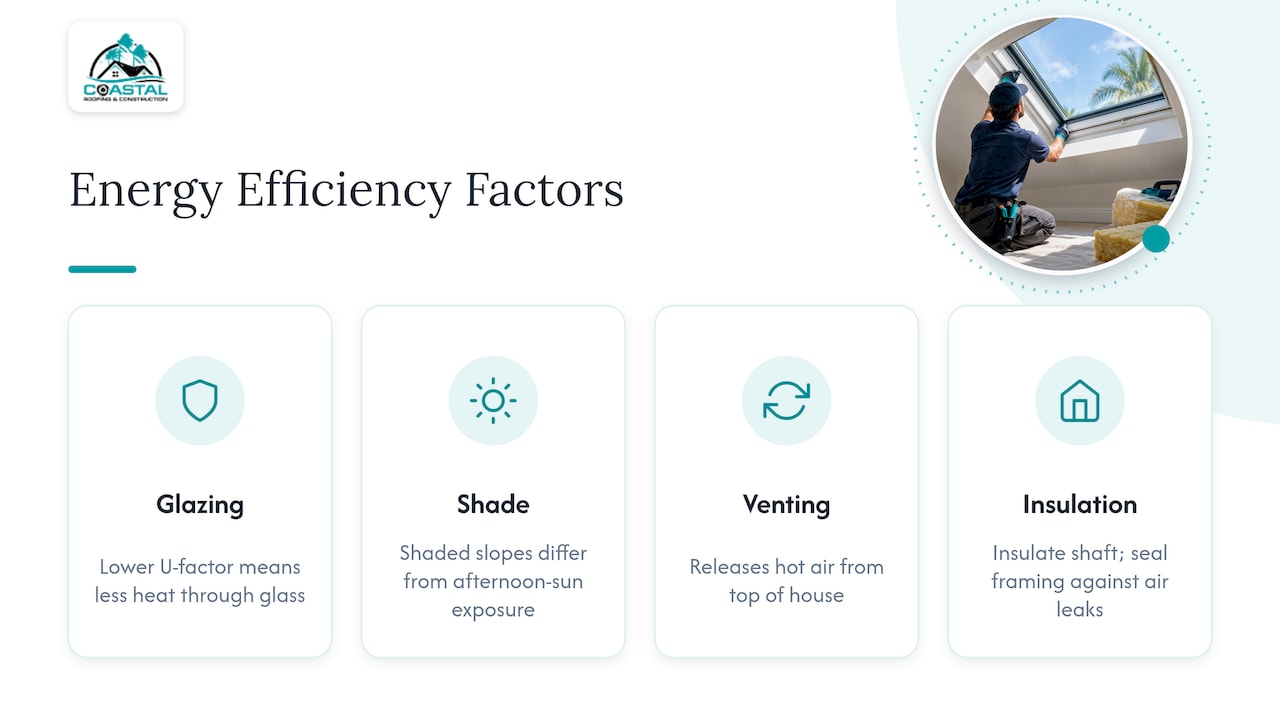
A skylight is a hole in your insulated roof, filled with glass. That makes the glazing and the seal quality the two things that decide whether it costs you energy or not. Glazing options such as laminated Low-E glass with argon fill are listed with glazing U-factors, and a lower U-factor means less heat moving through the glass. Compare those numbers across models instead of trusting a marketing label.
Florida adds its own twist. The sun load is the problem more than the cold, so the heat-blocking glazing matters most. Think about orientation too: buying guides advise weighing daylight against solar heat gain and noting tree shade. A skylight on a shaded slope behaves very differently from one baking in afternoon sun. Venting models can release hot air from the top of the house, which helps in warm weather, and tubular units bring light in through a much smaller opening with less glass exposed to the sun.
Insulation around the well deserves attention at the same time. When the opening is rebuilt, the light shaft should be insulated and the framing sealed so air can’t leak around the unit. That is cheap to do while everything is open and hard to do afterward. The failed seals described earlier are a common reason bills creep up, so a replacement often improves comfort as much as appearance.
What permits and codes apply to skylight work in Tampa Bay?
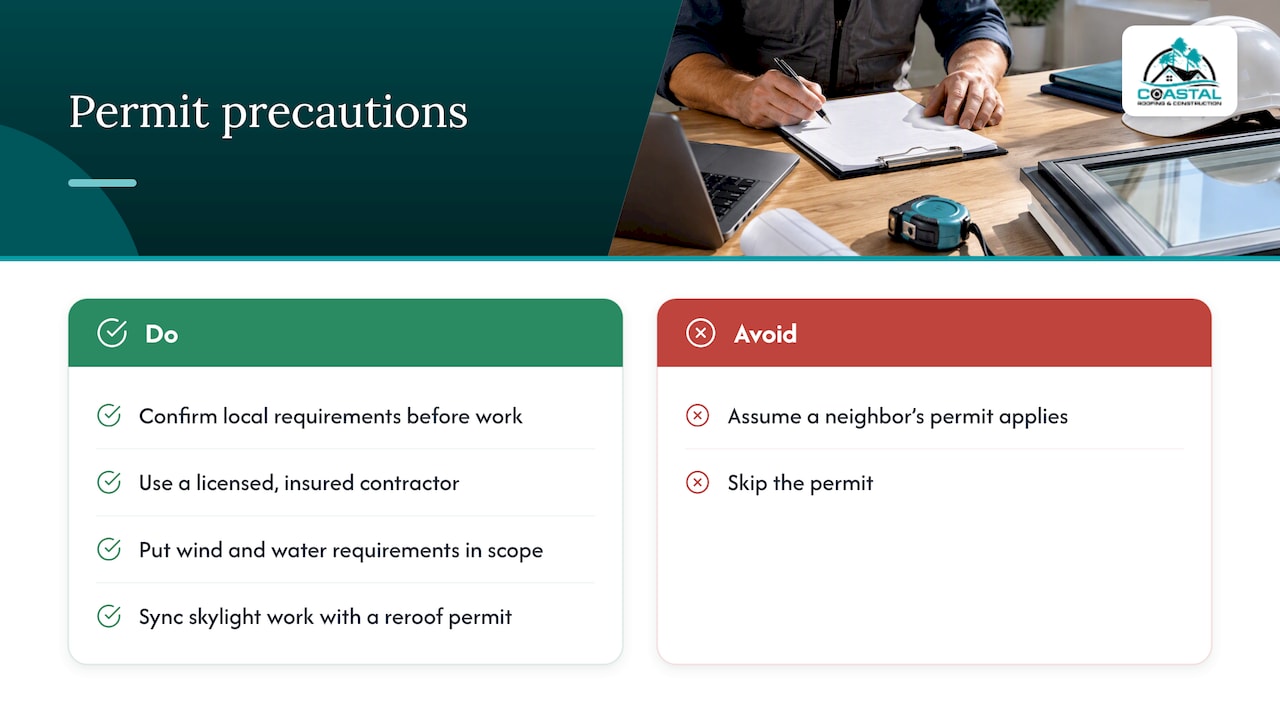
Plan on pulling a permit, since replacing a skylight alters the roof and the opening. Requirements vary by city and county across Tampa Bay, so confirm the details with your local building department before work starts rather than assuming a neighbor’s job tells you what yours needs. We handle that confirmation as part of our estimates for projects in Pinellas, Hillsborough and Pasco counties.
A couple of permit details deserve a plain statement. First, a permit generally comes with inspections, and an inspector will want to see the work done correctly. Second, the person who pulls the permit takes responsibility for the work, so confirm that your contractor is licensed and insured and is pulling the permit in their own name. Be cautious of anyone who suggests skipping it, because unpermitted roof work can complicate insurance claims and a future home sale.
If the skylight is part of a reroof, the skylight work usually rides along on the roofing permit, which is one more practical argument for syncing the two jobs. Because Gulf Coast storms are a fact of life here, ask what wind and water-intrusion requirements apply to the unit and its attachment, and have the answer written into the scope. Our write-up on how Florida’s tropical storms affect your roof explains why those details matter. When in doubt, call the building department. A short call is cheaper than redoing a rejected inspection.
How do you keep a new skylight working longer?
Most skylight problems start small and show up where water sits or seals dry out. A simple routine goes a long way, and many skylights last roughly 20 to 30 years when they are looked after.
- Clean gently. Use mild soap and water, and skip abrasive pads that scratch glass or acrylic.
- Clear debris. Leaves and pine needles trap water against the curb and flashing, so brush them off, especially after storms.
- Check the seals. On operable units, look at gaskets and weather stripping a couple of times a year and watch for gaps or cracking.
- Look inside. A new water stain or fog between the panes is your cue to call someone before the damage spreads.
- Trim trees. Overhanging branches drop debris and can scrape the unit in high wind.
- Inspect after storms. Check the flashing and sealant lines once the weather clears.
Schedule a professional look at the roof every year or so, and have the skylight checked at the same visit. If you find a leak, our guide on containing a leak and saving claim evidence covers what to do first. Catching a failing seal early often means a cheap gasket fix instead of a full replacement.
A roofer’s view on skylight mistakes
The leaks I see most trace back to two things: flashing that was never tied into the underlayment, and old seals reused on a new unit. Good contractors avoid both by rebuilding the flashing every time. Before the crew arrives, clear attic access, take photos of any stains, and ask for the flashing plan in writing. We coordinate skylight work with the reroof so the flashing and the warranties line up.
— Ryan
Let us coordinate your skylight replacement with your roof

If your roof is due for work, the skylight should be part of the plan. We handle roof replacement, roof inspections and roof repairs, and we coordinate the related trades so the flashing and water management are planned as one system.
We provide an estimate for the work.
Ready to get started? Request an inspection and estimate through our roof replacement page, or browse our full list of services and see recent jobs in our portfolio. We’ll look at the skylight and the roof together and tell you straight what needs to be done.
FAQ
How much does it cost to replace a skylight?
Costs vary with the unit, the roof and how complex the job is. National estimates put installation at roughly $1,000 to $3,000. Combining the work with a reroof can reduce duplicated labor.
Do roofers install skylights?
Yes, and a roofer is often the right choice because the flashing is what keeps water out. Ask for a contractor with roofing experience and a written flashing plan. We handle skylight replacement alongside roof work.
Can I replace a skylight without replacing the roof?
You can, when the skylight is fairly new and the roof is in good shape. It takes more effort, because installers must cut back shingles and underlayment to integrate new flashing. Interior patching may follow if the unit size changes.
How long does a skylight last?
Many skylights last roughly 20 to 30 years. Failed seals, fogging between panes and recurring leaks can shorten that. Replacing at reroof time lines the new unit up with fresh roofing.
Sources
- Replacing Existing Skylights | Building Science Education
- Veluxusa
- How Much Does Skylight Installation Cost in 2026? (Expert Reviewed)