
Choose a flat roof when you want usable rooftop space and a lower upfront price. Choose a pitched roof when drainage reliability, long-term durability, and lower lifetime maintenance matter more. That’s the short version. The longer version depends on your climate, your budget horizon, and what you actually want from your roof.
When to choose a flat roof:
- You want a rooftop deck, solar array, or HVAC placement without a crane
- Your budget is tighter upfront and you’re comfortable with more frequent maintenance cycles
When to choose a pitched roof:
- You’re in a wet, snowy, or hurricane-prone region and need gravity to do the drainage work
- You want a roof that lasts 20–50+ years with fewer replacement cycles over your ownership horizon
Flat-roof membranes generally have service lives in the 15–25 year range; pitched roofs typically last 20–50+ years, and systems with tile or slate can reach up to 100 years. That gap compounds over a 30–60 year ownership period. Coastal Roofing & Construction can inspect your existing structure and give you a straight recommendation for your specific home and Florida climate.
Table of Contents
- What are the main flat roof vs pitched roof benefits?
- How does a pitched roof work, and which materials last longest?
- Side-by-side comparison: flat vs pitched roofs
- What do flat and pitched roofs actually cost over time?
- Which roof style suits your U.S. climate and house type?
- Insurance, permits, and risk factors homeowners often overlook
- How to evaluate contractors and choose the right roof
- Why Coastal Roofing & Construction is the right call for Tampa Bay homeowners
- Key Takeaways
- A roofer’s perspective on the choice most homeowners get wrong
- Get an inspection and estimate from Coastal Roofing & Construction
- Useful sources and further reading
What are the main flat roof vs pitched roof benefits?
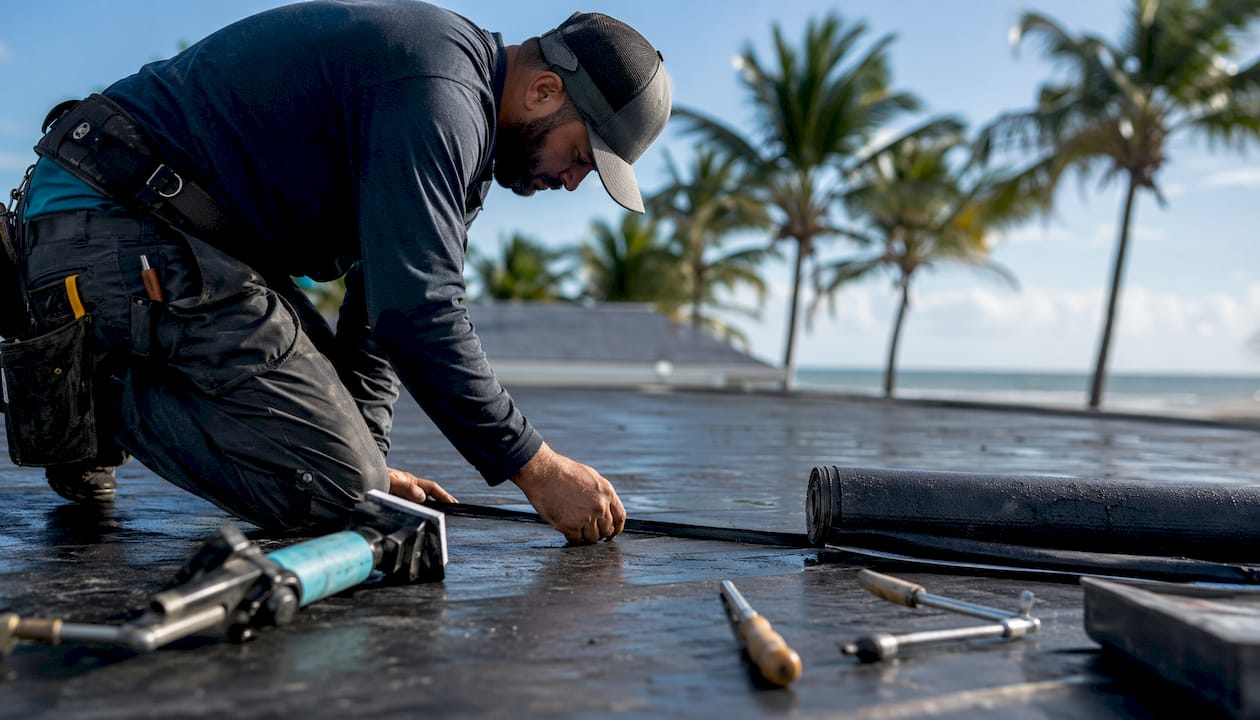
A flat roof is not actually flat. Technically, it’s a low-slope system built with a pitch of roughly ¼ to ½ inch per foot, just enough to push water toward drains, scuppers, or gutters. Without that engineered slope, water pools and the membrane fails early. You’ll find flat roofs on commercial buildings, modern residential designs, and urban infill homes where rooftop square footage is too valuable to waste.
Common flat-roof systems
Modern flat-roof membranes have come a long way. Five main systems each suit different situations:
- TPO (Thermoplastic Polyolefin): Heat-welded seams, white reflective surface, strong in hot climates. The go-to for Florida residential and commercial flat roofs.
- EPDM (Ethylene Propylene Diene Monomer): Rubber membrane, cost-effective, excellent UV resistance. Common in cooler climates; less common in Florida.
- PVC: Similar to TPO but with added plasticizers; chemical-resistant and durable, slightly higher cost.
- Modified bitumen: Asphalt-based rolled membrane, reinforced with fiberglass or polyester. Coastal Roofing & Construction installs this system on many Tampa Bay residential projects.
- Built-up roofing (BUR): Multiple layers of asphalt and felt, topped with gravel. Proven track record on commercial buildings; heavier and less common on new residential builds.
The flat roof advantages include lower installation cost, easier access for inspections and equipment, and the ability to create usable rooftop space. The disadvantages are real: ponding risk if drains clog, shorter membrane lifespans versus premium pitched materials, and fewer aesthetic options for traditional neighborhoods.
Pro Tip: Before converting a flat roof into a rooftop deck, get a structural load assessment. Most residential flat roofs are engineered for equipment and foot traffic during maintenance, not for permanent deck furniture and gatherings. Adding load without checking the framing is one of the more expensive mistakes homeowners make.
How does a pitched roof work, and which materials last longest?
A pitched roof sheds water by gravity. The slope, typically between 4:12 and 12:12 in residential construction (meaning 4 to 12 inches of rise per 12 inches of run), moves rain and snow off the surface before it has a chance to sit. That simple physics advantage is why pitched roofs dominate in wet and snowy climates and why they tend to outlast flat systems when you compare material-to-material lifespans.
Pitched-roof material families
- Asphalt shingles: The most common residential roofing material in the U.S. Architectural-grade shingles from manufacturers like Owens Corning and GAF typically carry 30-year warranties and perform well in most climates.
- Standing-seam metal: Concealed fasteners, no exposed penetrations, and exceptional wind resistance make this the premium choice for coastal and hurricane-prone areas. Lifespan of 40–70 years with minimal maintenance.
- Concrete and clay tile: Heavy, durable, and visually striking. Common throughout Florida and the Southwest. Tile vs shingle comparisons consistently show tile outlasting shingles by decades when properly installed.
- Slate: The longest-lived option at 75–100+ years, but heavy framing requirements and high cost put it out of reach for most residential budgets.
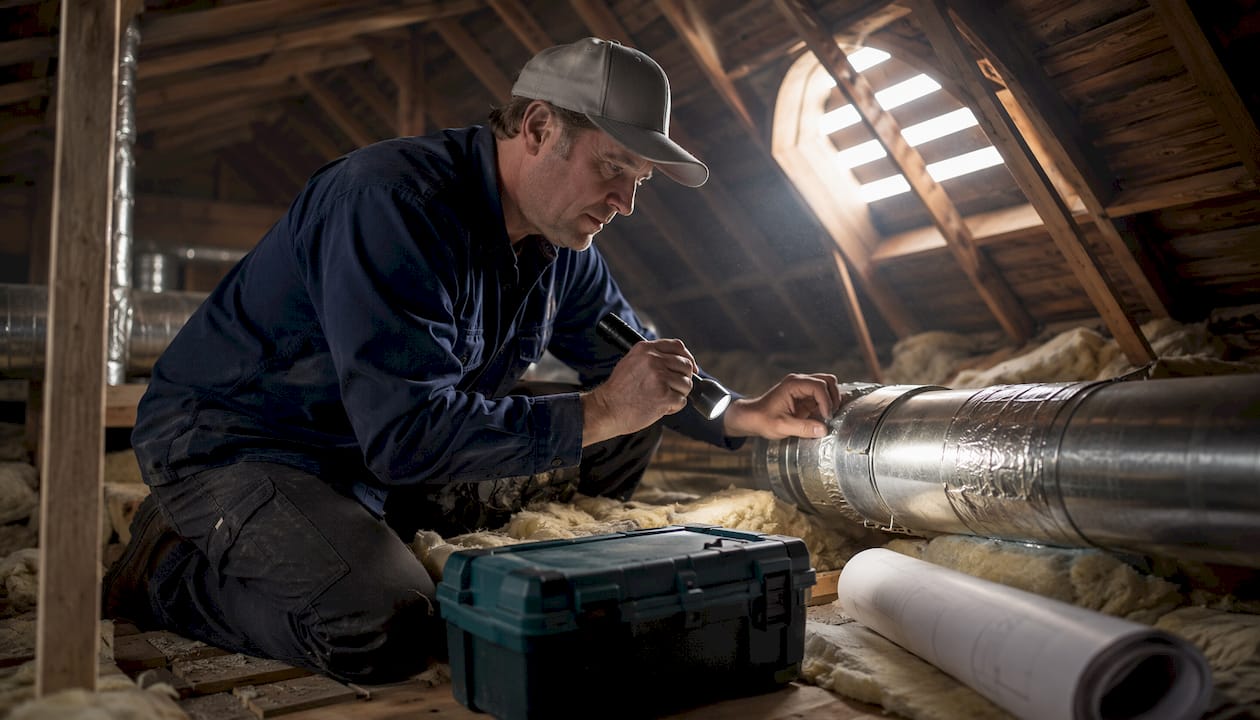
Pitched roofs also create attic space, which is a genuine thermal buffer. A properly ventilated attic reduces heat transfer into living spaces in summer and helps manage moisture in winter. That’s a structural energy benefit flat roofs can’t replicate without adding rigid insulation above the deck.
The trade-off is cost and complexity. Pitched roofs require more materials, more labor, and longer installation timelines. Repairs on steep slopes also demand more safety equipment and skill than walking a flat membrane.
Side-by-side comparison: flat vs pitched roofs
| Dimension | Flat Roof | Pitched Roof |
|---|---|---|
| Initial cost | Lower (varies by region) | Higher ($5–$12/sq ft for shingles; more for metal/tile) |
| Lifecycle cost | Higher (more frequent replacement cycles) | Lower over 30–60 years with durable materials |
| Typical lifespan | 15–25 years (membrane dependent) | 20–50+ years; tile/slate up to 100 years |
| Drainage/weather | Engineered drains; ponding risk if blocked | Gravity-fed; handles rain, snow, and debris well |
| Maintenance frequency | Higher; drain clearing and seam checks needed | Lower; annual inspection usually sufficient |
| Usable rooftop/attic space | Rooftop deck, solar, HVAC possible | Attic storage or conversion; no rooftop use |
| Curb appeal | Modern/contemporary; limited in traditional neighborhoods | Broadly appealing; wide material variety |
| Energy/insulation | Reflective TPO/PVC reduces cooling loads | Attic ventilation improves insulation performance |
| Installation complexity | Simpler framing; faster build | More labor, angles, and material layers |
| Climate suitability | Best in mild, dry, or urban settings | Preferred in wet, snowy, or hurricane-prone regions |
| Insurance/code | Some insurers charge more; maintenance records matter | Generally fewer complications; wind/hail ratings available |
The clearest trade-off: flat roofs win on upfront cost and rooftop utility; pitched roofs win on lifespan, drainage, and long-term value. For most U.S. homeowners planning to stay in their home for 20+ years, the lifecycle math usually favors a pitched system with durable materials.
What do flat and pitched roofs actually cost over time?
Pitched roofs typically last 20–50+ years; flat-roof membranes generally run 15–25 years. That difference means a homeowner with a flat roof may replace it two or three times over the same period a tile or metal pitched roof stays in service.
Material choice shifts both the upfront price and the replacement timeline dramatically. A TPO flat roof costs less to install than standing-seam metal, but you’ll likely re-cover it once or twice before the metal roof needs attention. Modified bitumen sits in a similar range to TPO and is a practical choice for Florida homeowners who want a proven asphalt-based system. Premium pitched materials like concrete tile or standing-seam metal carry higher installation costs but compress the number of replacement cycles over a 40–60 year horizon.
If you’re financing a roof replacement, it’s worth factoring those cycles into your budget. Resources like home loans for Florida families can help you evaluate financing options when the upfront cost of a longer-lived system is the sticking point.
Maintenance checklist for both roof types:
- Flat roofs: Inspect twice yearly (spring and fall); clear all drains, scuppers, and gutters after storms; check seams and penetrations (vents, HVAC curbs) for separation; look for standing water 48 hours after rain
- Pitched roofs: Annual inspection minimum; check shingles or tiles for cracking, lifting, or missing pieces; inspect flashing at valleys, chimneys, and skylights; clean gutters seasonally
- Both types: After any hurricane or major storm, schedule a professional inspection before filing or dismissing an insurance claim
- Flat roofs specifically: A small seam repair done promptly costs a fraction of what a deferred leak costs once water reaches the deck or framing
When a flat roof shows widespread seam failure, blistering, or multiple active leaks, a full flat roof replacement is usually more cost-effective than repeated patch repairs.
Which roof style suits your U.S. climate and house type?
Climate is the single biggest factor most homeowners underweight when choosing between flat and pitched roofs.
Heavy rain and snow (Northeast, Midwest, Pacific Northwest): Pitched roofs are the clear choice. Gravity-based drainage handles sustained rainfall and snow loads far better than engineered flat-roof drain systems, which can freeze, clog, or back up under heavy accumulation.
Coastal and hurricane-prone (Florida, Gulf Coast, Southeast Atlantic): Standing-seam metal on a pitched roof is the gold standard for wind resistance. Hurricane-rated fastening systems and concealed-fastener profiles eliminate the exposed screw points that fail first in high-wind events. Flat roofs are viable in Florida but require proper membrane selection (TPO is preferred) and meticulous drain maintenance before storm season.
Hot and dry (Southwest, Southern California): Flat roofs perform well here. Reflective TPO and PVC membranes reduce cooling loads, and the absence of heavy rain means ponding risk is lower. Rooftop solar and HVAC placement are practical advantages in these markets.
Temperate and urban (Mid-Atlantic, urban infill): Either style works. Flat roofs make sense on modern box-form homes and urban row houses where rooftop space is at a premium. Pitched roofs suit traditional neighborhoods and homes where resale value and HOA standards favor conventional aesthetics.
House-type quick rules:
- Modern flat-form or box-style home: flat roof fits naturally
- Historic or traditional neighborhood: pitched roof preserves curb appeal and resale value
- Single-level home in a dry climate: flat roof with rooftop deck potential
- Multi-story home with attic potential: pitched roof unlocks storage or future conversion
- Coastal waterfront home in Florida: standing-seam metal pitched roof for maximum wind and corrosion resistance
Insurance, permits, and risk factors homeowners often overlook
Roof choice affects your insurance premium and your permitting timeline, sometimes significantly.
Insurance considerations:
- Some insurers in Florida and other coastal states charge higher premiums for flat-roof systems or require documented maintenance records to keep coverage active
- Metal and tile pitched roofs often qualify for wind-mitigation credits in Florida, which can meaningfully reduce annual premiums
- After a storm, a roof without a current inspection report can complicate a claim; keep records of every inspection and repair
Permitting and code notes:
- Changing your roof’s slope or height typically triggers a full permit in most U.S. jurisdictions
- Historic districts and HOAs may restrict flat-roof installations on homes where pitched roofs are the neighborhood standard
- Florida’s building code requires specific wind-uplift ratings for roofing systems in high-velocity hurricane zones (HVHZ), which affects both material selection and fastening methods
Risk reduction checklist:
- Request a wind-mitigation inspection report after any new roof installation; it’s the document your insurer needs for a discount
- Ask your insurer specifically whether your flat-roof system requires annual maintenance documentation to maintain coverage
- Verify that your contractor pulls the required permit; unpermitted roofing work can void your homeowner’s insurance
- For flat roofs, confirm that all drains and scuppers are sized correctly for your roof area and local rainfall intensity
- Keep a dated photo record of your roof condition after every inspection
How to evaluate contractors and choose the right roof
A good contractor makes the roof decision easier, not harder. Here’s a numbered checklist to use during any estimate conversation:
- Confirm scope in writing. Get a written proposal that specifies the exact material, membrane type or shingle line, and any deck repairs included.
- Ask about ventilation and insulation. A pitched roof without a proper ventilation plan loses much of its energy efficiency advantage. A flat roof without adequate insulation above the deck risks condensation.
- Verify drainage details. For flat roofs, ask how many drains, what size, and where overflow scuppers are located. This is where cheap installs cut corners.
- Request warranty documentation. Manufacturer warranties on materials and separate workmanship warranties from the contractor are both standard on quality jobs.
- Check manufacturer certifications. Owens Corning, GAF, and Tri County Metals all offer contractor certification programs. Certified installers can offer extended system warranties that uncertified contractors cannot.
- Ask about load calculations for rooftop decks. If you want a rooftop deck or heavy HVAC equipment on a flat roof, confirm that the framing was engineered for that load.
- Confirm licensing and insurance. Ask for the contractor’s Florida license number and certificate of insurance. Verify both before signing anything.
Red flags to watch for:
- Pressure to sign before you’ve seen a written scope
- No mention of permits or code compliance
- Vague warranty language (“we stand behind our work”) with no written terms
- Subcontracting the entire job to an unlicensed crew without disclosure
Trust signals to request:
- Proof of state roofing license and general liability insurance
- Manufacturer certification documentation
- References from jobs completed in the past 12 months
- A written inspection plan for the post-installation walkthrough
Why Coastal Roofing & Construction is the right call for Tampa Bay homeowners
Coastal Roofing & Construction installs every major roofing system discussed in this guide: standing-seam metal, architectural shingles, concrete and clay tile, TPO flat roofs, and modified bitumen systems. That breadth matters because the right recommendation depends on your specific home, not on what a contractor happens to sell.
The team holds manufacturer certifications with Owens Corning, GAF, and Tri County Metals. Those certifications aren’t just marketing. They mean Coastal Roofing & Construction can offer extended system warranties that go beyond the standard manufacturer coverage, because the manufacturer trusts the installer’s work. For a homeowner choosing between a 10-year and a 50-year roofing solution, that warranty backing is a real financial protection.
Services directly relevant to the decisions covered in this guide include:
- Flat-roof membrane replacement (TPO and modified bitumen) with engineered drainage design
- Standing-seam metal roofing with hurricane-rated fastening for coastal exposure
- Tile and architectural shingle replacement for traditional and luxury residential homes
- Roof inspections and preventative maintenance programs
- Storm damage restoration and insurance documentation support
Coastal Roofing & Construction serves Pinellas County, Hillsborough County, Pasco County, and surrounding communities throughout the Tampa Bay area.
Key Takeaways
Pitched roofs win on lifespan and drainage; flat roofs win on upfront cost and rooftop utility, making climate and ownership horizon the two factors that should drive your decision.
| Point | Details |
|---|---|
| Lifespan gap is significant | Flat membranes last 15–25 years; pitched systems run 20–50+ years, with tile and slate reaching 100 years. |
| Climate drives the choice | Wet, snowy, or hurricane-prone regions favor pitched roofs; hot, dry, or urban settings suit flat roofs. |
| Lifecycle cost favors pitched | Multiple flat-roof replacement cycles over 30–60 years often exceed the total cost of one durable pitched system. |
| Insurance and permits matter | Metal and tile roofs can qualify for wind-mitigation discounts in Florida; flat roofs may require maintenance records to keep coverage active. |
| Coastal Roofing & Construction | Installs all major systems (TPO, modified bitumen, standing-seam metal, tile, shingles) with Owens Corning, GAF, and Tri County Metals certifications across Tampa Bay. |
A roofer’s perspective on the choice most homeowners get wrong
Most homeowners frame this as a style decision. It isn’t. The roof style that looks best on a Pinterest board is irrelevant if it’s wrong for the climate or the ownership horizon. The homeowners who end up frustrated are usually the ones who chose a flat roof because it was cheaper upfront, without accounting for the maintenance discipline it requires. A flat roof on a busy household where drain clearing gets skipped for two seasons is a leak waiting to happen.
The other underappreciated factor is what happens at the 15-year mark. A pitched metal or tile roof at 15 years is barely broken in. A flat membrane at 15 years is often approaching the end of its reliable 15–25 year service life. That timing difference changes the financial math entirely for anyone planning to stay in their home long-term.
Pro Tip: On any low-slope flat roof, install secondary overflow scuppers at least two inches above the primary drain level. If the primary drain clogs during a heavy storm, the overflow scupper prevents ponding from reaching a depth that stresses the membrane and the structure beneath it.
Get an inspection and estimate from Coastal Roofing & Construction
Replacing or choosing a roof is one of the largest single investments a homeowner makes. Getting it right starts with an honest inspection from a contractor who installs every system on the market and has no reason to steer you toward the wrong one.
Coastal Roofing & Construction serves homeowners throughout Pinellas County, Hillsborough County, Pasco County, and surrounding Tampa Bay communities. Every estimate includes a full inspection, a written material recommendation, and warranty documentation from Owens Corning, GAF, or Tri County Metals depending on the system specified. Whether you’re weighing a TPO flat roof against standing-seam metal or replacing aging shingles on a traditional home, the team can walk you through the trade-offs specific to your property. View completed projects or schedule a roof replacement estimate to get started.
Useful sources and further reading
- Custom Home: Flat vs Pitched Roofs — lifespan ranges, cost comparisons, and usable-space trade-offs for residential homeowners
- Speaking of Housing: Flat vs Pitched Roofs — drainage mechanics and maintenance implications explained in plain language
- Renovate: Flat Roof Guide — detailed breakdown of flat-roof membrane systems, costs, and energy performance
- e-architect: Flat Roof vs Pitched — architectural perspective on both roof styles with material and weather comparisons
- 4Feldco: Flat Roof Advantages and Disadvantages — consumer-focused pros and cons with a side-by-side comparison table
- Coastal Roofing & Construction: Flat Roof Systems Explained — TPO and modified bitumen specifics for Florida homeowners
- Coastal Roofing & Construction: Hurricane Resistant Roofing — Florida-specific wind and hurricane performance guidance for pitched and flat systems