
A roof coating is worth considering when your existing roof is structurally sound and you want to stretch its life and cut cooling costs, but it is not a universal fix. The main trade-offs come down to lower upfront cost against a shorter lifespan than full replacement, plus ongoing cleaning and recoat needs. The four chemistries you will run into are silicone, acrylic, urethane (elastomeric), and spray polyurethane foam (SPF).
TL;DR:
- Coating durability varies widely, with typical lifespans around five years, but performance depends heavily on coating chemistry, substrate condition, and climate exposure.
- Recoat intervals differ: acrylics usually need reapplication every 5 to 10 years, while urethanes can last longer under mechanical stress, and SPF topcoats require separate recoating schedules.
- Proper surface preparation, adhesion testing, and following manufacturer guidelines are critical to avoid failures like blistering, loss of adhesion, or premature wear.
- Coatings are most cost-effective for structurally sound roofs nearing the end of their lifespan, providing energy savings and delaying full replacement.
- A thorough inspection, substrate compatibility check, and multiple bids are essential before deciding whether to coat or replace, especially if active leaks or structural damage exist.
Table of Contents
- 1. Comparing silicone, acrylic, urethane, and SPF coatings
- 2. Where energy savings and extended roof life pay off
- 3. What can go wrong: durability, soiling, and warranty limits
- 4. Deciding between a coating and full replacement
- 5. How to choose a coating and what to ask a contractor
- 6. Field perspective: inspection steps and coastal considerations
- 7. Safety precautions during roof coating application
- 8. Environmental impact and VOC considerations of different roof coatings
- 9. Bottom-line recommendation and next steps
- 10. How our team can help with inspections and coating-ready repairs
- FAQ
- Sources
1. Comparing silicone, acrylic, urethane, and SPF coatings
Each coating chemistry solves a different problem, and picking the wrong one for your roof’s conditions is the most common mistake we see.
Silicone coatings resist ponding water better than most alternatives, which makes them a strong choice for low-slope roofs with poor drainage. They also hold up well under UV exposure, but they attract dirt and can become slippery underfoot when wet, which matters for roofs that need regular foot traffic for maintenance.
Acrylic coatings are the most affordable option and clean up easily with water during application, which keeps labor costs down. They do not handle standing water as well as silicone, so they fit best on roofs with good drainage in moderate climates.
Urethane (elastomeric) coatings, especially aromatic and aliphatic urethanes, offer the best impact and abrasion resistance of the group. They cost more than acrylics but tolerate foot traffic and mechanical wear better, which suits roofs with rooftop equipment or frequent service visits.
Spray polyurethane foam (SPF) is different from the other three: it is a sprayed insulating foam that adds R-value, then gets sealed with a protective topcoat, usually acrylic, silicone, or urethane. SPF works well for re-covering irregular surfaces, but the topcoat needs periodic recoating to keep the foam protected, and skipping that maintenance step shortens the system’s life considerably.
Water-based acrylics cure through evaporation and remain the most common reflective coating choice, while solvent-based urethanes generally offer stronger adhesion, according to a Department of Energy overview of cool roofing technologies. Recoat intervals vary by product and climate exposure:
- Acrylic coatings often need recoating every 5 to 10 years depending on UV exposure and foot traffic.
- Silicone coatings can last longer between recoats but need periodic cleaning to maintain reflectivity.
- Urethane coatings typically hold up longest under mechanical stress before requiring a fresh layer.
- SPF topcoats require their own recoat schedule separate from the foam’s structural lifespan.
A comparison of common coating materials used in hot, humid climates breaks down how these chemistries perform in conditions similar to the Gulf Coast, where humidity and UV load are both high year-round.
2. Where energy savings and extended roof life pay off
Cool roof coatings raise solar reflectance and thermal emittance, which reduces how much heat a roof transfers into the building below it. The Department of Energy estimates cooling energy savings up to $0.20 per square foot for commercial buildings and up to $0.05 per square foot for residential buildings, with the largest gains in hot climates, according to a DOE fact sheet on cool roofs.
That savings estimate depends on aged solar reflectance, not the reflectance measured right after installation. A roof’s reflective value drops as dirt and weathering accumulate, so the number that predicts real-world energy performance is the one measured after a coating has been exposed to the elements for a year or more.
Beyond energy costs, coatings extend service life and delay full tear-off, which cuts landfill waste and avoids the disruption of a complete roof replacement, a point the same DOE research highlights for large, low-slope commercial roofs. Return on investment tends to be strongest on big commercial roofs and on structurally sound roofs nearing the end of their expected life, where a coating buys several more years without the cost of a new system.
3. What can go wrong: durability, soiling, and warranty limits
Coatings are not a permanent fix, and several real-world factors reduce their value if you do not plan for them.
Soiling and general weathering lower a coating’s reflectance over time, which is why aged solar reflectance matters more than the number on the product label. Research into elastomeric coatings has targeted an aged solar reflectance of at least 0.75 to preserve long-term energy performance, according to Department of Energy research on durable white elastomeric coatings.
Common failure modes include:
- Adhesion loss when the substrate was not properly cleaned or primed before application.
- Blistering caused by trapped moisture beneath the coating film.
- Ponding-related breakdown on chemistries not designed to tolerate standing water.
- Premature wear on SPF topcoats that were not recoated on schedule.
Field-applied coatings are often cited with typical service lives around several years, though performance varies widely depending on substrate condition and climate exposure, per the same DOE research. Warranty traps are a frequent surprise: many manufacturers restrict coating warranties on certain substrates, and field-coating an existing shingle roof can void the shingle manufacturer’s own warranty if it is not an approved application.
Pro Tip: Ask any contractor for the coating manufacturer’s written substrate compatibility list before signing a contract, not after the crew shows up.
4. Deciding between a coating and full replacement
A coating only makes sense when the roof underneath it is sound. Run through this checklist before committing:
- Confirm the deck and structure show no rot, sagging, or structural damage.
- Check drainage and ponding history, since standing water limits which chemistries will hold up.
- Count existing roof layers, since many codes and warranties cap how many layers can remain before a coating or recover is no longer allowed.
- Rule out active leaks, since coatings seal surfaces but do not fix underlying leak sources.
- Review code and warranty restrictions tied to your specific substrate.
On the cost side, a coating’s upfront price needs to be weighed against the extra years of service it buys versus the cost of full replacement now. The EPA’s ENERGY STAR case study on a school roof found that a white acrylic coating raised reflectivity from 23% to 68% and produced roughly 13,000 kWh in annual energy savings, worth about $850 per year at that facility, according to the EPA case study on labeled roof products. Replacement becomes necessary once structural issues, multiple existing layers, or persistent leaks are in play. Coating remains a defensible interim step for a sound roof that simply needs a few more years of service.
5. How to choose a coating and what to ask a contractor
Start with the product data sheet, not the sales pitch. Look for a documented Cool Roof Rating Council (CRRC) aged reflectance value rather than just the initial reflectance number, since aging and dirt pickup both reduce real-world performance. Also check water uptake figures and any published adhesion test results tied to your specific substrate.
On the contractor side:
- Ask which manufacturer certifications the crew holds and request references from recent coating projects.
- Get the warranty in writing, including what voids it and whether it covers labor or materials only.
- Confirm the surface prep plan: cleaning, priming, and moisture testing matter more to long-term success than which brand of coating goes on top.
- Watch for red flags like vague warranty language, reluctance to document adhesion testing, or a bid that comes in far below everyone else’s.
Substrate compatibility deserves particular attention on membrane roofs. If you are working with a TPO roof, for example, coating options that won’t void your existing warranty are more limited than many homeowners expect.
Pro Tip: A contractor who won’t test adhesion before quoting a price is skipping the one step that predicts whether the coating will actually stick.
6. Field perspective: inspection steps and coastal considerations
A proper inspection before any coating goes down includes a moisture scan of the substrate, a test patch to check adhesion, and a review of slope and drainage patterns across the roof. In coastal climates, salt exposure, wind-driven debris, and algae growth all push product selection toward coatings with stronger UV and biological resistance.
- Moisture testing catches trapped water that would blister a coating within months.
- Drainage review identifies low spots where ponding-resistant chemistries become necessary rather than optional.
- Manufacturer-backed warranties only hold up when installation follows the certified process, which is why certified installers matter.
A written inspection report should document substrate condition, existing layer count, and any areas needing repair before coating work begins.
7. Safety precautions during roof coating application
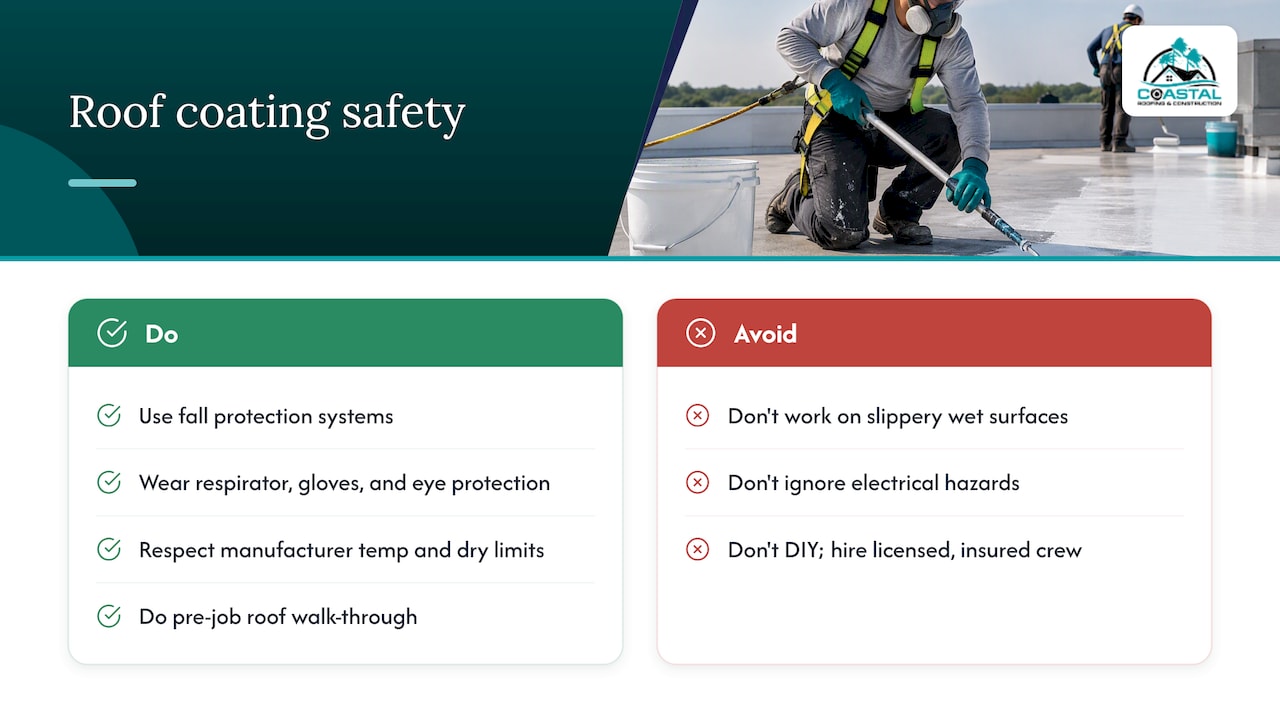
Roof coating work carries real fall and chemical exposure risks, and skipping basic precautions is how minor jobs turn into serious accidents. Fall protection comes first: anchor points, guardrails, or personal fall arrest systems are necessary on any low-slope or steep roof, and wet coating surfaces become slippery fast, especially with silicone products.
Ventilation matters during application, particularly with solvent-based urethanes that release stronger fumes than water-based acrylics. Workers should wear respirators rated for the specific product being applied, along with gloves and eye protection to avoid skin and eye contact with uncured coating material.
Weather timing affects both safety and results. Applying coating in direct midday heat on a dark roof surface can cause heat-related illness for the crew and can also affect cure time and film quality. Most manufacturers specify a minimum and maximum temperature range and a minimum number of dry hours before and after application, and ignoring those windows risks both worker safety and coating failure.
Electrical hazards deserve attention too, since rooftop equipment, conduit, and nearby power lines are common on commercial low-slope roofs. A pre-job walk-through that flags equipment, skylights, and roof edges before spraying begins prevents most on-site incidents. This is one more reason coating work benefits from a licensed, insured crew rather than a do-it-yourself weekend project.
8. Environmental impact and VOC considerations of different roof coatings
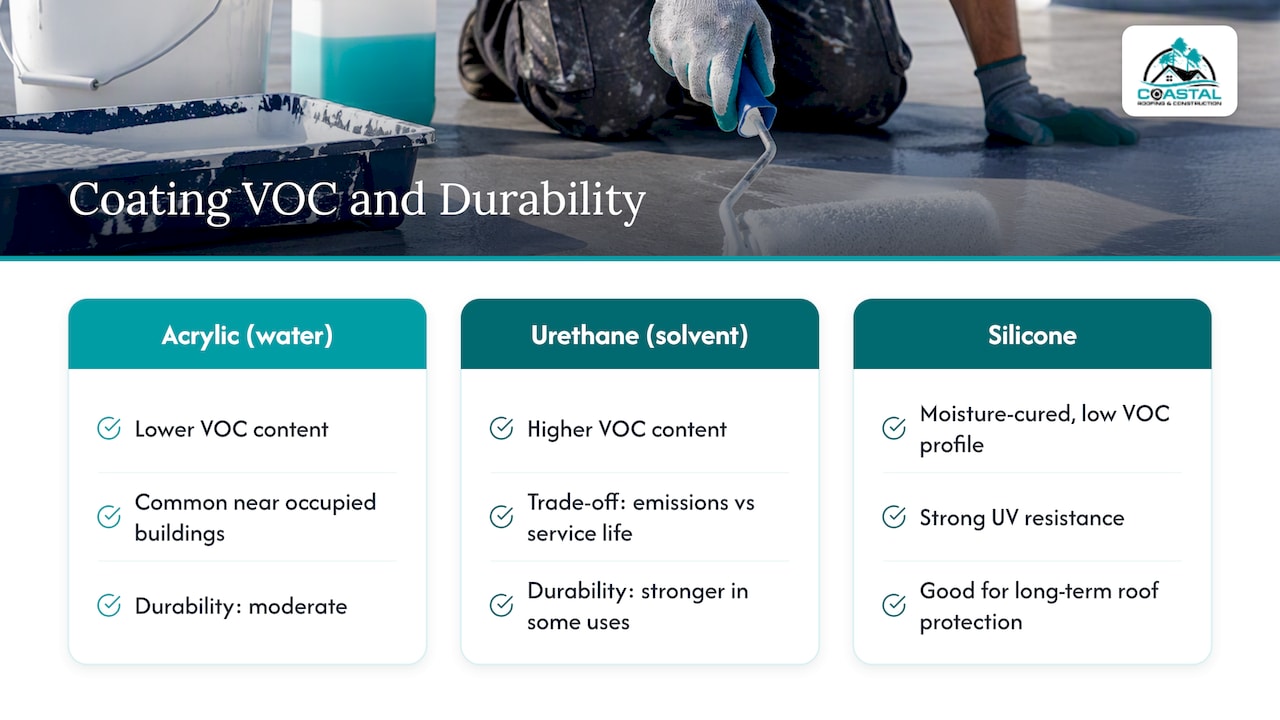
Coating chemistry affects both the environment during application and the building’s energy footprint for years afterward. Water-based acrylic coatings generally carry lower volatile organic compound (VOC) content than solvent-based urethanes, which makes them a common choice when indoor air quality or local emissions rules are a concern during application near occupied buildings.
Solvent-based urethanes tend to have higher VOC content but offer stronger durability in some applications, which creates a trade-off between short-term emissions and longer service intervals. Silicone coatings are typically moisture-cured rather than solvent-based, which keeps their VOC profile relatively low while still delivering strong UV resistance.
Beyond VOCs, the broader environmental case for coatings rests on waste reduction: extending a roof’s service life by coating it instead of tearing it off keeps that material out of a landfill for several more years, a point the Department of Energy raises when describing coatings as an economical retrofit approach for large commercial roofs. That said, coatings are not a zero-impact choice. Manufacturing, shipping, and eventual disposal of coating materials all carry a footprint, and a coating applied over a failing substrate that fails early simply delays the same waste rather than avoiding it.
Choosing a lower-VOC product matters most for occupied buildings during application and for crews working in enclosed or poorly ventilated areas. For most residential and commercial projects, matching the coating to the climate and substrate correctly the first time has a bigger environmental payoff than chasing the lowest VOC number alone.
9. Bottom-line recommendation and next steps
Coat a structurally sound roof that needs a few more years. Replace one with active leaks, multiple layers, or structural damage. Schedule an inspection, collect two or three bids, and ask every contractor for product data sheets with CRRC and ENERGY STAR claims in writing.
— Ryan
10. How our team can help with inspections and coating-ready repairs
If your roof needs repairs before a coating can go on, or if the inspection shows replacement is the smarter move, we handle both. As a factory-trained, manufacturer-certified contractor working with Owens Corning, GAF, and Tri County Metals systems, we can tell you honestly whether your roof is a good coating candidate or whether you are better served by a new flat roofing system, shingle roof, or metal roof.

An inspection and bid from our team includes a full substrate review, drainage check, and a clear explanation of what repairs, if any, a coating would require to hold its warranty. Explore our full lineup of roof replacement and repair services to see which option fits your roof and budget before you commit to either path.
FAQ
Is it worth getting your roof coated?
A coating is worth it when your roof is structurally sound, free of active leaks, and within code limits for existing layers. For roofs that already need structural repair or have reached the end of their service life, replacement is the more reliable investment.
What is the average cost of roof coating?
Published pricing varies by coating chemistry, roof size, and region, and no single national figure applies to every project. A contractor’s bid, based on your roof’s substrate and square footage, is the only reliable way to get an accurate number for your situation.
What is the typical lifespan of roof coating?
Field-applied coatings are often cited with typical service lives around 5 years, though performance depends heavily on the chemistry chosen, the substrate, and climate exposure, according to Department of Energy research on cool roofing technologies. Some elastomeric coating research has targeted extending service life to 15 years or more as formulations improve.
What are the downsides of using silicone roof coating?
Silicone coatings resist ponding water well but attract dirt more readily than other chemistries, which lowers reflectance over time unless the surface is cleaned periodically. They also become slippery when wet, which is a safety consideration for any roof that requires regular foot traffic for maintenance or equipment access.
Sources
- Cool Roofing Technologies
- Energy Star® Labeled Roof Products Case Study (Our Savior’s Elementary School)
- Stay-Clean and Durable White Elastomeric Roof Coatings (ERCs)