
Most flat roof leaks start at a seam, a flashing detail, a penetration or a spot where water sits, not in the middle of the membrane. Flat and low-slope roofs shed water slowly, so any weak point gets more time to let water in. Below are the eight causes we see most often on Tampa Bay homes and buildings, how each one shows up, and what to do the day you find a stain.
TL;DR
- Seams, flashing and roof penetrations (pipes, drains, HVAC curbs) are where flat roofs most often fail, according to roofing industry reporting.
- Low-slope roofs drain slowly, so water has more time to find cracks and splits, Florida’s emergency management guidance explains.
- The stain on your ceiling is rarely under the hole. Water can travel 10 or 15 feet before it drips.
- Not every ceiling stain is a roof leak: in a hot, humid attic, condensation on air-conditioning ducts can look the same.
- Photograph the damage, contain the water and call a roofer to inspect. Do not climb onto a wet roof.
Table of Contents
- Why flat roofs leak more easily than steep roofs
- The eight most common flat roof leak causes
- Why your flat roof leaks in heavy rain but not in light rain
- Is it really the roof?
- How to find a flat roof leak safely
- What to do the day you find a leak
- Our perspective: leaks are a diagnosis problem first
- Get your flat roof inspected by a Tampa Bay roofer
- Repair or replace: how to decide
- FAQ
- Sources
Why flat roofs leak more easily than steep roofs
A steep roof sheds rain in seconds. A flat roof, which is really a low-slope roof, holds water longer. The Florida Division of Emergency Management’s homeowner guidance says membrane and built-up roofs are notorious for leaking because water runs off slowly, giving it more chances to get into cracks or splits. Those cracks can form as the roof covering expands and contracts at a different rate than the deck under it.
That is the core idea behind every cause below. A flat roof is a continuous waterproof skin, and the skin is only as good as its weakest joint. Standards bodies treat this seriously: ASTM publishes a guide for evaluating the causes of leakage in low-sloped roofs, because water getting in tends to cause early deterioration of the roof, the building or its contents.
In Tampa Bay, add intense sun, daily heat swings, summer downpours and tropical storm wind. The roof gets tested more often here than in most of the country.
The eight most common flat roof leak causes
1. Failed seams
Seams are where two sheets of membrane (TPO, modified bitumen or similar) are joined. Adhesive ages, heat welds can be incomplete, and building movement pulls at the joint. Reporting on flat roof repair notes that aged adhesive, shrinking sealant or cracked seals open paths for water.
What to look for: lifted or curling edges, visible gaps, or a seam that feels loose. Some seam failures are invisible from above. The membrane can look fine while the bond underneath has let go, which is why a professional inspection, sometimes with moisture scanning, finds problems the eye misses.
2. Flashing that has cracked or pulled away
Flashing seals the roof where it meets something vertical: a parapet wall, a chimney, an equipment curb. These joints move more than the open roof. Building research notes that flashing details not designed to absorb thermal or other building movement can crack and leak.
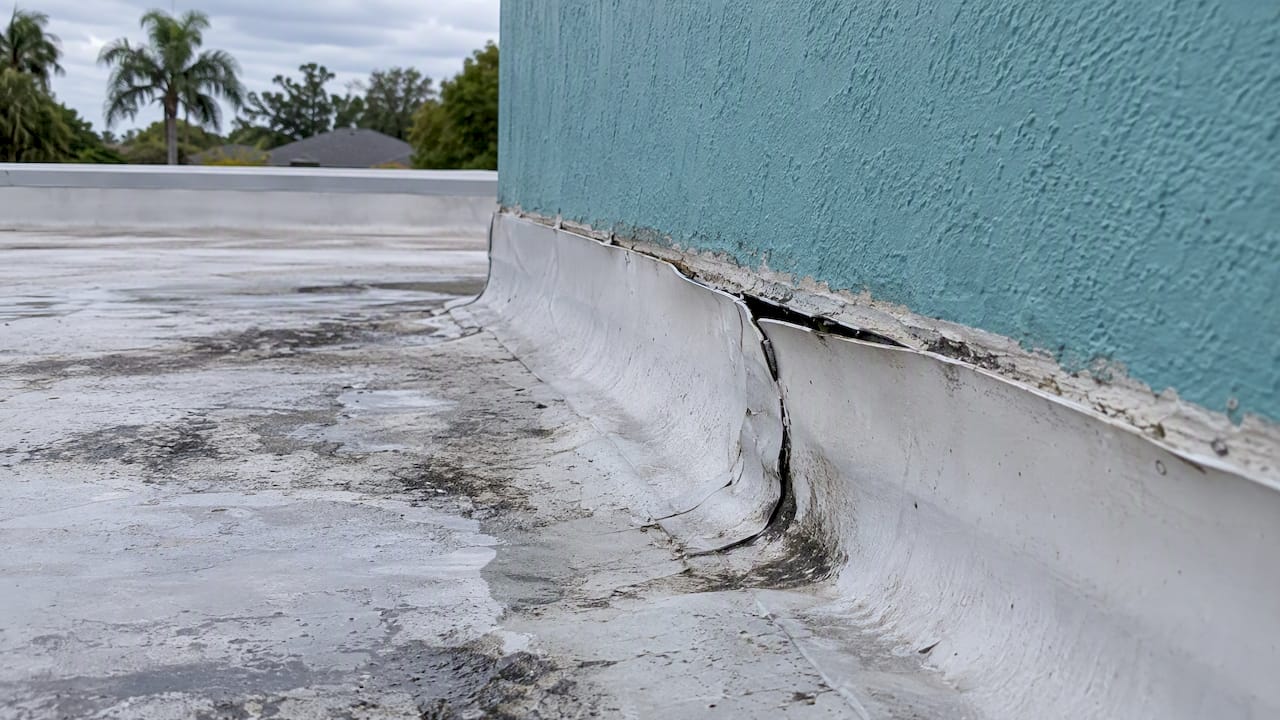
Industry writing ranks flashing failure as a leading defect on flat roofs, and our experience matches it. If you want to understand the types, our guide to roof flashing types to inspect before a leak walks through each one, and our piece on Florida roof flashing leaks covers safe checks and claim considerations.
3. Penetrations: pipes, vents, drains and HVAC curbs
Every hole through a flat roof is a potential leak. Plumbing stacks, exhaust vents, skylights, conduit and rooftop HVAC units all need a tight seal that lasts for years. Sealant ages and the pipe or curb moves. Building research describes pitch pots and mastic pans as increasingly considered unreliable for long-term sealing because the sealant ages or the penetrating component moves.
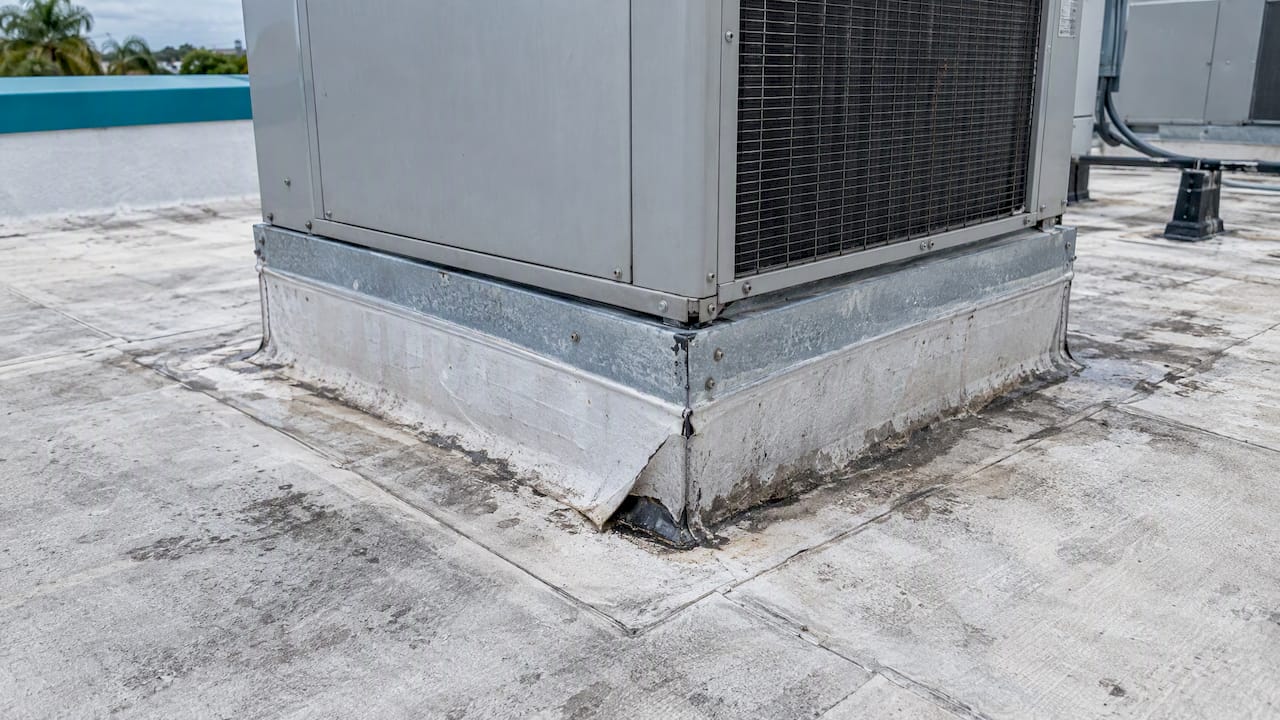
For a closer look at one common version of this problem, see our article on a roof leak around a vent pipe, including what a homeowner can safely check from the attic.
4. Ponding water
Water that stays on a flat roof is both a symptom and a cause. It adds weight, speeds up membrane wear and puts constant pressure on every seam. Reporting on flat roofs notes ponding water can force its way through even a pinhole.
Low-slope roofs are supposed to slope toward drains or scuppers at a minimum of 1/4 inch per foot, and pooling can mean the slope is insufficient or that drains or scuppers are needed. Causes include inadequate slope from the start, clogged drains, a deck that has sagged and insulation that has been compressed.
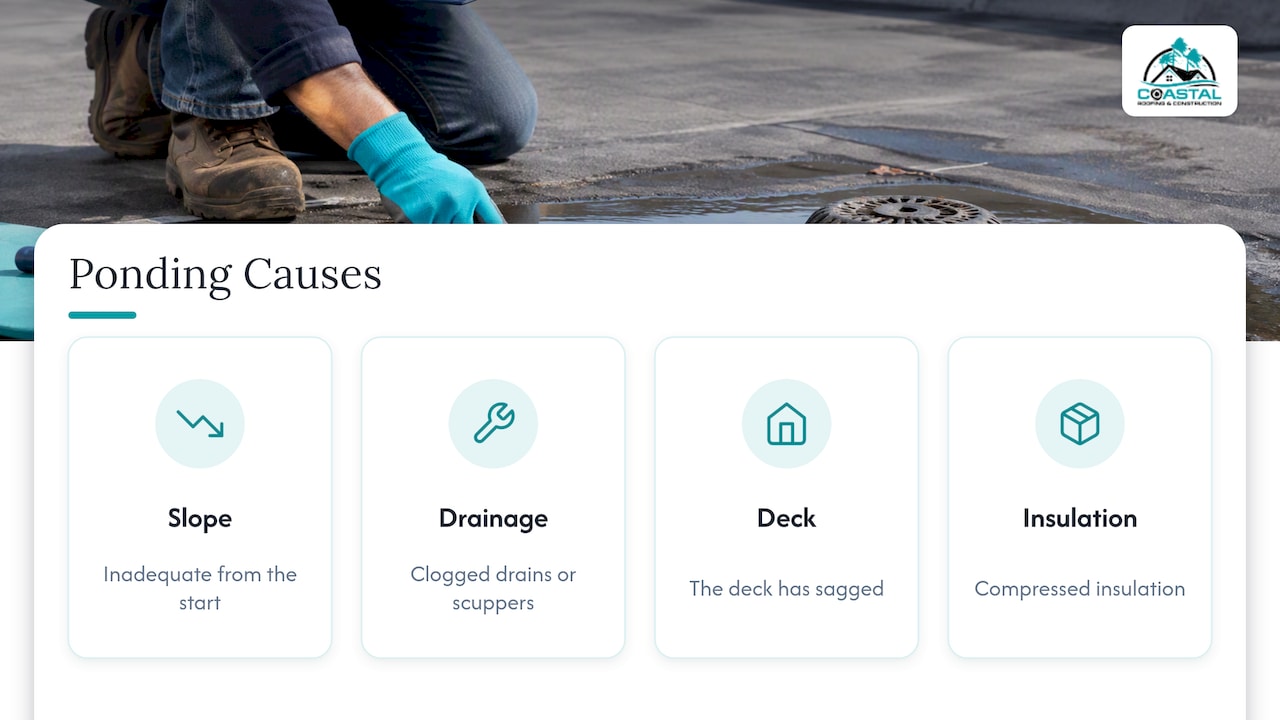
Our rule of thumb: puddles that disappear within a day or so are usually minor, while water still sitting there a couple of days after rain deserves an inspection. Our guides on flat roof ponding water and the 1/4 inch slope rule and drainage repair costs go deeper.
Ponding is also a structural issue. IIBEC, a building enclosure professional body, explains that ponded water can contribute to roof collapse during extreme storms, which makes drainage a safety matter and not only a leak matter.
5. Clogged drains, scuppers and gutters
This is the cheapest cause to prevent. Leaves, pine needles, granules and debris block drains, and water backs up onto the roof. Florida’s guidance tells homeowners to check for ponding and make sure drainage is not blocked, including cleaning gutters along the roof edge.
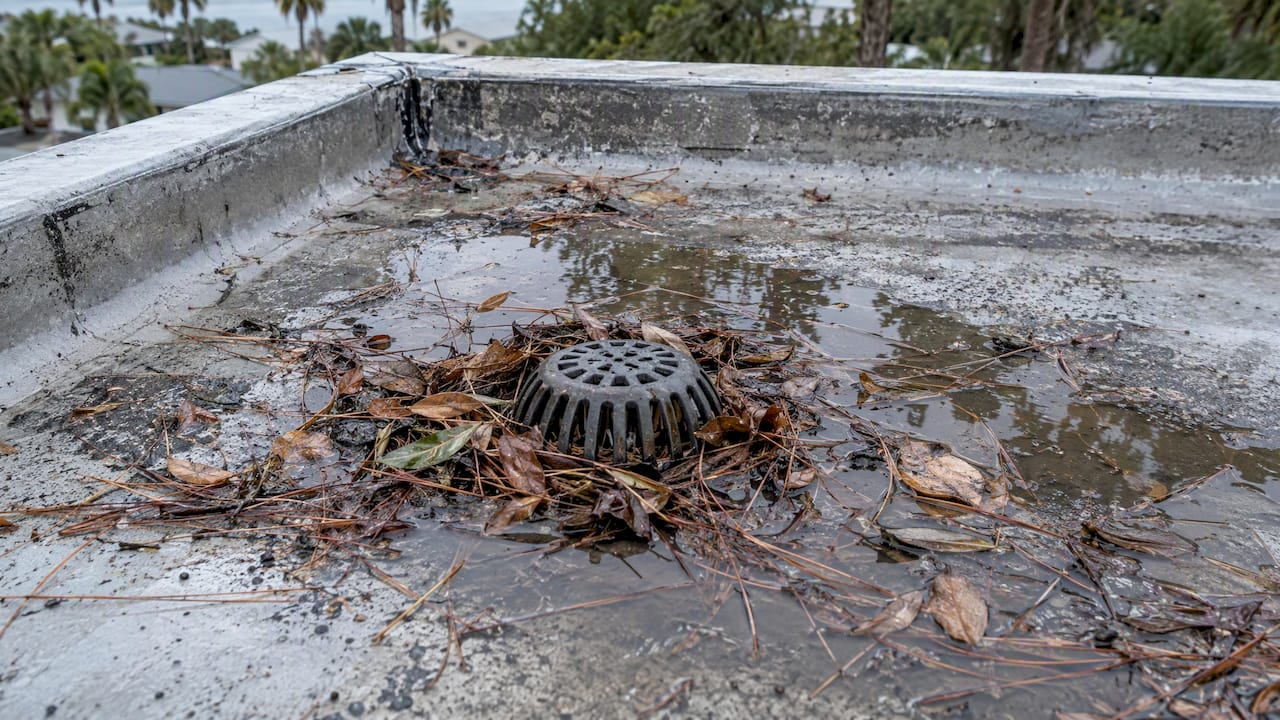
What happens at the bottom of the downspout matters too. If water is dumped right beside the foundation, the problem moves from the roof to the walls. These downspout drainage ideas show how to carry runoff away from the house once it leaves the roof.
6. Sun, heat and an aging membrane
UV and heat dry out membranes and sealants. The Florida guidance lists warning signs of a roof likely to leak, including cracks, holes, gaps, buckling, missing granules or gravel, damaged flashing, unsealed seams and poorly attached edges. A roof showing several of these is near the end of its service life, and patching it repeatedly can cost more than a planned replacement. Our guide on how to know when a roof needs full replacement explains where that line sits.
7. Wind and storm damage
Wind lifts edges first. The National Roofing Contractors Association explains that wind can loosen materials, especially at edges, after which wind pressure and suction progressively expose the roof system, and rain then enters more readily. After any named storm, even a roof that looked fine before deserves a look at its edges, flashing and seams. We cover this in how Florida’s tropical storms affect your roof.
8. Poor installation and later damage by other trades
Some leaks are built in. Rough detailing at corners, penetrations and edges, or a technician who walks on the membrane with a tool or sets down equipment, can create a weak point that fails years later. One industry perspective holds that most flat roof leaks trace back to poor detailing, poor workmanship or abuse by other tradesmen. We cannot give you a precise percentage, but the pattern fits what we see: a roof that leaks within a few years of installation often has a detail problem, not a material problem.
This is also where installer training matters. Flat systems like TPO and modified bitumen rely on correct welding or torching, correct flashing and correct drainage. Our flat roofing service is built around those details.
Why your flat roof leaks in heavy rain but not in light rain
A small opening may stay dry through a drizzle and leak in a Florida afternoon downpour. Three things combine: heavy rain overwhelms slow drainage, standing water puts pressure on weak seams, and wind-driven rain pushes water sideways under flashing and edges. Because flat roofs drain slowly, the water has more opportunity to work through cracks or splits.
If your roof leaks only in the hardest rain, look first at drains, scuppers and any place where water gathers, then at flashing along walls and curbs. Intermittent leaks are the hardest to track, so note the date, rainfall and wind direction each time. That log helps whoever inspects the roof.
Is it really the roof?
Not every ceiling stain comes from above. Florida’s guidance notes that interior stains may also come from condensation on air-conditioning ducts in a hot, humid attic. Plumbing leaks, window and wall leaks and HVAC drain lines can all look like a roof problem.
Quick ways to narrow it down:
- Timing. A stain that grows only after rain points to the roof, while one that grows with the air conditioner running points to condensation or a drain line.
- Location. Stains near a wall, window or rooftop unit suggest flashing, a window seal or equipment.
- Rooftop HVAC. Water around a rooftop unit may be normal condensation or an equipment leak, and an HVAC professional can address it by fixing the leak or rerouting the condensation.
If you cannot tell whether to call a plumber or a roofer first, this explanation of a ceiling leak, plumber or roofer helps you sort it, including why the visible drip can be far from the actual source.
How to find a flat roof leak safely
Start from the inside, then check the roof from a safe position.
- Mark the stain. Photograph it and trace its edge with a pencil so you can see if it grows.
- Look uphill of the stain. Water can travel along framing, decking and insulation. A leak may enter 10 or 15 feet from the interior stain, so inspect seams, penetrations and flashing above and uphill of it.
- Check the attic or ceiling space with a flashlight for wet insulation, dark decking or drips at pipes.
- Inspect from the ground first. The state guidance suggests that if you are not comfortable on a ladder, use binoculars to look for cracks, holes, gaps, buckling, missing granules and damaged flashing.
- Check drains and gutters for blockage and look for ponding.
- Stay off a wet or damaged roof. A flat membrane is slippery, and a saturated deck may not hold your weight.
A hose test can pinpoint a leak when done methodically, one section at a time, with a helper inside. It is best left to a roofer on most flat roofs, since pushing water at a damaged detail can drive more into the building. For a skylight, our hose test guide shows the method.
What to do the day you find a leak
- Protect people and belongings. Move furniture, place a bucket under the drip and lay towels around it. If the ceiling bulges, poke a small hole in the lowest point of the bulge to let the water out into a bucket, and keep clear of the area. If it is near light fixtures or wiring, turn off power to that circuit and call an electrician.
- Document everything. Take dated photos and video of the stain, the water and any visible roof damage. This matters if you file an insurance claim.
- Limit further water entry. If you can reach the roof safely from a ladder and the weather is dry, clear debris from drains. Do not climb on a roof that is wet, windy or visibly damaged.
- Call a licensed roofer for an inspection. Ask for the exact entry point, the cause and whether it is a repair or a bigger problem. A licensed contractor should carry insurance and be willing to show it.
- Contact your insurer if storm wind or a sudden event caused the damage. Policies often distinguish sudden damage from wear, so ask what your policy covers.
- Avoid DIY patching with roofing cement on a roof you cannot fully see. A patch over an unknown leak can trap moisture in the insulation and hide the real entry point.
Temporary tarping and minor repairs are fine to arrange quickly. A lasting fix needs the cause identified first.
Our perspective: leaks are a diagnosis problem first
We see the same story on Tampa Bay flat roofs. A homeowner patches a visible crack, the stain returns after the next storm, and the real cause turns out to be a failed seam or a drain that never worked well. Coastal weather speeds this up, with strong sun, salt air near the water and wind-driven rain.
Our approach is simple. We inspect before we recommend, we explain what we found in plain terms, and we tell you when a repair will do and when the roof system itself has reached the end of its life. Our crews are factory-trained and manufacturer-certified, and flat systems like TPO and modified bitumen are among the services we install and repair. If a patch is the honest answer, that is what we say.
One piece of advice we give to every owner: have the roof looked at before the storm season, not after. A small flashing repair is a short visit. A saturated deck and wet insulation are a very different project.
— Ryan
Get your flat roof inspected by a Tampa Bay roofer
If you have a stain, a soft spot or water that will not drain, we can find the source and give you an honest recommendation, whether that is a targeted repair or a new system. We serve homeowners and commercial owners across Pinellas, Hillsborough and Pasco counties. See our flat roofing service or book a roof inspection.

For larger buildings, our commercial flat roof installation page explains how we approach new systems, and our guide to problems professionals find during an inspection shows what an inspection should cover.
Repair or replace: how to decide
A repair makes sense when the leak is isolated, the membrane is otherwise sound and the deck and insulation are dry. Replacement becomes the better value when:
- leaks keep returning in different places,
- seams are failing across the roof,
- insulation is wet over a wide area,
- ponding persists because the slope is wrong, or
- the membrane is cracked, brittle or worn through.
If the slope is the root problem, a replacement is also the chance to correct it, for instance with tapered insulation that directs water to the drains. Ask any contractor to show you wet insulation or failed seams, not just describe them. If you are weighing materials, our roof replacement page explains the process.
FAQ
What is the most common cause of a flat roof leak?
Seams, flashing and penetrations are the most common starting points, not the open field of the membrane. These details move with heat and building settling, and their sealants age. Poor drainage makes each of them worse by keeping water on the roof longer.
Should a flat roof have puddles?
No, a flat roof should slope toward drains or scuppers, at a minimum of 1/4 inch per foot. Brief puddles right after rain can happen, but water that lingers for a couple of days points to slope, drain or structural trouble and should be inspected.
Why does my flat roof leak only in heavy rain?
Heavy rain overloads slow drainage, builds pressure on weak seams and pushes water under flashing. Small openings that stay dry in light rain can leak in a downpour. Check drains first, then flashing at walls and curbs.
How can I tell if the leak is from the roof or from my air conditioner?
A stain that grows only after rain suggests the roof. One that grows when the air conditioning runs suggests duct condensation or a drain line, which Florida’s guidance notes can mimic a roof leak in humid attics. A roofer or an HVAC technician can confirm which it is.
Can I fix a flat roof leak myself?
You can clear debris from drains and contain the water inside. Patching the membrane is risky without knowing the entry point, because water travels and a patch can hide the real source. Have a licensed roofer find the cause before you seal anything.
Sources
- Information About Membrane & Built-up Roofs, Florida Division of Emergency Management
- Hurricane Retrofit Guide, Membrane Roofs
- Flat Roof Leak Repair: Find It, Fix It by System
- ASTM D7053/D7053M Standard Guide for Determining and Evaluating Causes of Leakage in Low-Sloped Roofs
- CBD-179: Inspection and Maintenance of Flat Roofs, NRC
- Water Managed Roof: Re-roofing and Adding Insulation over Flat Roof, Building America Solution Center
- Raising the Bar in Standards: The ASCE 7 Standard and Low-Slope Roof Drainage, IIBEC
- Roof Repair After a Hurricane, NRCA
- Why Is There Ponding Water on My Flat Roof?, IKO
- Downspout drainage ideas
- Ceiling leak: plumber or roofer first