
Impact resistant roofing is a roofing system specifically engineered to withstand hail, wind-driven debris, and severe weather impacts without cracking or losing its waterproofing integrity. The industry standard for measuring this performance is the UL 2218 test, developed by Underwriters Laboratories, with Class 4 representing the highest level of protection. The Insurance Institute for Business & Home Safety recognizes Class 4 rated products as a meaningful line of defense against storm damage. For homeowners in hail-prone or coastal regions, understanding what these ratings mean and how they translate to real savings is the first step toward a smarter roofing decision. Coastal Roofing & Construction installs UL 2218 Class 4 rated systems throughout the Tampa Bay area.
What is impact resistant roofing, and how are ratings determined?
Impact resistant roofing earns its classification through a standardized test called UL 2218, which drops steel balls onto roofing material from controlled heights to simulate hail strikes. The test assigns ratings from Class 1 through Class 4 based on how the material responds.
Here is what each class means in practical terms:
- Class 1: Passes a 1.25-inch steel ball dropped from 12 feet. Minimal impact protection.
- Class 2: Passes a 1.5-inch steel ball dropped from 15 feet. Moderate protection.
- Class 3: Passes a 1.75-inch steel ball dropped from 17 feet. Good protection for moderate hail regions.
- Class 4: Passes two strikes from a 2-inch steel ball dropped from 20 feet without cracking. The top standard for residential and commercial use.
Class 4 is the rating most insurance carriers recognize for premium discounts. Commercial properties often reference FM 4473, a parallel standard used in industrial and low-slope roofing applications.
One thing homeowners frequently misunderstand: these ratings measure functional damage prevention, not cosmetic perfection. A Class 4 shingle can still show dents or granule loss after a hailstorm. What the rating guarantees is that the waterproofing layer beneath stays intact. That distinction matters when you file a claim.
Pro Tip: Ask your roofing contractor to provide the UL 2218 certification document for any product they propose. Vague marketing language like “impact resistant” without a class rating is not sufficient for insurance discount eligibility.
How do impact resistant roofing materials work?
The performance of impact resistant roofing comes down to how the material absorbs and disperses energy on impact. Two main engineering approaches exist: flexibility and hardness.
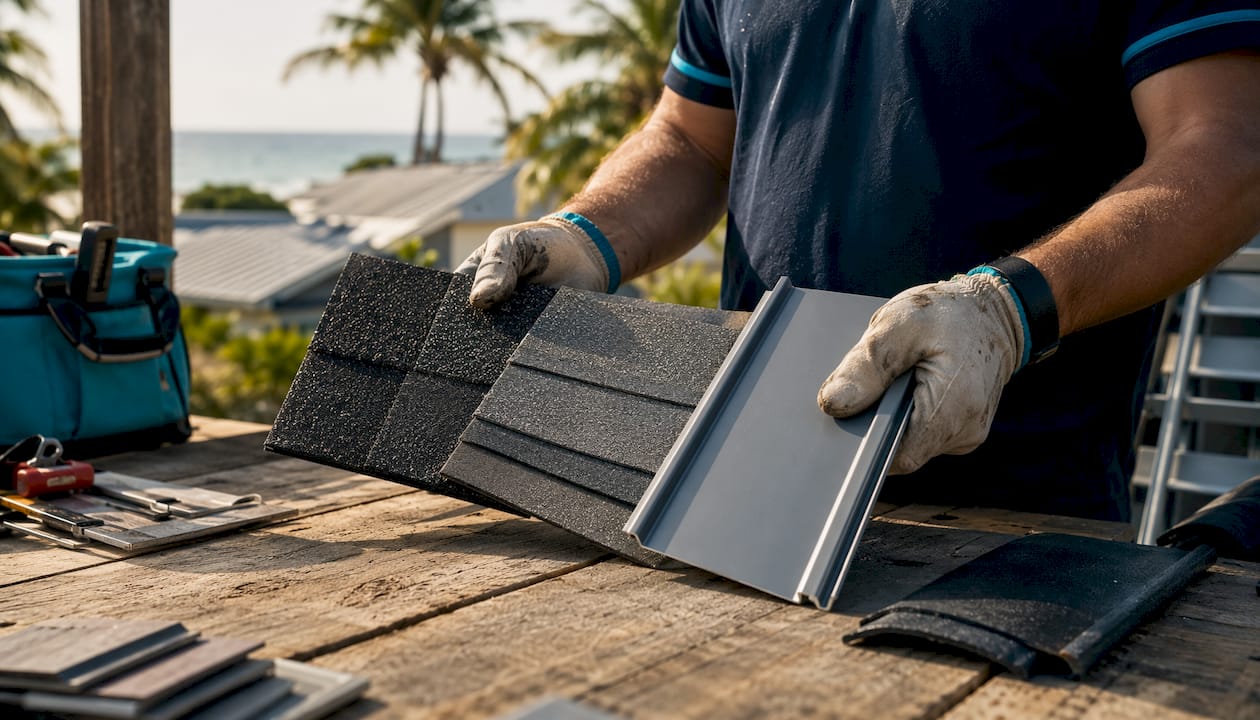
| Material Type | Impact Mechanism | Common Rating | Best Climate Fit |
|---|---|---|---|
| SBS modified asphalt shingles | Flexes to absorb impact energy | Class 3–4 | All climates, especially cold |
| Synthetic composite shingles | Dense polymer layers resist penetration | Class 4 | Hail-prone regions |
| Standing seam metal | Rigid surface deflects impact | Class 4 (varies) | Coastal, high-wind areas |
| Concrete and clay tile | Hard surface resists cracking | Class 3–4 | Warm, dry climates |
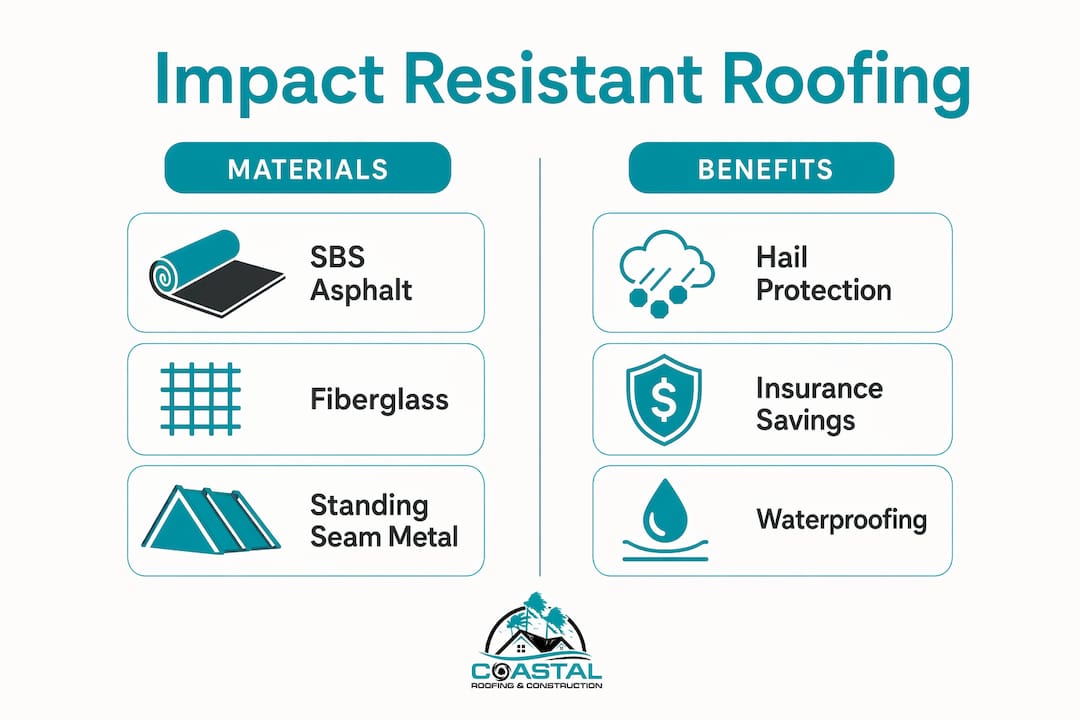
SBS, which stands for Styrene-Butadiene-Styrene, is a rubber-like polymer blended into asphalt shingles during manufacturing. SBS polymer modification keeps shingles flexible enough to absorb a hail strike rather than crack under it. Older asphalt formulations become brittle over time, especially in cold weather, making them far more vulnerable to impact damage. SBS changes that equation significantly.
Reinforced fiberglass mats add a second layer of structural integrity. The mat acts as a skeleton inside the shingle, holding it together even when the surface takes a direct hit. Synthetic composite shingles take a different approach, using dense polymer layers that resist penetration through sheer hardness rather than flexibility.
Metal roofing, particularly standing seam metal, deflects impact energy across its surface rather than absorbing it at a single point. This makes it one of the most durable long-term options for coastal homeowners dealing with both hail and wind-driven debris.
One important caveat: impact resistance preserves the waterproofing barrier during storms, but it does not guarantee zero surface damage. Homeowners should plan for some cosmetic wear after severe storms while trusting that the roof’s structural function remains sound.
Pro Tip: SBS polymers degrade with UV exposure over time. After 15–20 years, even a Class 4 shingle may perform closer to a Class 2 in real-world conditions. Factor this into your replacement timeline.
Is impact resistant roofing worth the cost?
The upfront cost of impact resistant roofing runs 10–50% higher than standard shingles, with total installation costs typically ranging from $7,500 to $11,655 depending on project size, material choice, and regional labor rates. That premium is real, and it deserves honest evaluation.
The financial case for upgrading rests on three factors:
- Insurance discounts: Class 4 rated roofs qualify homeowners for premium discounts of 10–35% depending on the carrier, region, and policy terms. In hail-prone states, those savings compound significantly over a 20-year roof lifespan.
- Reduced repair frequency: Fewer storm-related repairs mean fewer out-of-pocket costs between major replacements. A standard shingle roof in a hail-prone area may require patching every few years. A Class 4 roof dramatically reduces that cycle.
- Longer functional lifespan: Impact resistant materials, particularly metal and SBS-modified shingles, tend to outlast standard asphalt products by several years when properly installed and maintained.
The timing of your upgrade matters more than most homeowners realize. Replacing a healthy roof solely to chase insurance discounts rarely pencils out. The math works best when you are already at or near natural replacement time. If your roof is 15 years old and showing wear, upgrading to a Class 4 product at replacement is a straightforward financial win.
One detail that catches homeowners off guard: insurance carriers often require a cosmetic damage waiver when offering discounts on impact resistant roofs. That waiver means visible dents or granule loss may be excluded from your coverage even though the roof is still functionally sound. Read your policy carefully before signing.
Insurance providers also require official documentation. Vague marketing claims about impact resistance are commonly insufficient to qualify for discounts. You need the actual UL 2218 or FM 4473 certification on file.
How to choose the right impact resistant roof for your home
Selecting the right impact resistant roof type depends on four variables: your local weather risk, your roof’s slope and structure, your insurance carrier’s approved product list, and your budget.
-
Assess your regional hail and storm risk. Florida homeowners face fewer hail events than the Great Plains, but wind-driven debris and hurricane conditions create their own impact demands. Review historical storm data for your county before deciding how much to invest in impact resistance. Coastal Roofing & Construction’s knowledge of Florida storm patterns helps homeowners match the right product to their actual risk profile.
-
Match material to roof slope. Steep-slope roofs work well with SBS modified shingles, synthetic composites, metal panels, and tile. Low-slope or flat roofs require different systems entirely, such as TPO membranes, which have their own impact resistance considerations.
-
Verify the certification, not just the marketing. Ask for the UL 2218 class rating in writing. The growing frequency of severe hail events has driven standardization around UL 2218 and FM 4473, making verified ratings the only reliable benchmark. A product described as “hail resistant” without a class number is not a Class 4 product.
-
Check your insurance carrier’s approved product list. Not every Class 4 product qualifies for discounts with every carrier. Call your insurer before you buy materials. Get the discount eligibility confirmed in writing, not just verbally.
-
Prioritize proper installation. Installation errors can void product ratings and eliminate your insurance discount eligibility entirely. A Class 4 shingle installed incorrectly performs like a standard shingle. Choose a certified contractor who follows manufacturer specifications precisely. For homeowners weighing material options like tile vs. shingle, installation quality is as important as the product itself.
Key Takeaways
Impact resistant roofing earns its value through certified UL 2218 Class 4 ratings, material engineering like SBS polymer modification, and proper installation that preserves both performance and insurance discount eligibility.
| Point | Details |
|---|---|
| Class 4 is the top standard | UL 2218 Class 4 requires passing two strikes from a 2-inch steel ball without cracking. |
| SBS polymer drives flexibility | SBS modified asphalt shingles absorb impact energy rather than crack, outperforming older brittle formulations. |
| Insurance discounts require documentation | Carriers need official UL 2218 or FM 4473 certification; marketing claims alone do not qualify. |
| Upgrade timing matters | The financial case is strongest when replacing a roof already near the end of its natural lifespan. |
| Installation quality is non-negotiable | Improper installation voids product ratings and can eliminate insurance premium discounts entirely. |
What I’ve learned after years of installing impact resistant roofs
The question I hear most often is some version of: “Will this roof survive a hailstorm without any damage?” The honest answer is no, and I think the roofing industry does homeowners a disservice when it implies otherwise.
What a Class 4 roof actually does is protect your home from water intrusion during and after a storm. That is the goal. Cosmetic dents on a metal panel or granule loss on a shingle are real outcomes after a severe hailstorm, even on the best products available. Homeowners who understand this going in make better decisions and feel less blindsided after a storm.
The other thing I tell every homeowner: confirm your insurance discount in writing before the project starts. I have seen homeowners install a certified Class 4 product and then discover their carrier does not recognize that specific product, or that the discount requires a cosmetic damage waiver they were never told about. That conversation needs to happen before the first shingle goes up, not after.
My honest recommendation is to think in decades, not years. A well-installed Class 4 roof on a home in a storm-prone region will pay for its premium many times over through reduced repairs, lower insurance costs, and fewer sleepless nights during hurricane season. The homeowners who regret the upgrade are almost always the ones who rushed into it at the wrong time or skipped the insurance verification step.
— Ryan
Coastal Roofing & Construction installs certified impact resistant roofs in Tampa Bay
Coastal Roofing & Construction specializes in installing UL 2218 Class 4 rated roofing systems for homeowners throughout Pinellas, Hillsborough, and Pasco counties. The team is manufacturer-certified with Owens Corning and GAF, meaning every installation follows the exact specifications required to preserve product ratings and insurance discount eligibility.
Whether you are replacing an aging roof or building a new home on the Gulf Coast, Coastal Roofing & Construction brings local knowledge of Florida’s storm demands to every project. Browse the recent roof replacements in the portfolio to see the quality of work firsthand, or get a personalized consultation on the right impact resistant roof replacement for your home. The right roof, installed correctly, is one of the best investments a Florida homeowner can make.
FAQ
What is a Class 4 impact resistant roof?
A Class 4 roof passes the UL 2218 test, which requires the material to withstand two strikes from a 2-inch steel ball dropped from 20 feet without cracking. It is the highest impact resistance rating available for residential roofing.
Does impact resistant roofing prevent all hail damage?
No. Impact resistant roofing preserves the waterproofing layer during hailstorms but does not prevent all cosmetic damage such as dents or granule loss. Functional roof integrity is maintained even when surface blemishes occur.
How much can I save on insurance with a Class 4 roof?
Homeowners with Class 4 rated roofs can qualify for insurance premium discounts of 10–35%, depending on the carrier, region, and policy terms. Official UL 2218 documentation is required to claim the discount.
What is the best impact resistant roofing material for Florida homes?
Standing seam metal roofing and SBS modified asphalt shingles are both strong choices for Florida’s coastal climate, offering Class 4 ratings and resistance to wind-driven debris. The right choice depends on roof slope, budget, and insurance carrier requirements.
How long does impact resistant roofing last?
Most Class 4 products perform at their rated level for the typical roof lifespan, though SBS polymers can become less flexible after 15–20 years of UV exposure. Proper installation and periodic inspection extend functional performance.