
Energy efficient roofing, known in the industry as “cool roofing,” is defined as any roofing system that reflects solar heat and releases absorbed heat rapidly, reducing the energy needed to cool your home. The U.S. Department of Energy and the EPA both recognize solar reflectance and thermal emittance as the two core performance metrics that determine how well a roof controls heat. ENERGY STAR certification sets specific thresholds for both values, giving homeowners a reliable benchmark when comparing materials. In Florida’s intense sun, the difference between a standard dark shingle and a certified cool roof can translate to hundreds of dollars saved each year. This guide covers energy efficient roofing explained from the science up, so you can make a confident, informed decision.
How do solar reflectance and thermal emittance work in energy efficient roofing?
Solar reflectance and thermal emittance are the two numbers that determine a roof’s real energy performance. Solar reflectance measures the fraction of sunlight a roof bounces back rather than absorbs. A roof with a reflectance of 0.70 reflects 70% of incoming solar radiation. Thermal emittance measures how quickly the roof releases any heat it does absorb back into the atmosphere.
Both values must be high for a roof to perform well. A roof with high reflectance but low emittance still traps heat in the roofing material and transfers it into your attic. High thermal emittance coatings on metal roofing typically measure 0.80–0.90, while bare, unpainted metal measures only 0.05–0.10. That gap explains why a raw metal roof provides far less cooling benefit than a coated or painted one.
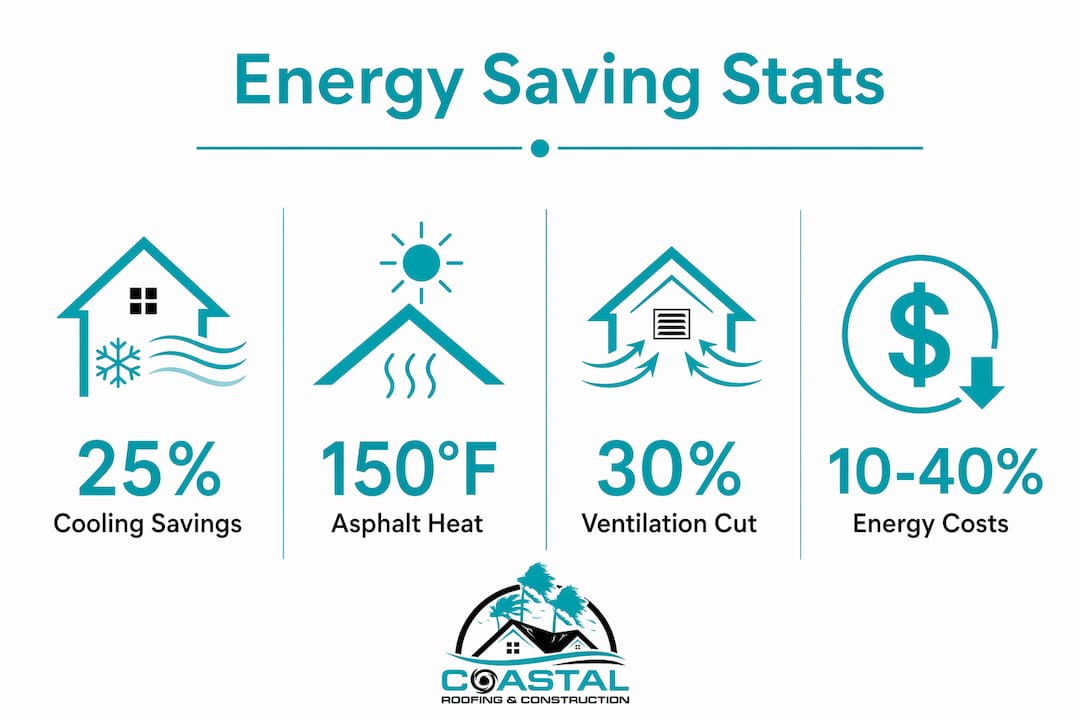
Traditional dark asphalt shingles can reach surface temperatures of 150°F to 170°F on a hot day. Cool roof certified materials reduce those surface temperatures by 50°F to 80°F. Lower surface temperatures mean less heat pushing through your ceiling and less work for your air conditioner.
| Roofing finish | Solar reflectance | Thermal emittance | Cooling benefit |
|---|---|---|---|
| Dark asphalt shingle | 0.05–0.10 | 0.90 | Minimal |
| Cool asphalt shingle | 0.25–0.35 | 0.90 | Moderate |
| Bare metal panel | 0.60–0.70 | 0.05–0.10 | Low (traps heat) |
| Coated/painted metal | 0.25–0.70 | 0.80–0.90 | High |
| White TPO membrane | 0.70–0.80 | 0.90 | Very high |
Pro Tip: When comparing roofing products, ask for the ENERGY STAR label and request both the solar reflectance and thermal emittance values. A high reflectance number alone does not guarantee a cool roof.
What roofing materials and colors are most effective for energy efficiency?
The best material for energy efficient roofing depends on your climate, budget, and design goals. Coated metal, cool asphalt shingles, concrete or clay tile, and TPO membranes all qualify as energy efficient options when they meet ENERGY STAR standards. Each has distinct trade-offs in cost, durability, and appearance.
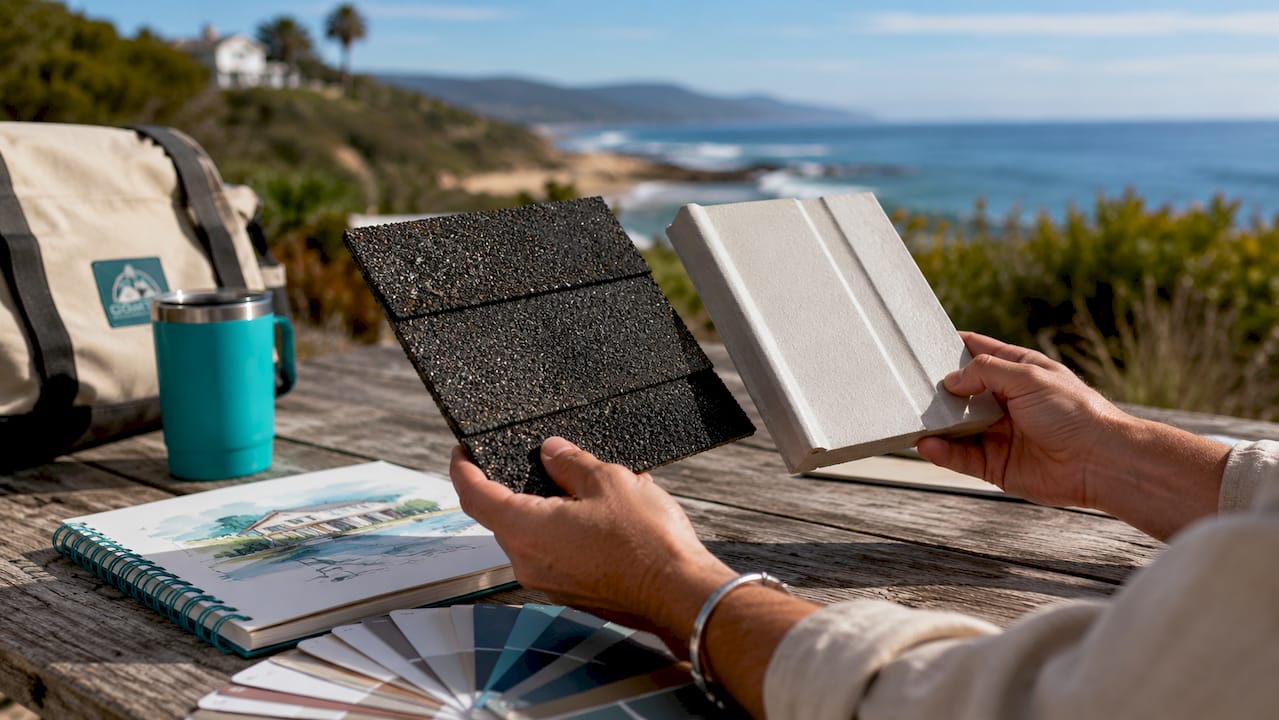
ENERGY STAR certified metal panels achieve solar reflectance values ranging from 25% to 70%, depending on color and coating. Advances in pigment technology now allow mid-tone colors like gray, tan, and even dark green to meet certification thresholds. You no longer have to choose a white or silver roof to get meaningful energy savings.
Here is a breakdown of the most common energy efficient roofing materials:
- Coated metal (standing seam or exposed fastener): High reflectance and emittance when properly coated. Long lifespan, low maintenance, and excellent performance in Florida’s heat. Bare metal without coating performs poorly.
- Cool asphalt shingles: Use special granule coatings to boost reflectance. More affordable upfront than metal. Shorter lifespan than metal or tile but widely available in ENERGY STAR certified options.
- Concrete and clay tile: Naturally high thermal mass slows heat transfer. The air gap beneath tiles adds passive ventilation. A strong performer in hot, sunny climates.
- TPO and reflective flat membranes: The top choice for low-slope and flat roofs. White TPO membranes deliver some of the highest reflectance values available.
Pro Tip: If you prefer a darker roof color for curb appeal, look specifically for products with “cool pigment” technology. These use infrared-reflective pigments that reflect heat even in darker shades, so you can get the look you want without sacrificing performance.
Color choice matters more than most homeowners realize. A light-colored roof reflects more visible light, but the real gains come from reflecting near-infrared radiation, which carries the majority of the sun’s heat energy. Cool pigment technology targets that infrared spectrum specifically, which is why a dark cool-pigment shingle can outperform a standard medium-gray shingle.
How does climate influence energy efficient roofing performance?
Cool roofs deliver the greatest savings in hot, sun-intense climates. Florida homeowners see the strongest return because the cooling season is long, solar intensity is high, and air conditioning accounts for a large share of annual energy costs. Reflective metal roofing can reduce cooling costs by up to 20% under typical conditions, and roofing affects approximately 35% of household energy use through heating and cooling combined.
The picture changes in colder climates. In northern states, a highly reflective roof can actually increase annual energy costs by blocking beneficial solar heat gain in winter. That increased heating load can offset the summer cooling savings. Cool roofs in mixed climates require careful analysis before installation.
| Climate type | Cooling savings | Heating impact | Overall recommendation |
|---|---|---|---|
| Hot, sunny (Florida, Texas) | High | Minimal | Strong fit for cool roofing |
| Mixed (mid-Atlantic, Midwest) | Moderate | Moderate increase | Evaluate case by case |
| Cold (northern states, Canada) | Low | Significant increase | Prioritize insulation over reflectance |
Florida homeowners comparing tile vs. shingle roofing will find that both can meet ENERGY STAR standards, but the long cooling season makes the performance gap between certified and non-certified products more financially significant here than almost anywhere else in the country.
What installation practices maximize energy efficiency benefits?
Material selection is only half the equation. The way a roof is installed determines how much of its rated performance you actually capture. Attic ventilation and insulation are the two most critical installation factors, and both are frequently overlooked during a standard roof replacement.
Above-sheathing ventilation can reduce heat flow into a building by nearly 30%. This technique creates an air gap between the roofing material and the roof deck, allowing hot air to escape before it reaches the attic. Metal roofing systems with raised seams naturally create this gap, which is one reason standing seam metal performs so well in hot climates.
Understanding why attic ventilation matters goes beyond just the roof surface. A well-ventilated attic stays cooler, reduces moisture buildup, and extends the life of both the roofing material and the insulation below it.
Common installation mistakes that reduce energy efficiency:
- Skipping attic air sealing: Air leaks between conditioned space and the attic transfer heat directly, regardless of roof reflectance.
- Inadequate insulation depth: The DOE recommends pairing reflective roofing with proper thermal barriers. Without adequate insulation, even a top-rated cool roof underperforms.
- Blocking soffit vents during installation: Contractors sometimes cover soffit vents with insulation or debris, cutting off the airflow that makes ventilation work.
- Installing coated metal over existing shingles: Layering adds weight and traps heat between materials, reducing the ventilation benefit.
A roof replacement is the best opportunity to address attic insulation and ventilation at the same time. Coordinating both projects reduces labor costs and produces better energy results than tackling them separately.
What are the real energy cost savings for homeowners?
The financial case for energy efficient roofing is strongest in hot climates. Cool metal roofs can reduce summer cooling costs by 10% to 25%, with savings reaching up to 40% in homes with specific characteristics like large roof area, poor existing insulation, or high sun exposure. Typical annual savings range from $450 to $1,800 depending on home size, local utility rates, and the roofing system installed.
Those numbers assume the roof is paired with adequate attic insulation and ventilation. A reflective roof on a poorly insulated attic still saves money, but it leaves a significant portion of its potential savings unrealized. The combination of a certified cool roof, proper insulation, and above-sheathing ventilation produces the highest return.
Beyond the utility bill, energy efficient roofing carries environmental benefits. Reduced air conditioning demand lowers a home’s carbon emissions. Cool roofs also reduce the urban heat island effect, which lowers ambient temperatures in dense neighborhoods. For homeowners pursuing green building certifications or simply reducing their environmental footprint, the roof is one of the highest-impact upgrades available.
Lifecycle cost matters as well. Metal roofing, for example, carries a higher upfront cost than asphalt shingles but lasts two to three times longer. When you factor in reduced cooling costs over a 40-year lifespan, the total cost of ownership often favors metal. Calculating your personalized savings starts with your current cooling bill, your roof’s square footage, and the solar reflectance value of the material you are considering.
Key Takeaways
Energy efficient roofing reduces cooling costs most effectively when high solar reflectance, high thermal emittance, proper attic ventilation, and adequate insulation work together as a system.
| Point | Details |
|---|---|
| Both metrics matter | Solar reflectance and thermal emittance must both be high; one without the other limits performance. |
| Climate drives ROI | Florida and other hot-climate states see the strongest savings; cold climates require careful evaluation. |
| Installation is half the job | Above-sheathing ventilation reduces heat flow by nearly 30%; attic insulation amplifies every roofing upgrade. |
| Coated metal leads in performance | Painted or coated metal achieves reflectance of 25%–70% and emittance of 0.80–0.90, outperforming bare metal significantly. |
| Savings are real and measurable | Annual cooling cost reductions of $450 to $1,800 are typical for certified cool roofs in hot climates. |
What I’ve learned after years of roofing in Florida’s heat
The most common mistake I see homeowners make is treating roofing as a single-variable decision. They pick a reflective material, expect dramatic savings, and then wonder why their utility bills barely moved. The roof surface is only one layer of a system. If the attic below it is poorly ventilated or under-insulated, the reflective roof is doing its job but the heat is still finding its way in through the ceiling.
The second misconception I run into constantly is that metal roofs trap heat. Bare metal does. Coated metal does the opposite. High emissivity coatings allow metal roofs to dissipate heat effectively, which is exactly why standing seam metal is one of the top performers in Florida’s climate. The material itself is not the issue. The coating and installation method are what determine real-world performance.
My honest advice: if you are replacing a roof in Tampa Bay or anywhere along Florida’s Gulf Coast, treat the project as a whole-home energy upgrade. Get the attic inspected at the same time. Address ventilation and insulation before or during the roof installation. The incremental cost is small compared to the additional savings you capture over the life of the roof.
Homeowners who focus only on upfront cost almost always regret it within five years. The ones who evaluate total cost of ownership, including energy savings, maintenance, and lifespan, consistently choose better materials and get better results. A reflective roofing system is not a luxury upgrade in Florida. It is the practical choice.
— Ryan
Coastal Roofing & Construction: energy efficient roofing for Tampa Bay homes
Coastal Roofing & Construction installs energy efficient roofing systems built specifically for Florida’s demanding climate, from ENERGY STAR certified standing seam metal to cool asphalt shingles and tile roofing.

The team at Coastal Roofing & Construction is manufacturer-certified with Owens Corning, GAF, and Tri County Metals, which means every installation meets the performance standards those certifications require. Whether you are replacing an aging shingle roof or investing in a premium metal roofing system, Coastal Roofing & Construction will match the right material to your home, your climate, and your energy goals. Visit the residential metal roof installation page to learn more or request a consultation.
FAQ
What is the difference between solar reflectance and thermal emittance?
Solar reflectance measures how much sunlight a roof reflects, while thermal emittance measures how quickly it releases absorbed heat. Both values must be high for a roof to qualify as energy efficient.
How much can an energy efficient roof save on cooling costs in Florida?
Cool metal roofs can reduce summer cooling costs by 10% to 25% in hot climates, with some homes saving up to 40% depending on roof area, insulation, and sun exposure.
Does a metal roof make a home hotter in Florida?
Coated or painted metal roofs do not trap heat. High emissivity coatings give metal roofs thermal emittance values of 0.80–0.90, allowing them to release absorbed heat rapidly and outperform most other roofing materials in hot climates.
What ENERGY STAR certification means for roofing products?
ENERGY STAR certified roofing products meet specific solar reflectance and thermal emittance thresholds set by the EPA, giving homeowners a verified benchmark for comparing energy performance across materials and colors.
Does attic ventilation really affect roofing energy efficiency?
Above-sheathing ventilation can reduce heat flow into a building by nearly 30%. Without proper attic ventilation and insulation, even a top-rated reflective roof will underperform its rated energy savings.