
Flat roof replacement is defined as the full removal and reinstallation of a roofing membrane system on a low-slope or nearly level roof surface. Florida homeowners face a unique challenge: the state’s heat, humidity, and hurricane season put flat roofing materials under stress that most other climates never produce. This flat roof replacement options guide covers the five most common membrane types, what each costs, and the installation and maintenance practices that determine whether your new roof lasts 15 years or 40. Coastal Roofing & Construction installs TPO, modified bitumen, and standing seam metal systems across the Tampa Bay area, and the material differences matter more here than almost anywhere else in the country.
What are the common flat roofing materials for Florida homes?
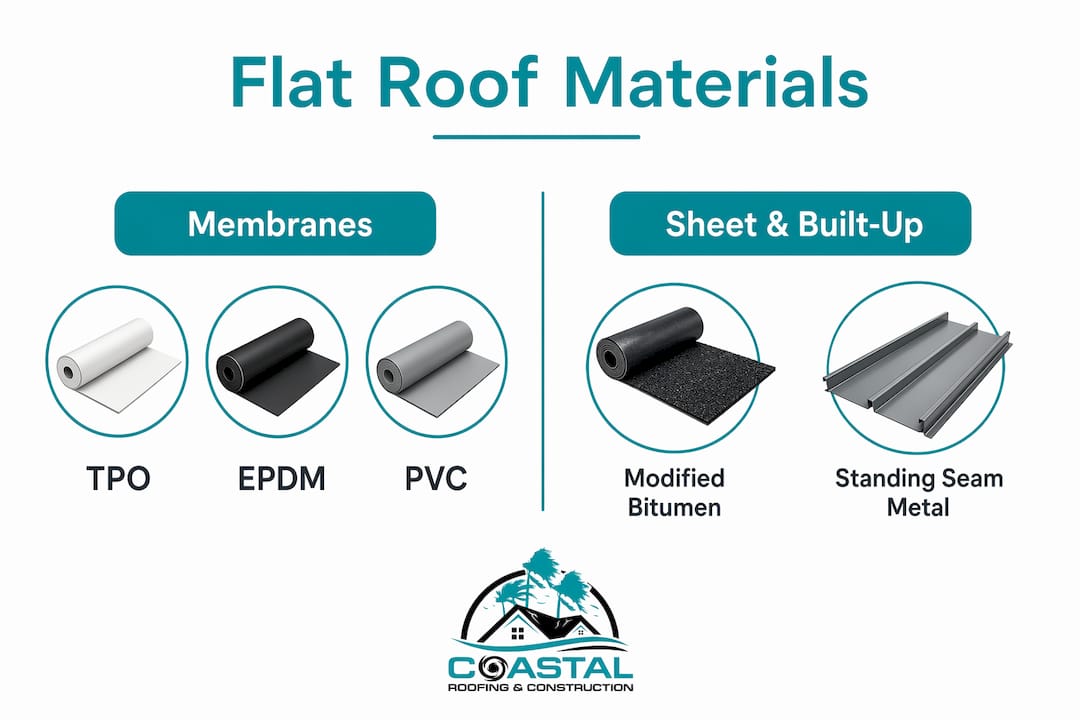
The best flat roof options for Florida homeowners are TPO, EPDM, PVC, modified bitumen, and standing seam metal. Each has a distinct performance profile, and no single membrane wins every category.
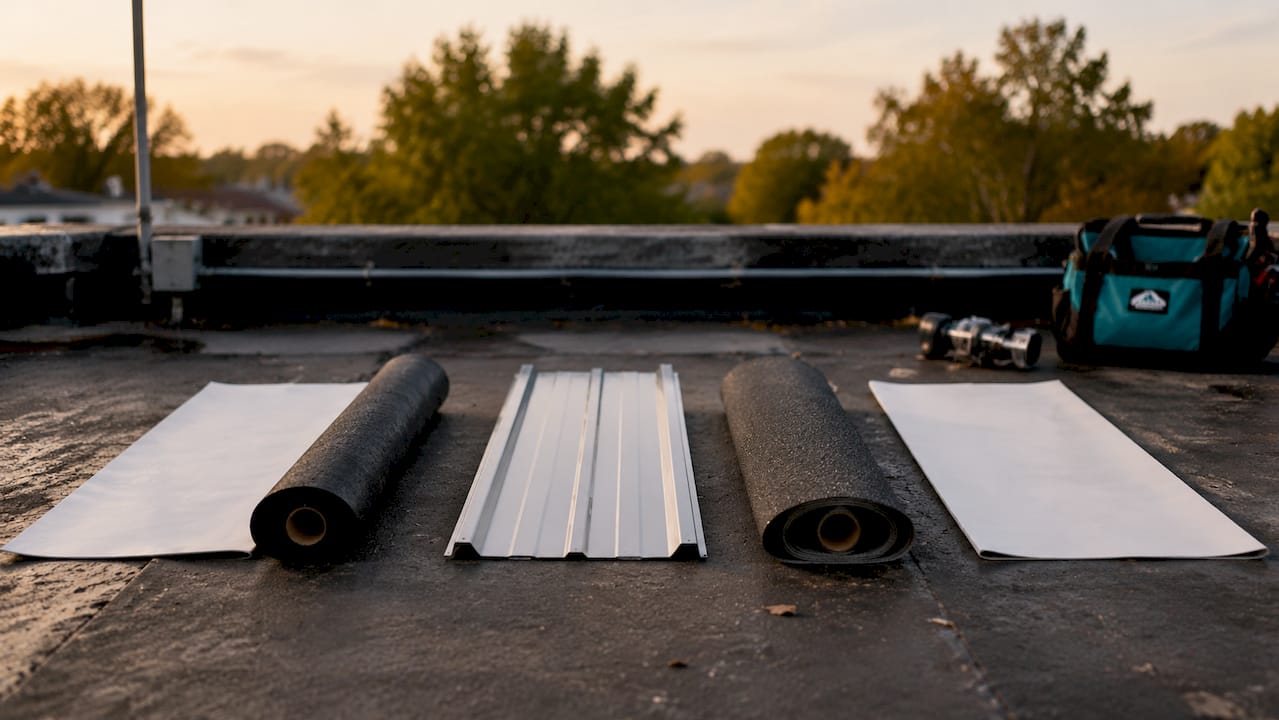
TPO: the heat-reflective standard
TPO is the most widely installed flat roof membrane in both commercial and residential applications. Its white reflective surface reduces heat absorption, which directly lowers cooling costs during Florida’s long summers. TPO costs $5.50–$9.00 per square foot and carries a typical lifespan of 20–30 years. Heat-welded seams make the joints stronger than the membrane itself, which matters in a state where wind-driven rain tests every seam during hurricane season.
EPDM: proven track record, limited heat performance
EPDM rubber roofing has over 40 years of field data behind it, making it one of the most tested flat roofing materials available. It costs $4.50–$8.00 per square foot and performs well in cold climates due to superior flexibility. In Florida, EPDM’s dark surface absorbs heat rather than reflecting it, which increases cooling loads. Homeowners who choose EPDM in Tampa Bay should factor that energy cost into the total ownership calculation.
PVC: chemical resistance at a premium price
PVC roofing lifespan typically exceeds 30 years and costs $7.00–$12.00 per square foot. PVC offers high chemical resistance, which makes it the right call for buildings with rooftop HVAC equipment or any chemical exposure. Like TPO, PVC uses heat-welded seams that are stronger than the membrane. The higher upfront cost is the main barrier for residential applications.
Modified bitumen: walkable and affordable
Modified bitumen is a multi-layer asphalt and polymer system that lasts around 15–20 years. It handles foot traffic better than single-ply membranes, which makes it practical for flat roofs that double as accessible outdoor areas. The moderate cost and straightforward installation process make it a common choice for garages, porches, and smaller residential flat roofs. Its darker surface does absorb more heat, so it is less efficient than TPO in Florida’s climate.
Standing seam metal: the long-term investment
Standing seam metal roofs last 40–70 years and cost $10–$18 per square foot. Metal reflects sunlight and resists corrosion, making it well suited to Florida’s coastal environment. The upfront cost is the highest of any flat roofing material, but the lifespan math often favors metal when you account for fewer replacements over a 40-year period. Coastal Roofing & Construction holds factory certifications with Tri County Metals, which supports precision installation on standing seam systems.
Pro Tip: Florida’s climate demands heat reflection and wind resistance above all else. TPO and standing seam metal both check those boxes. If budget is the primary constraint, TPO delivers the best performance-to-cost ratio for most Florida residential flat roofs.
How do flat roof replacement costs vary in Florida?
A flat roof replacement in Florida typically costs $4,500–$15,000 for a standard residential project, depending on material, roof size, and complexity. That range is wide because the variables compound quickly.
Key cost factors beyond material price
Permit requirements in Florida counties add both time and cost to any replacement project. Hillsborough, Pinellas, and Pasco counties each have their own inspection processes, and skipping permits creates liability problems at resale. Roof deck condition is the second major variable. If the existing deck shows rot or structural damage, repairs add cost before the new membrane goes down. Roof penetrations, including HVAC curbs, vents, and skylights, each require custom flashing work that increases labor hours.
Roof size drives total cost more than any single line item. A 1,000-square-foot flat roof at $7.00 per square foot for TPO costs $7,000 in material alone before labor, permits, or disposal fees. Accessibility also affects labor pricing. A flat roof over a second-floor addition costs more to work on than a ground-level garage roof.
Pro Tip: Get at least three written estimates before committing. Ask each contractor to break out material cost, labor, permit fees, and disposal separately. A single lump-sum bid makes it impossible to compare proposals accurately.
The Tampa Bay roof replacement guide from Coastal Roofing & Construction walks through local permit requirements and typical project timelines for homeowners in Pinellas, Hillsborough, and Pasco counties.
What best practices should Florida homeowners follow when replacing flat roofs?
Installation quality impacts roof performance more than the membrane material itself. A skilled installer familiar with the specific roofing system produces better longevity than premium materials installed by someone unfamiliar with the system.
Verify contractor credentials before signing anything
Florida requires roofing contractors to hold a state license. Verify the license number through the Florida Department of Business and Professional Regulation before signing any contract. Confirm the contractor carries general liability insurance and workers’ compensation coverage. Manufacturer certifications matter too. Coastal Roofing & Construction holds certifications with Owens Corning, GAF, and Tri County Metals, which allows access to extended manufacturer warranties that unlicensed installers cannot offer.
Installation details that determine lifespan
Seam welding is the most critical installation step for TPO and PVC systems. Improperly welded seams fail under wind uplift and water infiltration long before the membrane itself degrades. Flashing around penetrations and at roof edges is the second most common failure point. Proper slope is the third factor. Florida’s building code requires a minimum slope on flat roofs to prevent ponding water, which accelerates membrane deterioration.
- Confirm the contractor has installed the specific membrane type you are purchasing, not just “flat roofs” in general.
- Ask to see completed projects and contact references from jobs done at least three years ago.
- Request a written warranty that covers both materials and labor, not just the membrane manufacturer’s product warranty.
- Verify that the installation plan includes proper flashing at all penetrations, edges, and transitions.
- Schedule a post-installation inspection within 30 days to catch any seam or flashing issues before they become leaks.
Florida’s hurricane resistant roofing requirements add another layer of complexity. Materials with reflective surfaces like TPO reduce cooling costs, while metal roofing offers superior wind resistance for coastal properties.
Pro Tip: Never schedule a flat roof replacement between june and november if you can avoid it. Florida’s hurricane season creates scheduling pressure and material delays. A roof installed in a rush during storm season is more likely to have seam or flashing defects.
How do you know when to replace versus repair your flat roof?
Persistent leaks, visible membrane deterioration, and increased maintenance frequency are the three clearest signs that replacement is the right call. Repairs make sense when damage is isolated to a small area and the surrounding membrane is structurally sound.
The repair-versus-replace decision comes down to membrane age and damage extent. A modified bitumen roof at 18 years with multiple leak points across different areas of the surface is past the point where repairs deliver value. A TPO roof at 10 years with a single failed seam near a penetration is a strong candidate for targeted repair.
Florida’s climate accelerates the timeline. UV exposure, heat cycling, and hurricane-force wind events degrade membranes faster than in northern states. Professional inspections every 2–3 years help identify replacement timing before damage escalates to the roof deck or interior structure.
Signs that point clearly to replacement rather than repair:
- Membrane blistering or bubbling across more than 25% of the roof surface
- Ponding water that remains 48 hours after rainfall, indicating drainage failure
- Interior water stains in multiple rooms after a single rain event
- Membrane age beyond the manufacturer’s rated lifespan
- Visible cracking or shrinkage at seams and edges
Plan replacement projects for the dry season, between december and april, to avoid scheduling conflicts with storm damage repair crews. Roofing contractors across the Tampa Bay area book out quickly after major weather events, and waiting until after hurricane season to address a failing roof is a risk that rarely pays off.
Key Takeaways
The right flat roof material for a Florida home is determined by climate performance, budget, and contractor expertise, not brand name or thickness alone.
| Point | Details |
|---|---|
| TPO leads for Florida heat | TPO’s reflective surface and heat-welded seams make it the top value choice for Florida’s climate. |
| Metal roofing lasts longest | Standing seam metal lasts 40–70 years and resists corrosion in coastal environments. |
| Installation quality is decisive | Mediocre materials installed by experts outperform premium materials installed poorly. |
| Inspect every 2–3 years | Regular professional inspections catch replacement timing before interior damage occurs. |
| Plan outside hurricane season | Schedule replacement between december and april to avoid storm-season delays and rushed installs. |
What I’ve learned after years of flat roof work in Florida
The most common mistake I see Florida homeowners make is choosing a material based on price per square foot without asking who is installing it. I’ve watched a well-specified TPO system fail in under five years because the installer had no experience with heat-welding equipment. I’ve also seen a 22-year-old modified bitumen roof still performing because the original contractor was meticulous about flashing and slope.
The roofing industry does a poor job of communicating this. Marketing focuses on membrane specs and warranty years, but the installer’s proficiency with a specific system matters more than any product data sheet. Proper seam welding and flashing installation are skills that take years to develop, and not every contractor who offers flat roofing has actually mastered them.
My honest advice: spend as much time vetting the contractor as you do comparing materials. Ask for references from flat roof jobs specifically, not just general roofing work. Florida’s climate is unforgiving, and a flat roof installed without the right technique will show its weaknesses within two to three years. The upfront savings from hiring an underqualified crew disappear fast when you’re paying for emergency repairs after the first hurricane season. You can find qualified roofing professionals through industry directories and resources like Vaultio’s roofing network, which connects homeowners with vetted contractors in their area.
— Ryan
Coastal Roofing & Construction’s flat roof services for Tampa Bay homeowners
Coastal Roofing & Construction specializes in flat roofing systems built for Florida’s coastal environment, including TPO membrane systems and standing seam metal roofing across Pinellas, Hillsborough, and Pasco counties.

Every project starts with a thorough inspection and an honest assessment of whether repair or full replacement is the right call. The team holds manufacturer certifications with Owens Corning, GAF, and Tri County Metals, which means extended warranties are available on qualifying installations. Browse completed flat roof projects to see the quality of workmanship firsthand, or visit the residential roof replacement page to request a free estimate for your home.
FAQ
What is the best flat roof material for Florida homes?
TPO is the most widely recommended flat roof membrane for Florida due to its heat-reflective surface and strong heat-welded seams. Standing seam metal is the best long-term option, with a lifespan of 40–70 years and superior wind resistance for coastal properties.
How much does flat roof replacement cost in Florida?
A residential flat roof replacement in Florida typically costs $4,500–$15,000 depending on material, roof size, and project complexity. TPO runs $5.50–$9.00 per square foot, while standing seam metal costs $10–$18 per square foot.
How often should a flat roof be inspected in Florida?
Professional inspections every 2–3 years are the standard recommendation for Florida flat roofs. Florida’s UV exposure and hurricane season accelerate membrane wear, so catching issues early prevents costly interior damage.
When does a flat roof need replacement instead of repair?
Replacement is the right call when membrane blistering, persistent leaks, or ponding water affect a large portion of the roof surface, or when the membrane has exceeded its rated lifespan. Isolated seam failures on a younger roof are strong candidates for targeted repair.
Does Florida require permits for flat roof replacement?
Florida requires permits for full roof replacements in all counties, including Hillsborough, Pinellas, and Pasco. Skipping permits creates liability at resale and may void manufacturer warranties on the new membrane system.