
For Florida tile roofs, the priority list is short: keep edge and ridge tiles securely anchored, check flashing and underlayment for hidden failure, and replace broken tiles fast. The TRI Alliance and Florida Hurricane Retrofit Guide both point to the same weak spots. Get a professional inspection every two to three years, and always after a major storm, especially if you spot loose tiles near an eave or ridge.
TL;DR:
- Regular inspections should occur every two to three years and after major storms, focusing on ridges, eaves, and flashing to catch early damage.
- Moving or walking on wet tile is dangerous; roof-walking should be reserved for trained professionals who use proper safety measures.
- Promptly replace broken or cracked tiles and clean debris from valleys and gutters to prevent water damage and underlayment rot.
- Attic checks are crucial, as water stains and insulation issues often reveal more than exterior tile inspections, highlighting the importance of detailed documentation.
- Only licensed, certified contractors with proper documentation should perform repairs, especially when reusing tiles or working in wind-borne debris regions.
Table of Contents
- What Should You Inspect on a Florida Tile Roof?
- How Often Should You Maintain a Tile Roof in Florida?
- What Should You Do After a Storm Hits Your Roof?
- When Should You Call a Roofing Professional?
- Safety, Code, and Warranty Rules Florida Homeowners Should Know
- Why Documentation and Attic Checks Are Non-Negotiable
- Get a Local Tile Roof Inspection Built for Florida Storms
- Sources
- FAQ
What Should You Inspect on a Florida Tile Roof?
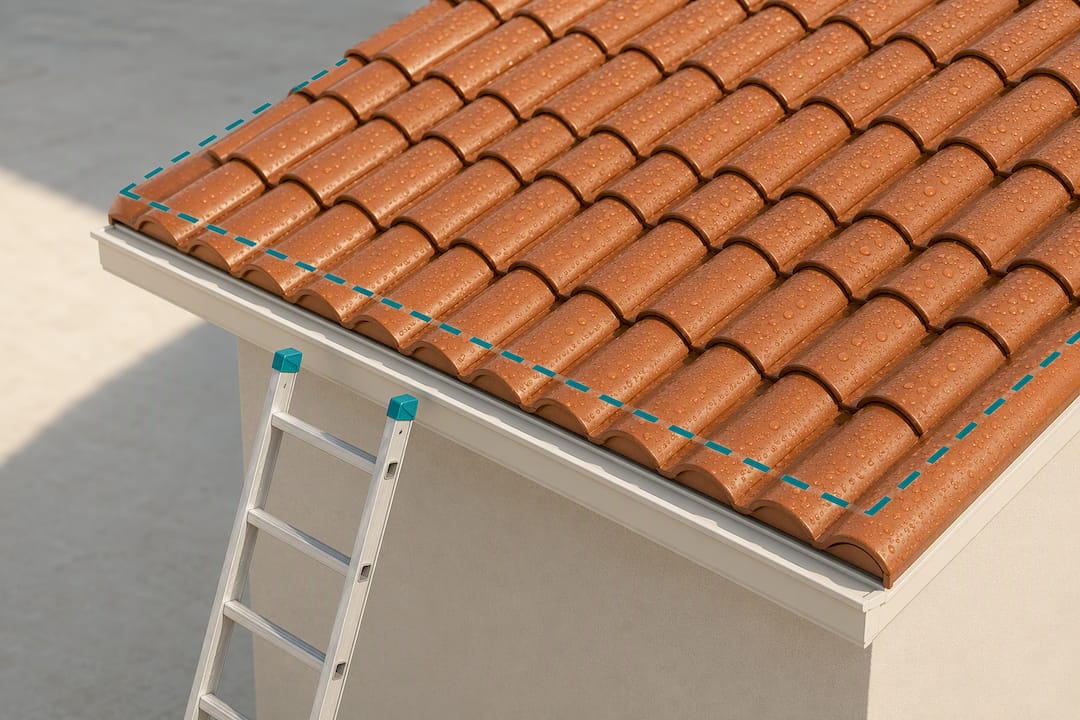
Start from a ladder, not the roof deck. The Florida Hurricane Retrofit Guide specifically recommends checking for cracked, broken, or loose tiles from the ladder edge, because ridges, gable edges, and eaves are where wind uplift does the most damage first. A few displaced tiles in these spots can mean the whole anchoring system is compromised, even if the rest of the field looks fine.
A real inspection covers more ground than the visible tile surface. According to the Florida Hurricane Retrofit Guide’s re-roofing checklist, you need to have eyes on:
- Ridge and hip caps, plus valleys where water concentrates
- Flashing around walls, chimneys, vents, skylights, and any solar panel penetrations
- Gutters and downspouts for clogs that back water up under tile courses
- The attic, checking for staining, wet insulation, or daylight where there shouldn’t be any
That attic check matters more than most homeowners realize. Underlayment failure often shows up as a water stain on the decking long before a single tile looks out of place. While you’re up there, look at how the deck was fastened. Straight lines of larger nails or screws between the rafters usually mean tiles are mechanically attached, a stronger setup than the older mortar-set method that tends to fail first in high wind.
One safety rule overrides everything else: never walk tile when it’s wet. Tile is slick and brittle underfoot, and TRI Alliance guidance is blunt about leaving roof-walking to trained professionals.
How Often Should You Maintain a Tile Roof in Florida?
TRI Alliance sets a clear cadence: get a professional inspection two years after installation, then every two to three years after that, plus a check after any major storm. Stick to that schedule and most tile roof problems get caught while they’re still cheap fixes.
- Clean algae and mildew growth. These organisms feed on the organic film that builds up on tile, not the tile itself, so a cleaning removes the growth without stripping a protective layer. Professional cleaning is worth the cost, and expect to repeat it every few years since there’s no permanent coating that stops regrowth.
- Clear debris from valleys and gutters. Leaves and pine needles trap water against the underlayment, and standing water is what eventually rots it out.
- Replace broken or cracked tiles right away. Small chips under three inches might be salvageable, but let a professional make that call rather than guessing.
- Recoat concrete tile only through an experienced applicator. Recoating is a legitimate maintenance step, but it has to follow the tile manufacturer’s own guidance, or you risk trapping moisture instead of protecting the surface.
Pro Tip: Snap dated photos of your roof from the ground every hurricane season. Comparing them year over year makes it obvious when a tile has shifted, even if the change is too subtle to notice from memory alone.
What Should You Do After a Storm Hits Your Roof?
Photograph everything before you touch anything. The Florida Hurricane Retrofit Guide’s post-storm guidance is direct: document damage, check the attic for new moisture, and avoid moving tiles yourself until a professional has assessed the attachment underneath.
Focus your attention where failures cluster:
- Eaves, ridges, and hip tiles first. These fail more often than the main field in Florida wind events.
- Flashing seams around penetrations, which loosen under repeated gusts.
- Valleys and gutters, cleared only if you can do it safely from the ground or a stable ladder.
- Attic moisture, since a leak often shows up inside before it’s visible outside.
Mortar-set tile is the weak link here. Florida guidance notes that mortar-set systems tend to perform worse in hurricanes than mechanically fastened or adhesive systems. A common retrofit fix attaches a wood or metal board along the ridge, then mechanically fastens or adhesive bonds the tiles to that board using approved two-part expanding adhesives or clips. Done correctly, that upgrade cuts tile loss risk substantially in the next storm.
Keep your insurance adjuster in the loop early, and let your contractor confirm whether the repair needs a permit before work starts.
When Should You Call a Roofing Professional?
Certain signs mean stop inspecting and start calling. Loose edge or ridge tiles, attic moisture, compromised flashing, or any sign of tile uplift all point to a professional job, not a weekend project.
Before hiring anyone, ask for:
- An active license and current insurance, no exceptions
- Manufacturer certifications and proof of factory training on tile systems
- References or past project examples specific to tile roofing
- A written scope that names the underlayment type and attachment method
- Attic photos and ladder-edge photos as part of the inspection report, per the detailed re-roofing guidance recommending component-level documentation
A component-by-component report protects you two ways. It tells you exactly what’s wrong, and it gives you a paper trail if a warranty dispute comes up later. Improper repairs from an unlicensed installer can void an existing manufacturer warranty, so if your roof is still under one, contact the original installer first. Manufacturer certifications and factory-trained crews reflect the standard homeowners should expect from any contractor working on a tile system.
Safety, Code, and Warranty Rules Florida Homeowners Should Know
Avoid walking tile whenever you can. When a professional does need to walk the roof, TRI Alliance guidance calls for stepping on the headlap, or using plywood or roof pads to spread out the weight.
- Repairing damaged components doesn’t automatically trigger Florida’s 25 percent reroofing rule, according to Florida Building Code staff analysis DS 2020-022.
- Salvaged or used tiles can only go back on a roof with building official approval and product-approval compliance.
- Permits and any Wind-Borne Debris Region or county product-approval rules are the contractor’s responsibility to secure, not yours.
- Confirm with your contractor whether third-party repair work affects an existing installation warranty before signing off.
Why Documentation and Attic Checks Are Non-Negotiable
A tile roof can look flawless from the driveway while the underlayment underneath is already failing. That’s the disconnect homeowners underestimate most. Surface tile is cosmetic protection; the real waterproofing happens in layers you can’t see without getting into the attic or pulling a few tiles.
Insist on attic access and close-up photos every single time, not just when something looks wrong. A report that only says “roof looks good” tells you nothing about attachment method or underlayment condition.
— Ryan
Get a Local Tile Roof Inspection Built for Florida Storms
Some roofing companies provide manufacturer-certified, factory-trained crews who know the difference between a mortar-set tile system and a mechanically anchored one before they climb the ladder.

That distinction changes how a repair gets scoped, and it’s exactly the kind of detail that shows up in the attic photos and component reports this article recommends requesting from any contractor. Coastal Roofing & Construction handles tile roof inspections, flashing replacement, storm damage restoration, and preventative maintenance across Pinellas, Hillsborough, and Pasco counties, including Clearwater, St. Petersburg, Tampa, and the surrounding Gulf Coast communities. If your last inspection turned up loose ridge tiles or you just want a clean attic-to-eave report before hurricane season, schedule a tile roofing evaluation and get a written scope before any work starts.
Sources
- Tile roofs — Florida Hurricane Retrofit Guide
- TRI Alliance maintenance protocol for concrete and clay roof tile
- Florida Building Code — DS 2020-022 staff analysis on repairs and product approval
FAQ
How Often Should I Inspect My Florida Tile Roof?
Get a professional inspection two years after installation, then every two to three years afterward, following TRI Alliance guidance. Add an extra inspection any time a major storm passes through your area, regardless of where you are in that cycle.
Can I Walk on My Tile Roof to Inspect It?
Avoid it if at all possible, and never step on wet tile. TRI Alliance recommends leaving roof-walking to trained professionals who know to step on the headlap or use plywood and roof pads to distribute weight safely.
What Are the First Signs of Tile Roof Damage in Florida?
Loose or displaced tiles at ridges, eaves, and gable edges are the earliest warning signs, according to the Florida Hurricane Retrofit Guide. Attic staining or wet insulation is often the first sign underlayment has already failed, even before any tile looks out of place.
Does Florida Code Require a Permit for Tile Roof Repairs?
Permit requirements depend on the scope of the repair, and a licensed contractor should confirm what applies to your project. Repairing damaged components doesn’t automatically trigger the 25 percent reroofing rule under DS 2020-022, but reusing salvaged tiles needs building-official approval.
How Much Does Tile Roof Maintenance Cost in Florida?
Costs vary based on the scope of cleaning, tile replacement, or flashing repair a roof needs. Coastal Roofing & Construction’s current pricing for tile roofing services is available on request through a scheduled inspection.