
A roofing contract is a legally binding written agreement that defines every aspect of your roofing project, from materials and labor to payment terms and warranties. Most residential roofing contracts run 1–3 pages and serve as your primary legal protection if anything goes wrong. Without one, you have no enforceable record of what was promised. Understanding how roofing contracts work explained in plain terms gives you the confidence to sign with clarity, not guesswork. Coastal Roofing & Construction provides every homeowner with a detailed written contract before a single shingle is touched, because transparency is the foundation of every successful project.
How roofing contracts work explained: the essential components
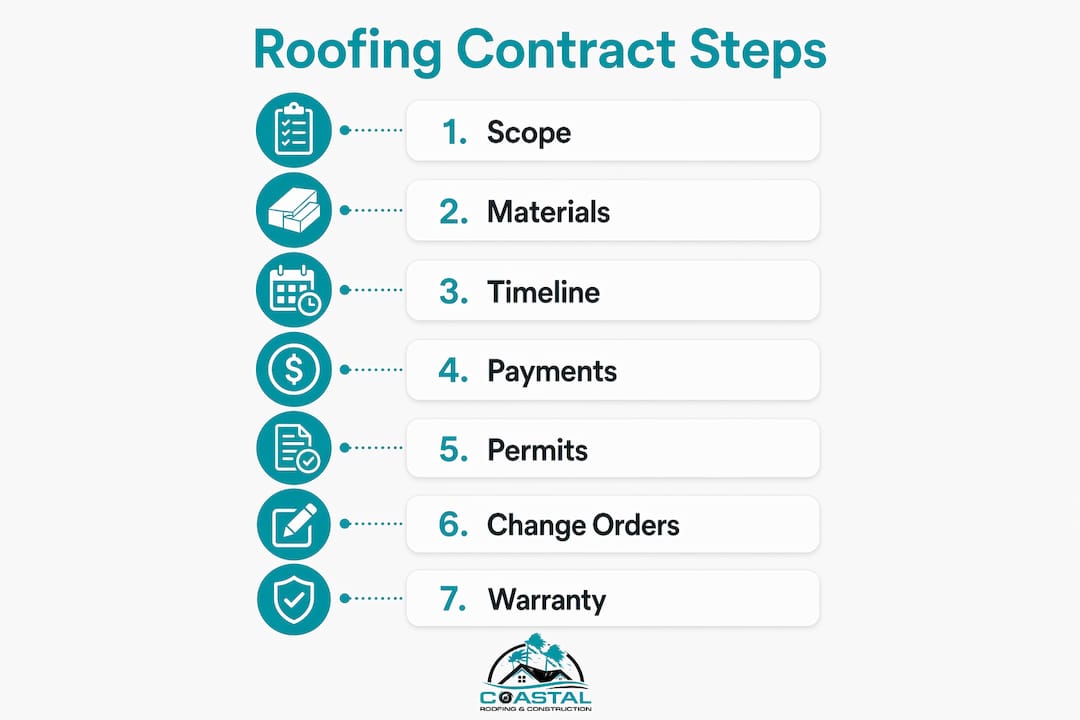
A complete roofing contract covers eight core areas: scope of work, material specifications, timeline, pricing and payment schedule, permit responsibilities, debris removal, change order process, and warranty terms. Each section exists to prevent a specific type of dispute. Miss one, and you create an opening for misunderstanding or financial loss.
Scope of work
The scope of work is the most critical section in any roofing agreement. A thorough scope restates every task the contractor will perform, including tear-off, decking replacement, ice and water protection, underlayment, shingle brand and color, flashing, ventilation, and cleanup. Vague language like “replace roof” invites disputes that almost always favor the contractor. Demand specifics in writing before you sign.
Material specifications
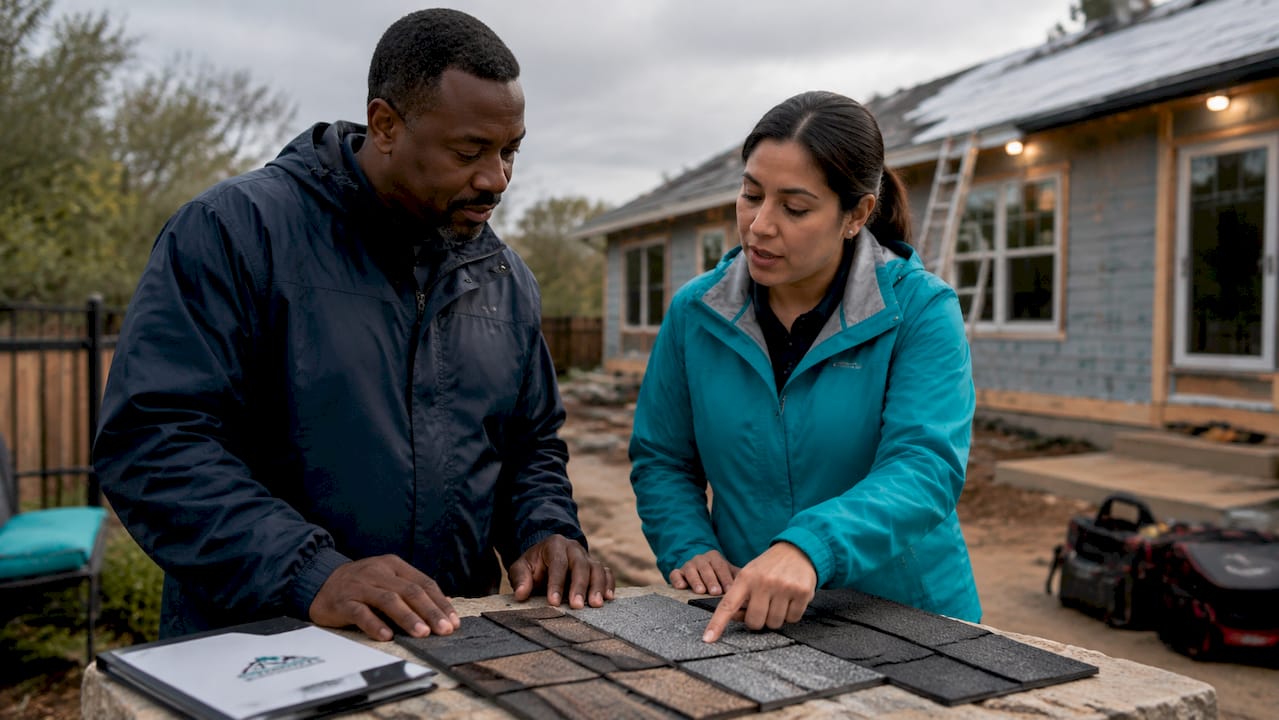
Material specs go beyond listing “architectural shingles.” A solid contract names the manufacturer, product line, color code, and warranty class. For example, an Owens Corning Duration shingle in Estate Gray carries a different warranty than a builder-grade alternative. If the contract omits the brand, the contractor can substitute a cheaper product and stay technically compliant.
Timeline and permits
Vague project timelines like “starting soon” are inadequate and unenforceable. Your contract must state specific start and completion dates, plus a contingency plan for weather delays or hidden substrate damage. On the permit side, the contract must clearly state who pulls the permit. Permit responsibility belongs to the licensed contractor in virtually every Florida jurisdiction. Never sign a contract that shifts this obligation to you.
Here is a quick checklist of what every roofing contract must include:
- Scope of work: specific tasks, materials, and methods listed in full
- Material specs: manufacturer name, product line, color, and warranty class
- Timeline: exact start and completion dates with delay contingencies
- Payment schedule: deposit amount, milestone payments, and final payment trigger
- Permit responsibility: contractor named as permit holder
- Debris removal: dumpster placement, daily cleanup, and nail sweep procedures
- Change order process: written and signed before any extra work begins
- Warranty terms: separate coverage for workmanship and materials
Pro Tip: Ask your contractor to walk you through the workmanship warranty coverage before signing. Manufacturer warranties cover materials; workmanship warranties cover installation errors. You need both.
How do payment structures and change orders work?
Payment structure is where many homeowners get burned. A fair roofing contract follows a tripartite schedule: a deposit upfront, progress payments tied to milestones, and a final payment only after completion and your inspection. This structure protects you because the contractor has a financial incentive to finish each phase correctly before receiving the next payment.
Here is how a typical payment schedule breaks down:
- Deposit (10%–30%): Paid at signing to cover material orders and scheduling. A deposit above 30% is a red flag in most markets.
- Progress payment (30%–40%): Released after tear-off and decking inspection are complete and documented.
- Midpoint payment (optional): Some larger projects add a third milestone after underlayment and flashing installation.
- Final payment: Released only after you have walked the completed roof, confirmed cleanup, and reviewed the final inspection report.
Payments linked to completion milestones protect your capital and deter contractors from moving on to the next job before finishing yours. Never pay the full balance before the work is done and inspected.
Change orders are equally critical. A change order is a written, signed amendment to the original contract that authorizes additional work and its cost. All scope changes must be documented and signed before work proceeds. The most common triggers are rotted decking discovered after tear-off, corroded flashing that needs full replacement, or code upgrades required by the building department.
Structural surprises like deteriorated decking are frequent post-tear-off discoveries. A well-written contract prices these as allowances per sheet rather than leaving the cost open-ended. For example, a contract might state “decking replacement at $X per sheet, not to exceed Y sheets without written approval.” That single clause can save you hundreds of dollars in surprise charges.
Pro Tip: If a contractor resists putting change orders in writing, treat that as a serious warning sign. Verbal approvals for extra work are nearly impossible to dispute after the fact.
What pitfalls should homeowners avoid in roofing contracts?
The most expensive roofing mistakes start before the first nail is driven. They start at the contract stage. Homeowners who skip careful review often end up with incomplete work, surprise charges, or no legal recourse.
Watch for these red flags:
- Vague scope language: Phrases like “install new roof” with no material or method detail leave you exposed.
- Unbalanced deposits: Requests for 50% or more upfront before materials are ordered signal financial instability.
- No warranty section: A contract without separate workmanship and material warranty terms offers you no post-project protection.
- Missing change order clause: Without this, any verbal agreement about extra work becomes a dispute waiting to happen.
- Permit ambiguity: If the contract does not name the contractor as permit holder, ask why before signing.
- No cancellation clause: You need a defined process for terminating the contract if the contractor fails to perform.
Verbal agreements do not override written contracts. This is one of the most common and costly misconceptions homeowners carry into roofing projects. Whatever was said during a sales visit carries no legal weight once you sign a document that says something different.
“The contract is the project. Everything promised verbally that does not appear in writing does not exist in a legal dispute. A homeowner who relies on a handshake is a homeowner without protection.”
State laws add another layer of complexity. Some states grant homeowners a limited right of rescission after signing a contract at home. In Minnesota, for example, home solicitation contracts carry a 3-business-day cancellation right, and contracts must disclose this to be enforceable. Florida has similar consumer protection provisions. Always read the cancellation terms before signing.
How to read and compare roofing contracts effectively
Comparing roofing proposals by bottom-line price alone is the single fastest way to choose the wrong contractor. Line-item estimates reviewed side by side reveal what each contractor includes, excludes, and leaves as an unknown. A lower bid often means fewer inclusions, not better value.
Use this framework when reviewing multiple contracts:
- Read the scope section first. Confirm every task is listed explicitly. If decking repair is not mentioned, ask whether it is included or priced as an allowance.
- Check material specs against manufacturer data. Look up the product line named in the contract to confirm it matches what was discussed.
- Compare warranty terms directly. A 10-year workmanship warranty from a certified installer is worth more than a 2-year warranty from an uncertified one. Roofing certifications from manufacturers like GAF and Owens Corning require contractors to meet installation standards that unlock extended coverage.
- Verify permit language. Confirm the contractor holds a current Florida license and will pull the permit in their name.
- Evaluate payment timing. Align each payment trigger with a specific, verifiable milestone you can inspect before releasing funds.
Proposals should also address anticipated site conditions and possible extras. Ask every contractor the same set of questions: What happens if we find rotted decking? Who handles the permit inspection? What is your process if the project runs past the completion date? The quality of those answers tells you as much as the contract itself.
A roofing contract must contain offer, acceptance, and consideration to be legally enforceable. For complex projects or high-value homes, having a real estate attorney review the contract before signing is a sound investment. You can also review building inspector requirements to understand what the permit inspection process involves after installation.
Professional contractors increasingly use digital project management tools including photo documentation and CRM platforms to keep contract scope aligned with real-time site conditions. When reviewing proposals, ask whether the contractor documents progress with photos tied to each milestone. That documentation protects both parties if a dispute arises later.
Pro Tip: Request a roofing estimate breakdown that lists every line item separately. A contractor who cannot produce one is likely bundling costs in ways that make overcharging easy to hide.
Key Takeaways
A roofing contract protects you only when it specifies scope, materials, payment milestones, permits, change orders, and warranty terms in writing before work begins.
| Point | Details |
|---|---|
| Contracts must be specific | Vague scope language favors the contractor; demand named materials and listed tasks. |
| Payment follows milestones | Tie every payment to a completed, inspectable phase of work to protect your capital. |
| Change orders must be written | All scope additions require a signed amendment before work proceeds. |
| Permits belong to the contractor | A licensed contractor pulls the permit in their name; never accept a contract that shifts this to you. |
| Compare line items, not totals | Reviewing full proposals side by side reveals exclusions that a bottom-line price comparison hides. |
What I have learned after years of watching contracts go wrong
The contracts I see cause the most problems share one trait: they are short. A one-paragraph agreement that says “replace roof for $X” looks clean and simple. It is actually a liability for the homeowner. Every clause that is missing is a decision that gets made on the fly, under pressure, and usually not in your favor.
The homeowners who come to me frustrated mid-project almost always signed without reading the change order section. They approved verbal extras, assumed the contractor would be reasonable, and then received an invoice that bore no resemblance to the original quote. The contract gave them no recourse because the contract said nothing.
What I have also seen is that digital documentation changes the dynamic entirely. When a contractor photographs the decking before and after tear-off, timestamps the images, and ties them to the contract scope, there is nothing to argue about. The record is the record. Homeowners should ask for this as a standard practice, not a special request.
My honest advice: treat the contract review as the most important hour of your entire roofing project. Read every section. Ask about every blank. If a contractor pushes back on adding specifics, that tells you everything you need to know about how they handle problems once work begins. A contractor who is proud of their work welcomes a detailed contract because it protects them too.
You can review Coastal Roofing & Construction’s completed projects to see the standard of documentation and craftsmanship that backs every contract we issue.
— Ryan
Coastal Roofing & Construction: contracts built on clarity
Every project Coastal Roofing & Construction takes on starts with a detailed written contract that covers scope, materials, payment milestones, permits, and warranty terms in full. There are no vague clauses and no surprise charges.

Homeowners across Tampa Bay, Clearwater, St. Petersburg, and the surrounding Gulf Coast communities trust Coastal Roofing & Construction because the contract they sign reflects exactly what gets built. From residential roof replacement to premium standing seam metal roofing, every project is backed by manufacturer certifications from Owens Corning, GAF, and Tri County Metals, and documented from inspection through final walkthrough. If you want a contractor whose paperwork is as solid as their workmanship, explore our recent work and reach out for a detailed proposal.
FAQ
What is a roofing contract?
A roofing contract is a legally binding written agreement between a homeowner and a contractor that defines the scope of work, materials, timeline, payment schedule, and warranty terms for a roofing project. It serves as the primary legal protection for both parties if a dispute arises.
How much deposit is normal for a roofing contract?
A standard roofing deposit runs between 10% and 30% of the total project cost. Requests for 50% or more upfront before materials are ordered are a red flag and should prompt further scrutiny of the contractor’s financial stability.
What should a change order include?
A change order must describe the additional work in detail, state the added cost, and carry signatures from both the homeowner and the contractor before any extra work begins. Verbal approvals for scope changes carry no legal weight.
Who is responsible for pulling the roofing permit?
The licensed contractor is responsible for obtaining the permit in virtually every Florida jurisdiction. A contract that shifts permit responsibility to the homeowner is a warning sign and may expose you to liability if the work fails inspection.
Can I cancel a roofing contract after signing?
Many states grant homeowners a limited right of rescission, typically 3 business days, after signing a contract at home. Florida consumer protection law includes similar provisions. Review the cancellation clause in your contract and confirm the disclosure is present before signing.