
Most full roof replacements and significant reroofs in Tampa Bay require a building permit, and you should hire a local pro familiar with Tampa screen enclosure permit requirements and confirm your exact rules before signing a contract. The City of Tampa Roof Mitigation Verification Statement and Hillsborough County’s owner-builder rules show how much the process varies by jurisdiction. Licensed roofers like Coastal Roofing & Construction typically pull the permit for you, but you should always verify that in writing before work begins.
TL;DR:
- Full roof replacements almost always require a permit, regardless of project size or cost, especially if structural elements are affected.
- Permits are managed through different online portals depending on whether the property is in Tampa, Hillsborough County, or Pinellas County, and submitting to the wrong system causes delays.
- Most contractors pull the permit on behalf of homeowners, but owners must verify permit requirements, especially if considering an owner-builder permit in Hillsborough County.
- Uploading the mitigation verification form is crucial for scheduling inspections, particularly on tile roofs, and should be done immediately after application submission to avoid delays.
- Starting work before permit approval, or after just receiving an application number, risks stop-work orders, so waiting until permits are officially issued is essential.
Table of Contents
- When Does a Tampa Bay Roof Need a Permit?
- Which Office Handles Your Permit, and How Do You Check?
- Who Actually Pulls the Permit: You or Your Contractor?
- What Documents Does a Roof Permit Application Need?
- How Does the Permit Process Actually Flow, Step by Step?
- What Does a Roof Permit Cost in Tampa Bay?
- What Trips Up Homeowners, and How Do You Avoid Delays?
- How a Licensed Tampa Bay Contractor Manages Your Roof Permit
- What I’d Tell a Friend Before They Start This Process
- Let Us Handle the Permit While You Focus on the Roof
- FAQ
- Sources
When Does a Tampa Bay Roof Need a Permit?
A permit is almost always required for a full roof replacement, a reroof covering a substantial portion of the structure, or any repair that touches the roof’s structural elements. The trigger is not the price of the shingles. It is whether the work changes the roof assembly, the decking, the underlayment, or the attachment points that hold everything down during a storm.
There are narrow exceptions. Effective July 1, 2026, unincorporated Hillsborough County allows a permit exemption for non-structural residential work valued under the applicable cost threshold under HB-803, but you still need to apply for that exemption through HillsGovHub, and work that touches structural components does not qualify regardless of cost. Some homeowners try to split a larger job into smaller invoices to stay under a threshold. Building departments watch for this, and it can jeopardize your entire project if discovered during inspection.
A few points worth keeping in mind as you scope your project:
- Full roof replacements and major reroofs almost always need a permit, regardless of jurisdiction.
- Structural repairs, such as deck replacement or truss repair, require a permit even on small sections.
- Hillsborough County’s non-structural exemption under HB-803 applies only under a specified cost threshold and only after you file for it.
- Splitting one job into multiple smaller contracts to dodge a threshold can backfire during review.
If a contractor tells you your replacement does not need a permit, call the building department yourself before tear-off starts. It takes one phone call and it protects you from a stop-work order halfway through the job.
Which Office Handles Your Permit, and How Do You Check?
Tampa Bay is not one permitting authority. Depending on your address, your roof permit could run through the City of Tampa, unincorporated Hillsborough County, or Pinellas County, and each uses a separate online system. The Hillsborough County building and subtrade permit resources page confirms that City of Tampa (Accela), Hillsborough County (HillsGovHub), and Pinellas County (Access Portal) are distinct systems with different forms and thresholds.
Here is how to pin down the right one for your property:
- Pull up your property’s parcel or folio number, which you can find on your county appraiser’s site or a recent tax bill.
- Use that parcel number to search the relevant portal: Tampa Accela for City of Tampa addresses, HillsGovHub for unincorporated Hillsborough County, or the Access Portal for Pinellas County.
- Confirm the jurisdiction match before you submit anything, since a mailing address with “Tampa” in it does not always mean City of Tampa governs your permit.
- Note the Notice of Commencement threshold for your jurisdiction, with specific requirements that vary by county.
Getting this step wrong costs time. Each portal has different document requirements, different mitigation verification rules, and a different order of inspections, so submitting to the wrong office means starting over.
Who Actually Pulls the Permit: You or Your Contractor?
In the vast majority of Tampa Bay roofing jobs, the licensed contractor you hire pulls the permit and manages the record from application through close-out. That is the standard, and for good reason: contractors carry the license, insurance, and familiarity with local review comments that make the process move faster.
Homeowners can pursue an owner-builder permit, but Hillsborough County’s owner-builder permit requirements spell out real constraints:
- The property must be your primary residence and titled in your name.
- You must sign an Owner-Builder Disclosure Statement acknowledging the legal responsibilities you are taking on.
- Permit issuance still happens only after plan review and fee payment, the same as a contractor-pulled permit.
- Selling a home built or roofed under an owner-builder permit within a certain window can trigger additional scrutiny or disclosure obligations.
Pro Tip: Unless you have construction experience and plan to live in the home for years, hiring a licensed roofer to pull the permit can reduce liability and paperwork complexity.
What Documents Does a Roof Permit Application Need?
Building departments across Tampa Bay ask for a similar core packet, even though the exact forms differ by portal. Having everything ready before you submit cuts down on review cycles significantly.
Expect to provide:
- Property address and parcel or folio number.
- Contractor name and active license number, or your Owner-Builder Disclosure Statement if applicable.
- A written scope of work describing the roofing system being removed and installed.
- Product approval documents or manufacturer specifications for shingles, tile, metal panels, or underlayment.
- A Roof Mitigation Verification Statement for City of Tampa permits, required on nearly all residential and commercial roof replacements except owner-builder jobs.
- A Notice of Commencement when your project value crosses your jurisdiction’s threshold.
The mitigation verification form deserves special attention. The City of Tampa requires it be uploaded to your Accela permit record before any roof inspection can even be scheduled, and tile roof replacements carry an added dry-in inspection requirement. Our Tampa Bay roof replacement guide walks through why mitigation measures get this much attention: they are what determines how your roof performs in high wind.
How Does the Permit Process Actually Flow, Step by Step?
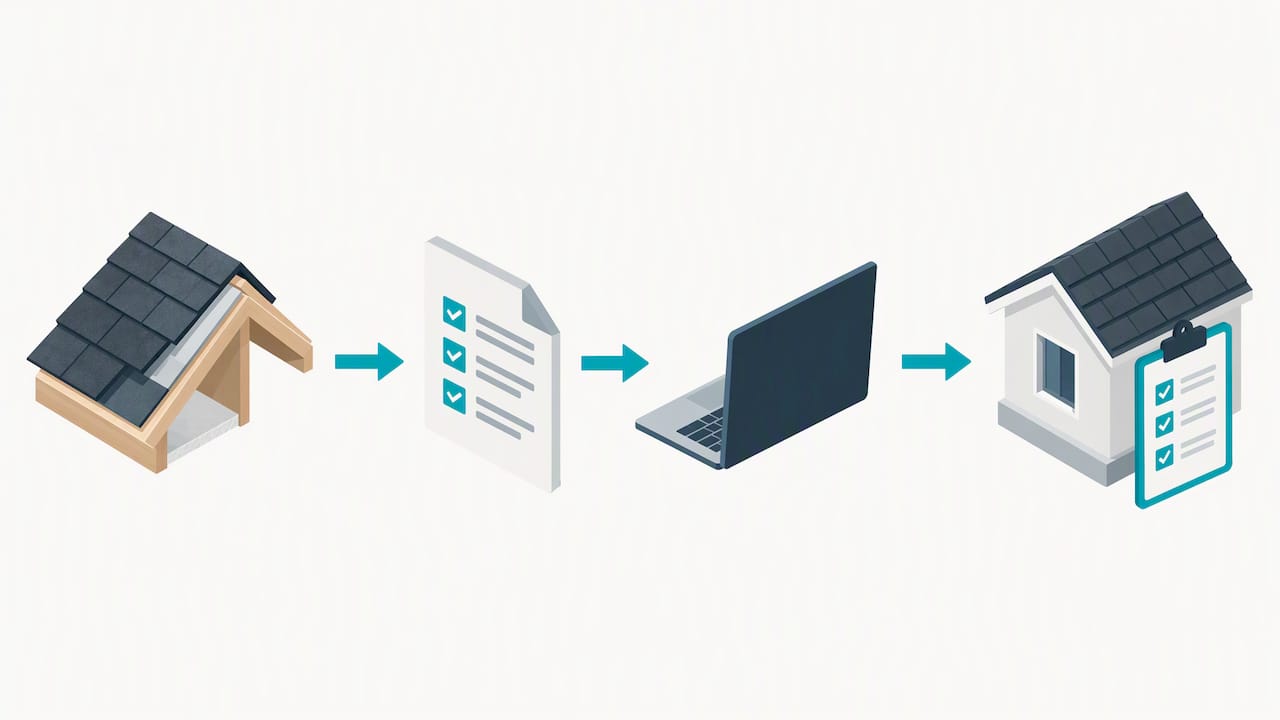
The sequence is largely the same regardless of which office handles your paperwork, though the names of each step vary by portal. Here is the general path:
- Confirm your jurisdiction using your parcel number before submitting anything.
- Submit the correct permit application with contractor license information and product approvals attached.
- Respond promptly to any plan-review comments the building department sends back.
- Pay the permit fees once your application clears review.
- Receive permit issuance, which is a separate event from submitting the application.
- Schedule required inspections, starting with mitigation verification or dry-in for tile roofs.
- Pass your final inspection and keep the closed permit record for your files.
Inspection sequencing is where most delays happen. The City of Tampa’s roofing inspection guidance confirms that mitigation verification must be on file before any roof inspection gets scheduled, and the city now supports virtual inspections for some roofing work, which can shave days off the process. Hillsborough County offers a similar progress-check option for some reroofs, covered in its re-roof inspection information.
A missing mitigation verification form is one of the most common reasons a roof inspection gets held up in Tampa, according to Hillsborough County’s inspection guidance. Uploading it the same day you submit your application, rather than waiting, avoids that bottleneck entirely.
What Does a Roof Permit Cost in Tampa Bay?
Permit costs break down into a few categories: the base permit and inspection fee, a plan review fee for more complex scopes, and sometimes a resubmittal fee if your application needs multiple rounds of corrections. The exact dollar amount depends on your project’s value and your jurisdiction’s current fee schedule.
A few things to keep straight when budgeting:
- The base permit fee covers the application and standard inspections tied to your roofing scope.
- Plan review fees apply when your project needs engineering review, such as structural repairs or certain commercial roofs.
- Resubmittal fees can apply if the building department sends back corrections more than once.
The City of Tampa’s 2026 fee schedule report shows how trade and roofing permit fees are structured, and recent schedules have adjusted residential roofing fees upward in some line items according to the official fee schedule report, so treat any number your contractor quotes as an estimate until the permit clears review. Ask your roofer for the specific fee line item tied to your project before you sign anything, since the final cost can shift once plan review is complete.
What Trips Up Homeowners, and How Do You Avoid Delays?
The single most common mistake is starting tear-off the moment you have an application number. An application number means your paperwork is in the queue, not that your permit has been issued. Hillsborough County’s guidance for homeowners is direct about this distinction, and starting work before issuance can trigger a stop-work order.
Practical steps that keep your project on schedule:
- Wait for actual permit issuance, not just a submitted application, before any tear-off begins.
- Upload your mitigation verification or dry-in documentation the day you apply, since it gates every inspection that follows.
- Respond to plan-review comments within a day or two rather than letting them sit.
- Use virtual inspections where your jurisdiction offers them to cut down on scheduling windows.
- Have your contractor handle the Notice of Commencement and its recording so nothing falls through the cracks.
Pro Tip: Keep a copy of every uploaded document and inspection result for your own records. A closed permit file is often requested by insurers and buyers years down the road.
How a Licensed Tampa Bay Contractor Manages Your Roof Permit
We handle the permit process as part of every roof replacement we take on across Pinellas, Hillsborough, and Pasco counties. We prepare the application package, upload product approvals and mitigation verification statements, and track plan-review comments so homeowners are not the ones chasing paperwork.
On tile roofs, we schedule the required dry-in inspection before proceeding to final, and we coordinate Notice of Commencement filing when a project crosses the local threshold. Once the final inspection passes, we retain the closed permit record and pass it along to the homeowner, since that documentation often matters for insurance claims or a future home sale.
What I’d Tell a Friend Before They Start This Process
If you take away one thing, confirm your jurisdiction first and hire a licensed contractor who will pull the permit and manage the paperwork. Do not let tear-off start until the permit is issued and, for tile roofs especially, until the dry-in and mitigation verification are cleared. That one form, more than any other step, is what stalls Tampa Bay roofing projects.
— Ryan
Let Us Handle the Permit While You Focus on the Roof
We manage the entire permit process for Tampa Bay homeowners: submitting the application, uploading mitigation verification and product approval documents, scheduling inspections, and closing out the record once your new roof passes final. You get a completed roof and a clean permit file without tracking down forms yourself. Request a roof replacement estimate to see how we coordinate the paperwork and installation together.

FAQ
Do I need a permit to replace my roof in Florida?
Yes, a full roof replacement in Florida almost always requires a building permit, with the exact rules set by your local jurisdiction. In Tampa Bay, that means confirming whether the City of Tampa, Hillsborough County, or Pinellas County governs your property before you apply, since each uses a separate permitting system.
How much is a roof permit in Florida?
Roof permit costs vary by project value, jurisdiction, and whether plan review is required, so there is no single statewide fee. The City of Tampa’s fee schedule report outlines how local trade and roofing fees are structured, and your contractor can provide a project-specific estimate.
How do I find a roof permit record in Hillsborough County?
Hillsborough County permit records, including re-roof and owner-builder filings, are managed through HillsGovHub, where you can search by parcel or folio number. This is also where you would apply for the non-structural work exemption under HB-803 if your project qualifies.
What’s included when Coastal Roofing & Construction manages my permit?
We submit the application, upload product approval documents, handle mitigation verification paperwork, and schedule every required inspection through final close-out throughout the roof replacement and repair work we perform.
Sources
- Hillsborough County building and subtrade permit resources
- City of Tampa — Roof Mitigation Verification Statement (PDF)