
Florida homeowners should inspect their roofs at least once a year, and twice is the smarter habit: once before hurricane season and once after it ends. Salt air, intense UV exposure, heavy humidity, and the threat of tropical storms wear down roofing materials faster here than almost anywhere else in the country, so a single annual glance rarely catches problems in time.
TL;DR:
- Inspect roofs twice a year, ideally before and after hurricane season, to catch damage caused by storms, UV, and salt air in Florida.
- Focus on detailed checks of shingles, flashing, drainage, attic moisture, and roof-to-wall connections, with photos and documentation for insurance purposes.
- Use licensed professionals for inspections, especially for wind mitigation and complex evaluations, and confirm their credentials and scope.
- After a storm, avoid walking on damaged roofs; document damage from the ground and contact insurers and licensed roofers promptly.
- Updating wind mitigation forms every five years can help maintain insurance discounts, especially after upgrades like new roofs or shutters.
Table of Contents
- How often should you schedule a roof inspection in Florida?
- What does a professional roof inspection in Florida check?
- What types of roof inspections are available and what do they cost?
- What should you do immediately after storm damage?
- How do wind mitigation inspections affect your insurance costs?
- How do you choose a qualified roof inspector in Florida?
- How does Coastal Roofing & Construction approach roof inspections?
- Why inspections matter more than most homeowners think
- Schedule a roof inspection with Coastal Roofing & Construction
- FAQ
- Sources
How often should you schedule a roof inspection in Florida?
The baseline is simple: inspect once a year at minimum, but most Florida roofing professionals recommend a twice-yearly rhythm tied to the Atlantic hurricane season. A pre-season check in late spring (April or May) catches loose shingles, cracked flashing, or clogged drainage before wind and rain can exploit them. A post-season inspection in late fall (November) confirms the roof weathered the summer intact and flags any damage before it turns into a leak or a mold problem over the winter.
A single annual inspection can work for a newer roof in good condition, but it leaves a six-month gap where storm damage can go unnoticed. Florida’s hurricane season runs from June through November, which means a once-a-year schedule often misses the exact window when damage is most likely to occur. Splitting the inspection into two visits closes that gap and gives you a clean “before” and “after” record if you ever need to file an insurance claim.
Beyond the calendar, certain events should trigger an inspection regardless of timing:
- A named storm or significant hail or wind event has passed near your home.
- The roof is more than 15 years old and has not been professionally evaluated recently.
- You notice a leak, stain, or missing material anywhere on the roof or ceiling.
- Your insurer requests documentation for renewal, a new policy, or a mitigation discount.
- You are buying, selling, or refinancing a property and need a current roof condition report.
Homeowners who just had repairs or a partial reroof done should also schedule a follow-up inspection once the work settles, particularly after the first heavy rain. Hurricane retrofit guidance developed for Florida properties notes that reroofing is the best opportunity to expose and correct deck attachment issues, which is also the best time to confirm that the fix actually addressed the weak point.
What does a professional roof inspection in Florida check?
A thorough inspection looks well past the shingles or tiles you can see from the driveway. Professionals move through the roof system in a sequence, checking the exterior covering, the flashing and penetrations, the drainage path, and then the attic and structural connections that keep everything attached during high winds.
- Roof covering: shingles, tiles, or metal panels are checked for cracking, curling, missing pieces, or granule loss.
- Flashing and penetrations: the metal and sealant around chimneys, vents, skylights, and pipe boots are checked for gaps or corrosion.
- Edges and drainage: fascia, gutters, and downspouts are checked for proper attachment and clear water flow.
- Attic interior: insulation, sheathing, and ventilation pathways are checked for moisture stains, mold, or daylight gaps that signal a breach.
- Structural attachment: where accessible, inspectors look at roof deck attachment and roof-to-wall connections, since retrofit guidance from PNNL’s Building America program identifies these as the elements that most often determine whether a roof survives a hurricane, not just the surface material.
A good inspector documents everything with photographs and a written report rather than a verbal pass or fail. Inspection standards from InterNACHI call for inspectors to state their viewing method and name any areas that were inaccessible, since no visual inspection can certify what cannot be seen. If a report only says the roof “looks fine” with no photos and no mention of what wasn’t checked, treat that as incomplete. For a closer look at the specific issues inspectors routinely flag in this region, see this breakdown of roofing problems professionals can identify during an inspection.
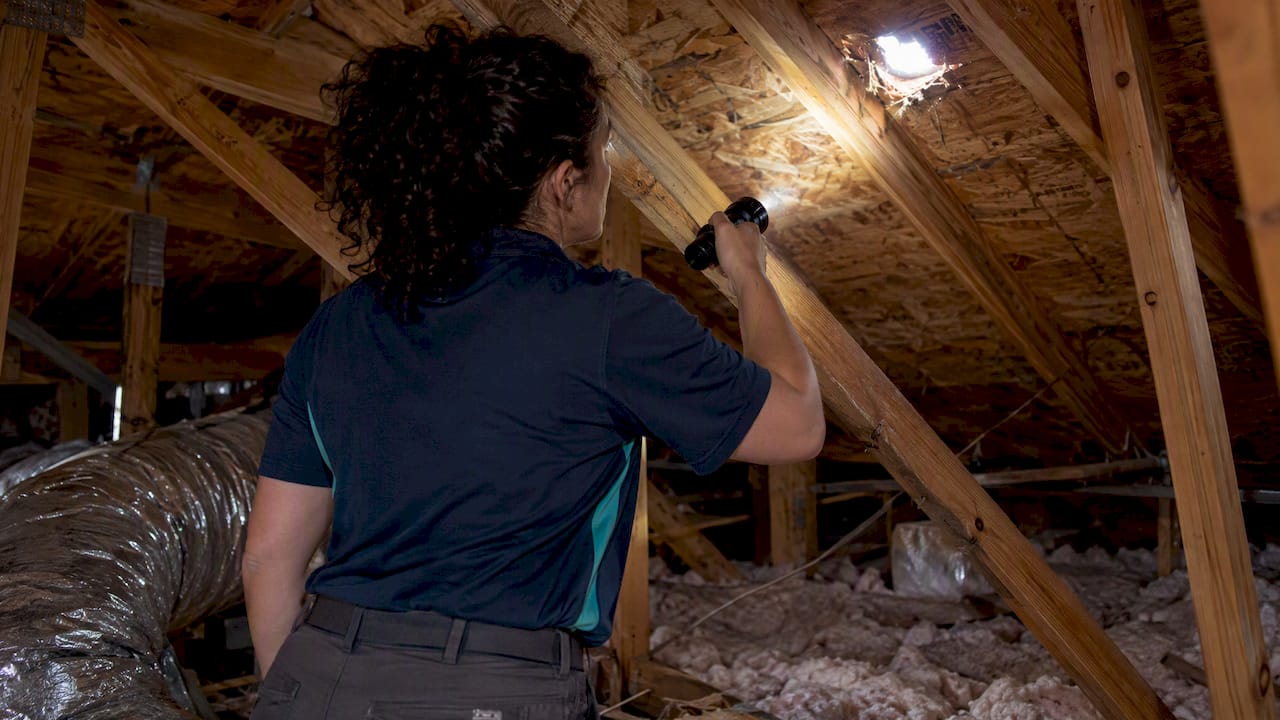
Pro Tip: Ask your inspector to walk the attic with a flashlight during daylight hours; stray light coming through the roof deck is one of the fastest ways to spot a hidden breach.
What types of roof inspections are available and what do they cost?
Florida homeowners typically choose from four inspection types, each serving a different purpose and carrying a different price tag. A standard visual inspection is the most common starting point, and Angi’s roof inspection checklist notes that a typical visit takes about an hour for an average-sized home, covering the exterior, attic access, photographs, and a written summary of findings.
- Visual inspection: a ground-and-attic walkthrough focused on general condition and maintenance needs.
- Wind mitigation inspection: documents storm-resistant features for insurance discount purposes.
- Four-point inspection: a condensed review of the roof, electrical, plumbing, and HVAC systems, often required for older homes or certain policies.
- Thermal or drone inspection: uses infrared imaging or aerial photography to spot trapped moisture or steep-slope damage without anyone walking the roof.
A standard inspection commonly takes around an hour for an average home, according to Angi’s inspection checklist, though larger or steeper roofs usually require more time. Cost drivers include roof size, pitch, material (tile and metal generally take more time to inspect than asphalt shingle), access difficulty, and whether the inspection is bundled with a wind mitigation or four-point report. Drone and thermal add-ons typically cost more than a basic visual check because they require specialized equipment and a trained operator.
What should you do immediately after storm damage?
Safety comes first, and that means staying off the roof. Climbing onto a wet, wind-damaged, or structurally weakened roof after a storm is one of the most common ways homeowners get hurt during hurricane cleanup.
- Stay on the ground. Photograph visible damage from a safe distance and check the attic from inside for water stains or daylight gaps, without going outside onto the roof itself.
- Document everything. Take dated photos and write brief notes describing what you see; this record matters for both insurance and contractor evaluation.
- Avoid permanent repairs before documentation. Temporary protective measures like tarping are reasonable, but major repairs before an adjuster or inspector sees the damage can complicate a claim.
- Call a licensed professional for tarping. Climbing a damaged roof to secure a tarp is a job for a trained crew, not a homeowner with a ladder.
- Contact your insurer, then a licensed roofer. Report the claim promptly, then schedule a professional inspection to get a photo-documented, written assessment that supports your claim.
For a step-by-step version of this process built specifically for Florida storm damage, see this storm damage roof inspection checklist. If a storm also brought down trees or damaged your driveway, a tree and stump removal service or driveway resurfacing guide can help you sequence the broader cleanup once the roof is secured.
Pro Tip: If a leak reaches an interior ceiling, check nearby plumbing lines too; water stains from a roof leak and a slow pipe leak can look identical from below.
How do wind mitigation inspections affect your insurance costs?
A wind mitigation inspection documents the storm-resistant features of your roof and home, and insurers use that documentation to apply discounts on your premium. The standard paperwork is the Uniform Mitigation Verification Inspection Form, known by its form number, and Florida is updating it for 2026.
- New form version: a revised Uniform Mitigation Verification Inspection Form, OIR-B1-1802, takes effect for inspections performed on or after April 1, 2026.
- Who can sign it: licensed home inspectors with mitigation training, licensed contractors, engineers, and architects are all qualified to complete the form.
- Insurer verification: insurers retain the right to independently verify a submitted form before applying any discount.
- Validity window: a completed inspection generally remains valid for discount purposes as described by the Florida Department of Financial Services.
A wind mitigation inspection stays valid for up to five years if no material changes are made to the home, according to the Florida Department of Financial Services, which means a single inspection can support several renewal cycles before you need a new one. If you add hurricane shutters, a new roof, or other wind-resistant upgrades in the meantime, an updated form can capture those changes and potentially increase your discount. Homeowners researching how deductibles interact with storm claims can also review this explanation of Florida’s roof deductible cap and what it means for out-of-pocket costs.
How do you choose a qualified roof inspector in Florida?
Start with licensing. Florida roofing contractors are licensed through the Department of Business and Professional Regulation, and you can verify any contractor’s license status before hiring. Home inspectors who complete wind mitigation forms need specific mitigation training on top of general licensing, so ask directly whether they hold it.
- Verify credentials first: confirm DBPR licensing and, for mitigation work, specific wind mitigation training.
- Ask about scope and method: find out exactly what will be inspected, how it will be documented, and what areas might be inaccessible.
- Check insurance coverage: a contractor walking your roof should carry liability and workers’ compensation coverage.
- Ask about manufacturer certifications: certified installers for brands like Owens Corning or GAF often bring more product-specific knowledge to an inspection.
Red flags are easy to spot once you know what to look for: no photo report, verbal-only findings, guarantees that go beyond what a visual inspection can support, or no written scope of work at all. A credible report includes dated photographs, a written summary of findings, a note on anything that could not be accessed, and typically takes about an hour to complete for an average home, consistent with the duration Angi describes for a standard visual inspection.
How does Coastal Roofing & Construction approach roof inspections?
A licensed and insured, family-owned contractor serving Tampa Bay performs inspections with manufacturer certifications including Owens Corning, GAF, and Tri County Metals. Inspections follow a documented process: exterior and attic review, photo-backed reporting, and a clear account of any areas that could not be safely accessed. Common findings in this region include worn flashing around chimneys and vents, algae and mold growth on shaded slopes, and wind-lifted shingles or tiles near roof edges, each addressed with repair or maintenance recommendations rather than an automatic push toward replacement.
Why inspections matter more than most homeowners think
Most homeowners treat a roof inspection as a box to check before a storm, but the real value is the paper trail it creates. A photo-documented report from April is worth far more in October than a vague memory of “the roof seemed fine.” I’d rather see a homeowner run the checklist above twice a year and call a licensed professional the moment something looks off than wait for a leak to force the issue. Coastal Roofing & Construction and other established Tampa Bay contractors exist for exactly that moment.
— Ryan
Schedule a roof inspection with Coastal Roofing & Construction
A twice-yearly inspection only pays off if the person doing it actually documents what they find, and that is the standard Coastal Roofing & Construction builds every visit around. A factory-trained, manufacturer-certified contractor serving the Tampa Bay area offers photo-backed reporting and wind mitigation form support to every inspection, providing documentation suitable for insurance purposes, not just a verbal opinion.

Services relevant to an annual inspection routine include:
- Roof inspections and wind mitigation documentation support.
- Storm damage restoration after named storms or wind events.
- Roof repair for flashing, underlayment, and penetration issues found during inspection.
- Full roof replacement when an inspection reveals a roof past its service life, including metal, shingle, tile, and flat roofing systems.
Booking a visit means a photo-documented report, a clear account of any inaccessible areas, and honest recommendations instead of an upsell. Visit the roof inspections page to schedule a visit or request a free estimate.
FAQ
What is the new law in Florida about roofs?
Florida is updating the Uniform Mitigation Verification Inspection Form, OIR-B1-1802, with a new version required for inspections performed on or after April 1, 2026. The update affects how wind mitigation features are documented for insurance discount purposes, not general roof construction rules.
What is the average cost of a roof inspection in Florida?
Published pricing varies by inspection type, size, and material, and no single statewide average is published by an official source. A standard visual inspection typically takes about an hour for an average home, according to Angi’s roof inspection checklist, with cost rising for larger roofs, steeper pitches, or added wind mitigation and drone services.
What are the requirements for roof inspections in Florida?
There is no statewide mandate that every homeowner get an annual inspection, but insurers often require one for renewal, underwriting, or mitigation discounts. Wind mitigation forms specifically must be completed by a qualified signer, including a licensed home inspector with mitigation training, a licensed contractor, an engineer, or an architect, as outlined by the Florida Department of Financial Services.
What is the 15 year roof rule in Florida?
Many Florida insurers use a roof’s age, often around 15 years, as a trigger point for requiring a four-point or full roof inspection before issuing or renewing a policy. This isn’t a single statewide statute but a common underwriting practice, so the exact threshold and requirement vary by insurer.
Sources
- Mitigation notices, inspections and forms | Florida Department of Financial Services
- PNNL Building America: Retrofit existing roofs for hurricane/high-wind resistance
- Hurricane retrofit / reroof guidance (Florida/FEMA)
- InterNACHI — Standards of Practice for performing inspections
- Angi — Roof inspection checklist