
Most Florida homeowners pay between $6,000 and $33,000 for a full roof replacement in 2026, with high-wind zones or premium materials sometimes topping $45,000. For a typical 2,000 square foot home with architectural asphalt shingles, expect roughly $10,500 to $22,000, with a median near $14,000. Material choice, deck condition, and whether your home sits in a High-Velocity Hurricane Zone drive most of that spread. Coastal Roofing & Construction, serving Tampa Bay homeowners directly, can turn that range into an exact written number after a single inspection.
TL;DR:
- Roof replacement costs in Florida range from $6,000 to $33,000 on average, with high-wind zones or premium materials exceeding $45,000.
- Material choice significantly impacts pricing, with impact-rated shingles, metal, and tile costing more than basic asphalt, especially in HVHZ counties.
- Regional differences mean Miami-Dade and Broward typically require 5% to 15% higher budgets due to stricter codes and impact product requirements.
- Accurate measurement and proper project complexity assessment are more critical to bid validity than material selection, preventing lowball estimates.
- Getting a detailed, written estimate based on your actual roof area, materials, and local permits ensures a reliable project budget and timeline.
Table of Contents
- Roof Replacement Cost Florida: Averages By Home Size
- How Much Does Each Roofing Material Cost Per Square Foot?
- Why Do Miami-Dade and Broward Roofs Cost More?
- What Drives Your Roof Replacement Estimate Up or Down?
- How Do You Calculate a Reliable Roof Replacement Estimate?
- What Do Permits, Insurance, and Financing Add to the Cost?
- How Long Does a Roof Replacement Take From Quote to Completion?
- Who’s Actually Installing Your Roof in Tampa Bay?
- Does a New Roof Increase Your Home’s Resale Value in Florida?
- Why Are Florida Roofing Costs Climbing Faster Than Labor Alone Explains?
- How Do Warranty Terms Change the True Cost of a Roof?
- The Real Math Behind Roof Pricing in Florida
- Get a Written Roof Replacement Estimate for Your Tampa Bay Home
- Sources
Roof Replacement Cost Florida: Averages By Home Size
Roofers don’t price by your home’s floor plan, instead charging based on your roof area as explained in roofing square measurements. They price by roof surface, measured in “squares,” where one square equals 100 square feet of actual roof area. That distinction trips up a lot of homeowners comparing quotes, because a 1,800 square foot single-story ranch with a steep hip roof can carry more roofing squares than a 2,200 square foot home with a low-slope design.
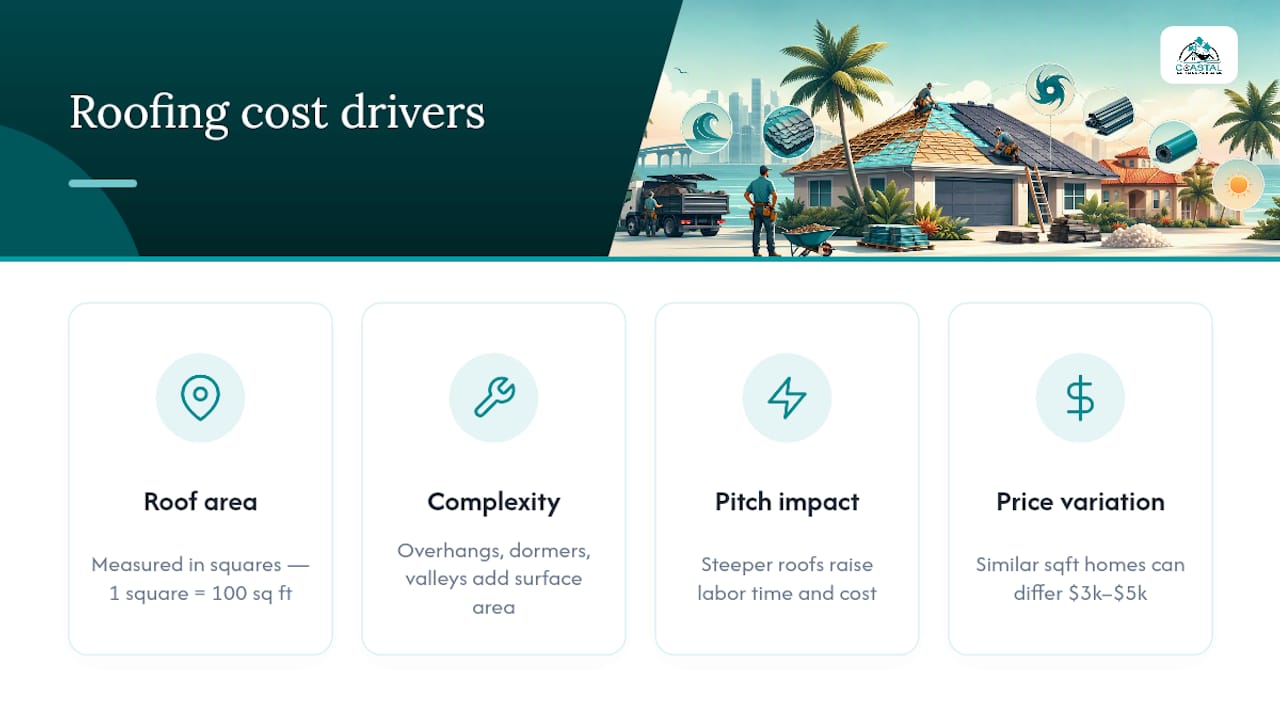
Overhangs, dormers, valleys, and pitch all add surface area that never shows up on a floor plan. A steeper roof also takes longer to work safely, which adds labor cost independent of material. That’s why two homes with identical square footage inside can land $3,000 to $5,000 apart on a roofing estimate.
Here’s how typical Florida homes break down by size and roofing squares, based on statewide 2026 pricing:
These figures assume standard architectural asphalt shingles on a moderate-pitch roof outside an HVHZ county. Swap in metal, tile, or a steep, complex roofline, and the numbers shift considerably, which is exactly what the next section breaks down.
How Much Does Each Roofing Material Cost Per Square Foot?
Material is the single biggest lever on your final number, and the spread between options is wide enough to change your total by tens of thousands of dollars on the same house.
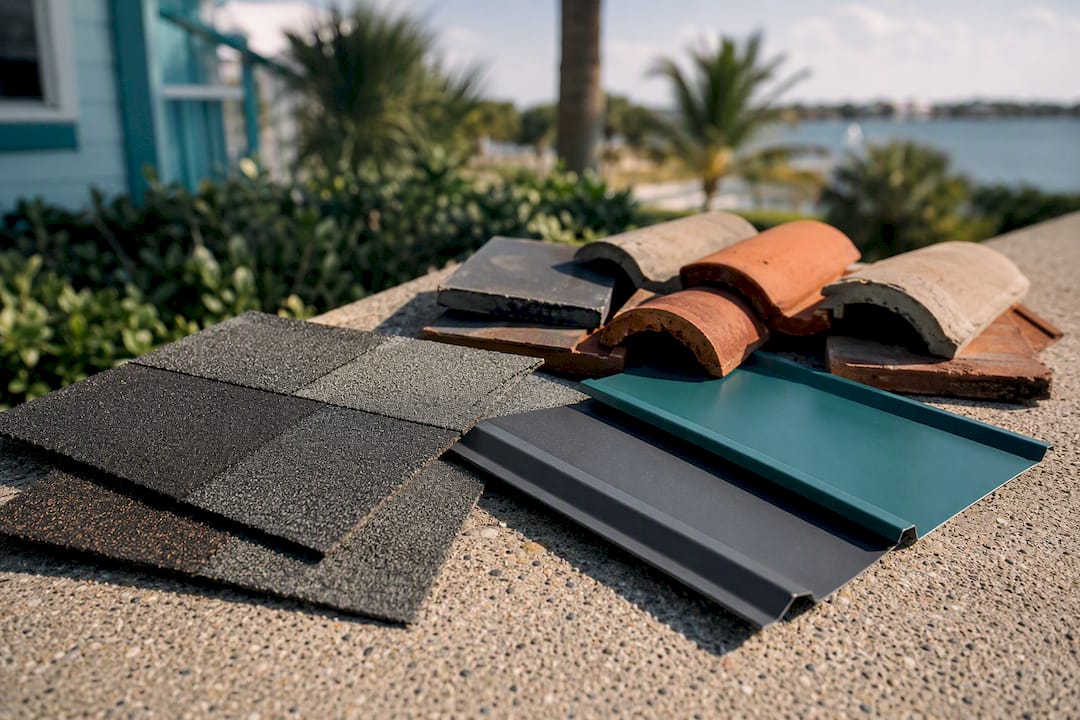
Per-square-foot installed pricing looks roughly like this across Florida:
A few things matter beyond the sticker price:
- 3-tab asphalt is the budget option but rarely meets today’s wind ratings for coastal counties.
- Architectural shingles hold most of the Florida market because they balance cost, curb appeal, and wind performance reasonably well.
- Impact-rated shingles carry a Class 4 rating and can qualify for insurance discounts, covered in more detail later on.
- Standing seam metal sits at the top of the metal range and typically outlasts three asphalt roofs, which changes the math for anyone planning to stay put.
- Concrete and clay tile are common on Mediterranean-style Florida homes and hold up exceptionally well to UV and salt air, provided the underlying deck and battens are installed correctly.
- Flat and low-slope systems (TPO, modified bitumen) run separately from the pitched-roof pricing above and typically land between $6.00 and $12.00 per square foot depending on insulation and membrane thickness.
Not every material carries a Miami-Dade Notice of Acceptance (NOA), and not every tile or metal product has been tested for large-missile impact, which narrows your options if you live in an HVHZ county. Manufacturer certification also matters here. Coastal Roofing & Construction installs Owens Corning, GAF, and Tri County Metals systems, all of which carry documented wind and impact ratings that hold up during insurance claims and code inspections. If you’re weighing metal against asphalt on a coastal lot, the metal roofing options page breaks down standing seam profiles in more depth, and homeowners comparing shingle grades can review the asphalt shingle comparison guide.
Why Do Miami-Dade and Broward Roofs Cost More?
If your home sits in Miami-Dade or Broward County, budget higher than the statewide average. The reason isn’t just wind speed on paper. It’s a completely different regulatory bar.
Homes in the High-Velocity Hurricane Zone require products carrying a Miami-Dade NOA, plus sealed roof decks and stricter fastening patterns under the Florida Building Code. NOA compliance alone commonly adds 5% to 15% to total project cost, and it stretches your timeline too, since not every product on a contractor’s shelf qualifies.
Rough regional comparisons for a 2,000 square foot architectural shingle roof:
- HVHZ (Miami-Dade, Broward): roughly $13,000–$26,000, driven by NOA products and sealed-deck requirements.
- Central Florida (Tampa, Orlando): roughly $10,500–$20,000, the statewide baseline.
- North Florida (Jacksonville, Tallahassee): roughly $9,500–$18,500, generally the lowest end of the range.
Permit fees compound the regional gap. Expect $150 to $800 depending on county, with HVHZ jurisdictions and cities that require full plan review sitting at the top of that band. Combine a slower permit process with product sourcing constraints, and HVHZ projects often run two to three weeks longer from contract to completion than an equivalent job in Pinellas or Hillsborough County.
What Drives Your Roof Replacement Estimate Up or Down?
Every roofing quote is built from the same core variables, and understanding them lets you actually interrogate a bid instead of just reacting to the bottom-line number.
- Roof area and pitch. A steep or cut-up roof (multiple valleys, dormers, hips) can carry a complexity multiplier of 10% to 25% over a simple gable roof of the same square footage.
- Tear-off and disposal. Removing an old roof typically adds cost per square foot, with disposal fees increasing if multiple layers exist.
- Deck repair. Rotted or delaminated plywood found during tear-off is the most common line-item surprise. Deck replacement can add 20% to 35% to the total project, which is why a contingency buffer matters.
- Penetrations and add-ons. Skylights, chimneys, and multiple roof vents each add labor and flashing cost, often pushing the total up 5% to 30% depending on how many you have.
- Accessibility. Steep lots, gated communities, or homes without truck access near the roofline add setup time and cost.
- Reroof-over restrictions. Florida code limits how many layers of shingles can stay under a new roof; if you’re already at the limit, a full tear-off becomes mandatory rather than optional.
How Do You Calculate a Reliable Roof Replacement Estimate?
You don’t need a contractor’s software to get within striking distance of your real number. A six-step method gets most homeowners within 10% to 15% of an actual contractor bid once local labor rates are applied.
- Measure your roof area in squares. Use a satellite measurement tool, a past permit record, or ask a contractor for a written measurement, not a floor-area guess.
- Pick your material’s base cost per square. Use the per-square-foot ranges above and multiply by 100 to get a per-square figure.
- Apply a complexity multiplier. Add 10% to 25% for steep pitch or a cut-up roofline.
- Add permit and disposal costs. Budget $150 to $800 for permits and $1.00 to $3.00 per square foot for tear-off.
- Apply a local labor multiplier. Tampa Bay labor rates differ from North Florida rates; ask a local contractor for a rough per-square labor figure to plug in.
- Add a contingency. Set aside 15% to 20% for deck repair or code-driven surprises.
Worked example: A 2,000 square foot home measures out to 22 squares of architectural shingle roof. At $700 per square ($7.00/sq ft), that’s $15,400 in material and base labor. That lands you near $20,940, right inside the statewide range for a home that size.
Pro Tip: When comparing written quotes, confirm each contractor measured your actual roof in squares rather than estimating from your home’s listed square footage. A quote based on floor area instead of roof area is the single most common source of lowball estimates that balloon once tear-off starts.
What Do Permits, Insurance, and Financing Add to the Cost?
Permit timing varies by county, and inspections typically happen at two points: after tear-off (deck inspection) and after final installation. In busier counties, scheduling an inspector can add a week or more to your project, especially right before hurricane season when permit offices get backed up.
- Permit fees: $150 to $800 depending on county and whether plan review is required.
- Insurance basis: Confirm whether your homeowner’s policy covers replacement cost value (RCV) or actual cash value (ACV), since ACV policies factor in depreciation and pay out less on an aging roof.
- Hurricane deductible: Many Florida policies apply a separate hurricane deductible calculated as a percentage of your dwelling coverage, not a flat dollar figure, so check your declarations page before budgeting.
- Wind-mitigation credits: Impact-rated materials and verified fastening can lower your premium once your insurer receives a wind-mitigation inspection form.
- Financing routes: Home equity loans, direct contractor financing, Florida PACE for resilience-focused upgrades, and HUD Title I loans are the main paths homeowners compare, each with different rate structures and repayment terms worth reviewing before signing anything.
How Long Does a Roof Replacement Take From Quote to Completion?
Most projects run four to eight weeks from initial estimate to finished roof, though that window stretches during peak hurricane-season demand between June and November when material and crew availability tighten statewide.
On install day, expect tear-off first, typically completed in a single day for an average home, followed by deck inspection, then installation of underlayment, flashing, and the finish material over one to three days depending on size and material. A final inspection closes out the permit, and cleanup includes magnetic sweeps for nails and full debris removal.
Common delay culprits: weather holds, deck repair discovered mid-tear-off, and permit office backlogs. Building a few extra days of flexibility into your calendar, especially if you’re scheduling around a summer storm system, avoids most scheduling frustration.
Who’s Actually Installing Your Roof in Tampa Bay?
Coastal Roofing & Construction is a licensed, insured, family-owned contractor working throughout Pinellas, Hillsborough, and Pasco counties, including Clearwater, St. Petersburg, Tampa, and the surrounding Gulf Coast communities. The crews are factory-trained and certified through Owens Corning, GAF, and Tri County Metals, credentials that matter when a manufacturer warranty is on the line and when an insurance adjuster asks who installed a wind-rated system.
A roof replacement isn’t just a material swap. It’s a system: deck, underlayment, flashing, fastening pattern, and finish material all working together against wind and water. Getting a certified installer on any one of those layers wrong can void the very warranty a homeowner is paying extra for.
Coastal Roofing & Construction specializes in standing seam metal, tile, and custom high-end residential installs, alongside standard shingle replacement, for homeowners who want a contractor that treats a roof as long-term infrastructure rather than a commodity swap.
Does a New Roof Increase Your Home’s Resale Value in Florida?
A new roof carries more weight in a Florida real estate sale than almost anywhere else in the country, mainly because of insurance. Buyers in Florida increasingly ask for a roof age disclosure before making an offer, and many insurers won’t write a new policy, or will only write ACV coverage, on a roof older than 15 to 20 years.
That insurance friction turns roof age into a negotiating chip. A home with a roof past that age threshold routinely triggers a buyer request for a credit or price reduction to cover eventual replacement, and appraisers factor roof condition into their valuation more directly than they do most other home systems.
Homes with a documented recent roof replacement, especially one carrying a transferable manufacturer warranty and impact-rated materials, tend to move faster and avoid the insurance-related contingencies that stall closings. Impact-rated or metal roofs also support a wind-mitigation credit that a buyer can inherit, which is a selling point real estate agents in coastal Florida markets increasingly highlight in listings.
The upfront cost difference between a standard architectural shingle roof and a premium metal or tile system narrows considerably when you factor in both the insurance advantage and the multi-decade lifespan. For sellers weighing a replacement before listing, and for buyers evaluating a home’s roof age during due diligence, that resale math should factor into material selection, not just the installation invoice.
Why Are Florida Roofing Costs Climbing Faster Than Labor Alone Explains?
Roofing material costs in Florida have moved up over the past several years for reasons that go beyond simple inflation. Skilled roofing labor is in short supply statewide, and demand spikes hard after major storm events, when thousands of homes need repairs or full replacements simultaneously and contractors compete for the same limited crews.
Material supply adds another layer. Asphalt shingle production depends on petroleum-based inputs and specialty granules that occasionally face supply constraints, while metal roofing costs track steel and aluminum pricing, both of which fluctuate with broader manufacturing demand. Tile products, especially those manufactured for NOA compliance in HVHZ counties, come from a smaller pool of certified suppliers, which limits how much competitive pricing pressure keeps costs down.
The practical result for homeowners: prices quoted in spring can shift by fall, particularly heading into hurricane season when statewide demand for roofing crews spikes. Booking a project during the shoulder season, roughly January through April, often means faster scheduling and less pressure on material availability than trying to book a replacement in September.
None of this is a reason to delay a replacement that’s already overdue. It’s a reason to get a written quote locked in with a defined timeline rather than a verbal estimate that assumes today’s material pricing will hold for months.
How Do Warranty Terms Change the True Cost of a Roof?
The cheapest bid on paper isn’t always the cheapest roof over 20 years, and warranty coverage is where that gap usually shows up. Manufacturer warranties on materials like Owens Corning or GAF shingles typically run 25 to 50 years on materials, but that coverage often only reaches its full value when installed by a certified contractor, since many manufacturers offer enhanced, non-prorated warranties exclusively through certified installer programs.
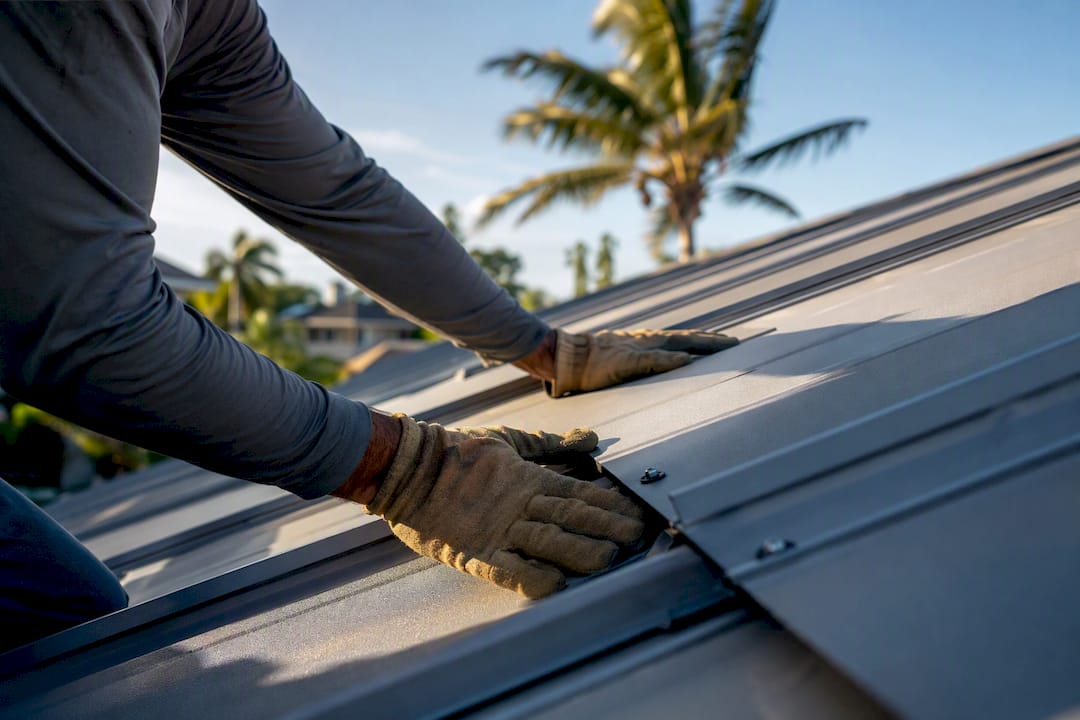
Workmanship warranties are separate from material warranties, and this is where quotes diverge the most. A contractor offering a 2-year workmanship warranty is pricing in a very different risk profile than one offering 10 or 25 years on labor, and that difference should show up in your comparison, not just the sticker price.
Transferable warranties matter for resale, too. A roof with a warranty that transfers to the next owner is a documented asset a seller can point to during negotiations, while a non-transferable warranty resets any buyer’s risk calculation to zero. When comparing bids, ask each contractor for the exact warranty length, whether it’s prorated, whether it transfers, and whether their certification level with the manufacturer affects the coverage tier. Those four questions usually reveal more about long-term value than the line-item price difference between two competing quotes.
The Real Math Behind Roof Pricing in Florida
The conventional advice you’ll find on most roofing sites treats material choice as the whole story. It isn’t. The research behind this guide points to a different priority order: measurement accuracy and HVHZ status move your number more than most homeowners expect, often before material selection even enters the conversation.
Here’s what gets underweighted. A homeowner who gets an accurate square measurement and understands their county’s NOA requirements before calling for quotes will spot a lowball bid immediately, because lowball quotes almost always skip deck inspection contingency or use floor-area measurement instead of actual roof area. That single gap explains more quote confusion than material markup ever does.
If you take one thing from this guide, make it the six-step estimating method. Not because it replaces a professional inspection, but because it turns you into a homeowner who can read a bid critically instead of just comparing bottom-line numbers. That skill is worth more than any single material recommendation, including the ones in this article.
— Ryan
Get a Written Roof Replacement Estimate for Your Tampa Bay Home
Coastal Roofing & Construction is the direct route to an exact number instead of a statewide range. Serving Pinellas, Hillsborough, and Pasco counties, including Clearwater, St. Petersburg, Tampa, Palm Harbor, and the surrounding Gulf Coast communities, the team measures your roof in actual squares on-site rather than estimating from your home’s floor plan, so the number you get reflects your roof, not an average.
A written estimate includes the measured roof area, the exact NOA and Florida Building Code product specs for your material choice, manufacturer warranty terms tied to Coastal Roofing & Construction’s Owens Corning, GAF, and Tri County Metals certifications, and a realistic install timeline based on current permit turnaround in your county. Whether you’re weighing architectural shingles against a standing seam metal upgrade or need a quote for a custom coastal home, request a written estimate for your residential roof replacement and get a number you can actually plan around.
Sources
Energy, Florida PACE financing details, HUD Title I program rules, and roofing square measurement standards all informed the pricing and methodology in this guide.
- Roof Replacement Cost Florida | 2026 Pricing Guide
- Florida Roofing in 2026 — Cost, Hail, Wind & Solar Guide
- Florida PACE
- HUD Title I program