
Architectural shingles, also called dimensional or laminated shingles, are multi-layer asphalt roofing products made by bonding two or more asphalt-coated fiberglass layers together. That layered construction creates a thick, contoured profile that mimics the look of slate or cedar shake without the cost or weight of those materials. They have largely replaced flat three-tab shingles as the standard choice for U.S. residential roofing.
Here is what sets them apart at a glance:
- Construction: Two or more bonded asphalt-fiberglass layers, heavier and thicker than single-layer shingles
- Appearance: Textured, three-dimensional surface with natural shadow lines
- Wind resistance: Rated for 110–130 mph winds, compared to roughly 60 mph for three-tab
- Fire rating: Class A, the highest available for asphalt shingles
- Lifespan: 25–30 years with proper installation and maintenance
- Cost: 20–30% more upfront than three-tab, but they last roughly 50% longer
Coastal Roofing & Construction is certified by both Owens Corning and GAF, which means the team installs these systems to manufacturer specs and can back the work with full warranty coverage.
How architectural shingles are built and why it matters
The core of every architectural shingle is a fiberglass mat saturated with asphalt, then coated with ceramic-coated mineral granules on the exposed face. Manufacturers bond a second, shorter layer of asphalt beneath the main layer to create the dimensional profile. That added thickness is not just cosmetic.
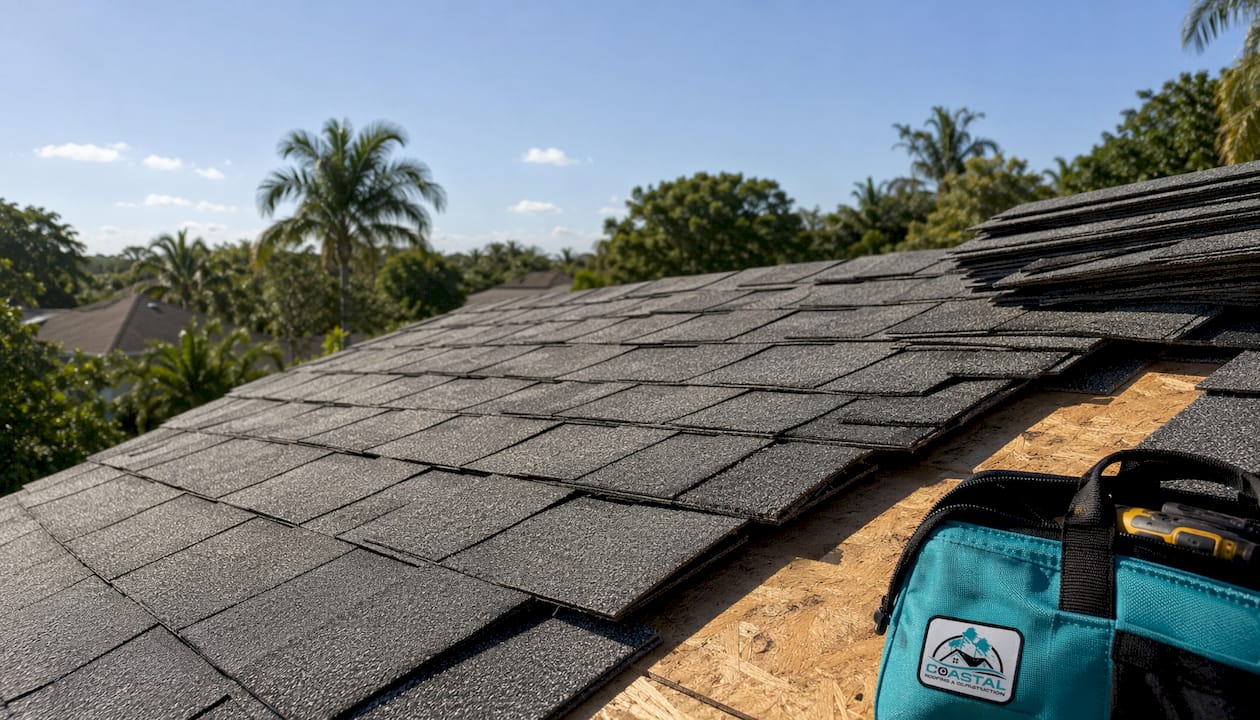
The extra weight and layering improve resistance to wind uplift, hail impact, and general wear. The granule surface also does double duty: it protects the asphalt from UV degradation and, in many modern products, contains copper-infused or algae-resistant granules that prevent the black streaking common on older roofs.
Architectural shingles vs. three-tab shingles at a glance:
| Feature | Architectural shingles | Three-tab shingles |
|---|---|---|
| Layers | 2+ bonded layers | Single layer |
| Lifespan | 25–30 years | 15–20 years |
| Wind resistance | high wind resistance | lower wind resistance |
| Fire rating | Class A | Class A |
| Appearance | Dimensional, textured | Flat, uniform |
| Upfront cost | Moderate to high | Lower |
| Resale value | generally higher | generally lower |
Stat to know: Architectural shingles cost 20–30% more upfront but last roughly 50% longer than three-tab, and homeowners typically recoup 60–70% of the cost at resale.
On the environmental side, asphalt shingles are recyclable through programs that process old shingles into road paving material, reducing landfill waste. Not every contractor participates, so ask yours directly.
What the installation process actually involves
A proper architectural shingle installation follows seven defined stages. Skipping or rushing any one of them is where problems start.
- Tear-off: The crew removes existing shingles, nails, and underlayment down to the bare deck.
- Deck inspection: Every square foot of plywood or OSB gets checked for rot, soft spots, and water damage. Damaged decking must be replaced before anything else goes on. Fasteners pull through compromised wood, and no shingle will save a failing deck.
- Drip edge and underlayment: Drip edge goes along the eaves first, then synthetic underlayment rolls across the entire deck. In storm-prone or cold climates, self-adhering ice and water shields are installed in valleys and vulnerable areas. Building codes require this shield to extend at least 24 inches past the interior warm wall line.
- Chalk line layout: Straight chalk lines are snapped across the deck to keep rows aligned. Crooked rows are not just an aesthetic problem; they create gaps where water can infiltrate.
- Starter strip and first course: A factory-made starter strip goes along the eave edge, providing a sealed base and wind resistance at the most vulnerable point of the roof.
- Shingle application: Shingles are nailed in overlapping, staggered rows from the bottom up. Each shingle receives 4–6 nails depending on the product and local wind zone requirements. Nail placement matters: too high or too low causes blow-offs and voids warranties.
- Flashing and ridge caps: Metal flashing seals around chimneys, vents, and skylights. Factory-produced ridge caps finish the peak, providing both a clean look and proper ventilation. Cut-from-field shingles used as ridge caps are a shortcut that manufacturers explicitly discourage.
Pro Tip: Always ask your contractor whether they use factory ridge caps. It is a quick way to gauge whether they follow manufacturer specs, which directly affects your warranty.
Maintenance, lifespan, and keeping your warranty valid
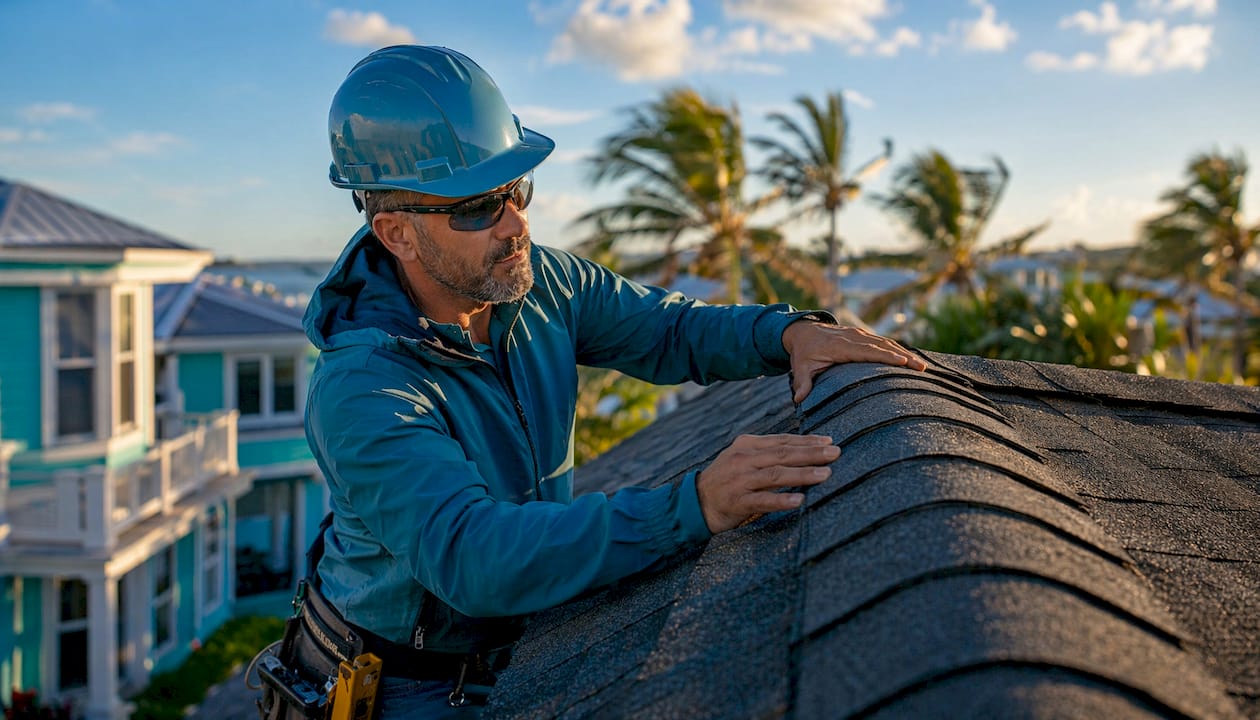
A well-installed architectural shingle roof realistically lasts 25–30 years, but that range assumes the roof gets basic attention along the way. Florida’s climate adds specific pressure: heat, humidity, and hurricane-season wind events accelerate wear faster than in temperate climates.
Maintenance priorities for homeowners:
- Annual professional inspection: A trained eye catches lifted shingles, cracked flashing, and early algae growth before they become leaks. Coastal Roofing & Construction offers roof inspection services that cover all these points.
- Post-storm check: After any significant wind or hail event, have the roof inspected. Manufacturers require documented maintenance to honor long-term warranties.
- Gutter cleaning: Clogged gutters back water up under the eave edge, exactly where shingles are most vulnerable.
- Ventilation check: Poor attic ventilation traps heat that degrades shingles from below, cutting years off the roof’s life.
- Algae treatment: Modern shingles with copper or algae-resistant granules handle this better, but older products may need periodic cleaning with a low-pressure wash.
Warranty coverage typically requires certified installation and documented upkeep. Skipping inspections gives manufacturers grounds to deny claims.
Leading U.S. manufacturers worth knowing
Four brands dominate the U.S. architectural shingle market, and each takes a slightly different approach:
- GAF: The largest roofing manufacturer in North America. Their Timberline series is the best-selling architectural shingle line in the country, available in dozens of color blends and backed by a lifetime limited warranty when installed by a GAF-certified contractor. Coastal Roofing & Construction holds GAF certification.
- Owens Corning: Known for the Duration series, which features SureNail technology for improved fastener holding strength. Their TruDefinition color system produces blended, natural-looking tones. Coastal Roofing & Construction is also Owens Corning certified.
- CertainTeed: Offers the Landmark series, a widely specified product with strong wind warranties and a broad color palette. CertainTeed’s Integrity Roof System bundles shingles with compatible underlayment and accessories for a fully warranted system.
- IKO: A Canadian-founded manufacturer with strong U.S. distribution. Their Cambridge series offers Class A fire ratings and wind resistance up to 130 mph, with a focus on value at the mid-market price point.
All four brands carry Class A fire ratings and wind warranties in the 110–130 mph range. The real differentiator between them is often the contractor certification program, since manufacturers only honor their best warranties through certified installers.
What warranties actually cover
Architectural shingle warranties come in two parts, and most homeowners only read one of them. The material warranty covers defects in the shingle itself, typically for 30 years on standard products and lifetime on premium lines. The workmanship warranty covers installation errors and comes from the contractor, not the manufacturer.
Manufacturers require certified installation to activate the full coverage. An uncertified install may still carry a material warranty, but it is often prorated and shorter. Read the fine print: most warranties also exclude damage from improper ventilation, acts of nature above the rated wind speed, and lack of maintenance documentation.
Which roof types and pitches work with architectural shingles
Architectural shingles perform best on roofs with a pitch of 4:12 or steeper, meaning the roof rises 4 inches for every 12 inches of horizontal run. Steeper pitches shed water faster, which is exactly what layered shingles are designed for.
They can be installed on slopes as low as 2:12 with modified underlayment procedures, typically a double layer of underlayment or a single layer of ASTM D1970-rated self-adhering membrane. Anything below 2:12 is not suitable for shingles of any type. Flat or near-flat roofs require membrane systems like TPO instead.
For Florida homes, most standard gable and hip roof designs fall well within the compatible pitch range. Complex rooflines with multiple valleys, dormers, or low-slope sections may require a combination of shingles and membrane roofing.
Drawbacks worth knowing before you decide
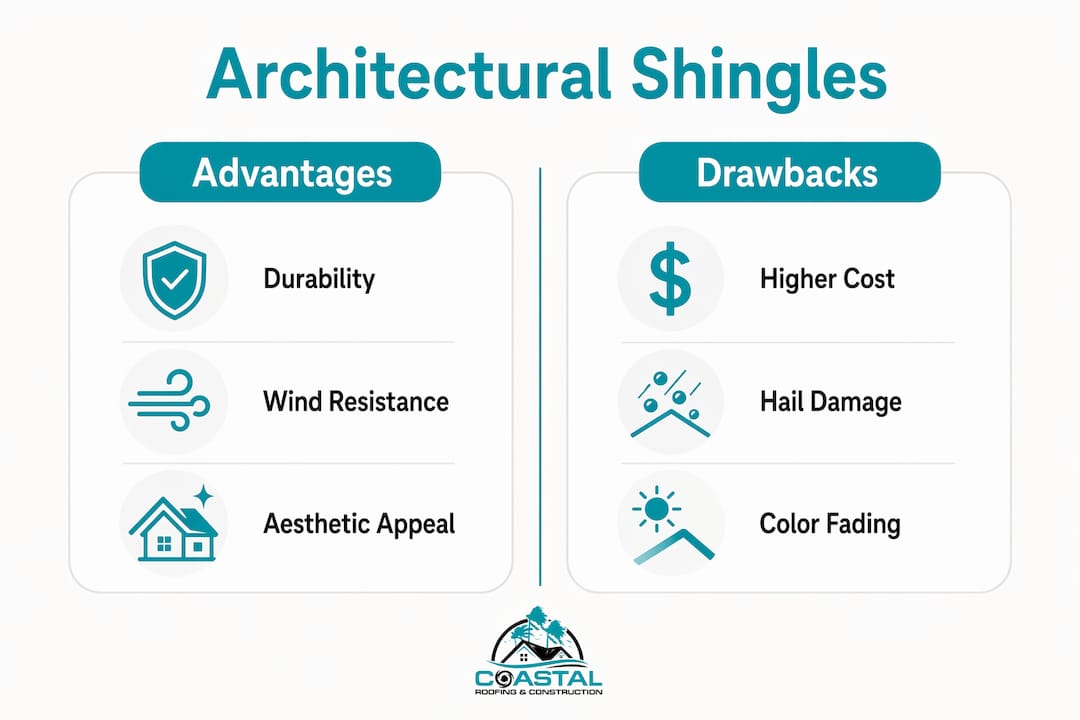
Architectural shingles are not the right answer for every situation. The higher upfront cost is real: a full replacement runs noticeably more than a three-tab job, which matters if budget is the primary constraint. They are also heavier, so older homes with marginal roof framing may need structural assessment before installation.
In extreme hail markets, even premium architectural shingles can sustain impact damage, and standard products do not carry an impact resistance rating. Homeowners in high-hail areas should ask specifically about Class 4 impact-rated shingles, which carry a separate IR rating and often qualify for insurance discounts.
Finally, color fading is a real issue over time. Granule loss from UV exposure gradually changes the appearance of any asphalt shingle. Premium products with enhanced granule adhesion slow this process, but no asphalt shingle holds its original color for 30 years.
Ready to put architectural shingles on your home?
Coastal Roofing & Construction installs architectural shingle roofs throughout the Tampa Bay area, with manufacturer certifications from both Owens Corning and GAF. That certification matters because it is what activates the full warranty on your new roof. Whether you are replacing an aging roof or building new, the team brings the same attention to deck prep, underlayment, and nail placement that separates a 30-year roof from one that starts leaking in year eight.
Browse recent shingle projects or get a full breakdown of the residential roof replacement process to see what working with Coastal Roofing & Construction actually looks like.
Key Takeaways
Architectural shingles outperform three-tab shingles in every measurable category, and certified installation is the single factor that determines whether the warranty holds.
| Point | Details |
|---|---|
| Construction advantage | Two or more bonded asphalt-fiberglass layers create a thicker, heavier shingle with better wind and impact resistance. |
| Performance ratings | Wind resistance of 110–130 mph and Class A fire rating are standard across major brands. |
| Lifespan vs. cost | 25–30 year lifespan costs 20–30% more upfront but lasts roughly 50% longer than three-tab shingles. |
| Warranty requirement | Manufacturers require certified installation to honor full coverage; uncertified installs receive reduced warranty terms. |
| Pitch compatibility | Best performance on slopes of 4:12 or steeper; modified procedures allow installation down to 2:12. |