
Asphalt shingles are the most widely used residential roofing material in the United States, installed on 75–80% of U.S. homes. The three main grades are 3-tab, architectural, and luxury, each with a distinct cost range, lifespan, and wind resistance rating. When you compare asphalt shingle roofing options, the right choice depends on your budget, local climate, and how long you plan to stay in the home. This guide breaks down every grade, explains the impact-resistant upgrade category, and walks you through the total cost of ownership so you can make a confident, informed decision.
What are the main grades of asphalt shingles and how do they differ?
Asphalt shingle grades are defined by their construction, weight, and performance ratings. Understanding those differences is the fastest way to narrow down which type fits your home.
3-tab shingles
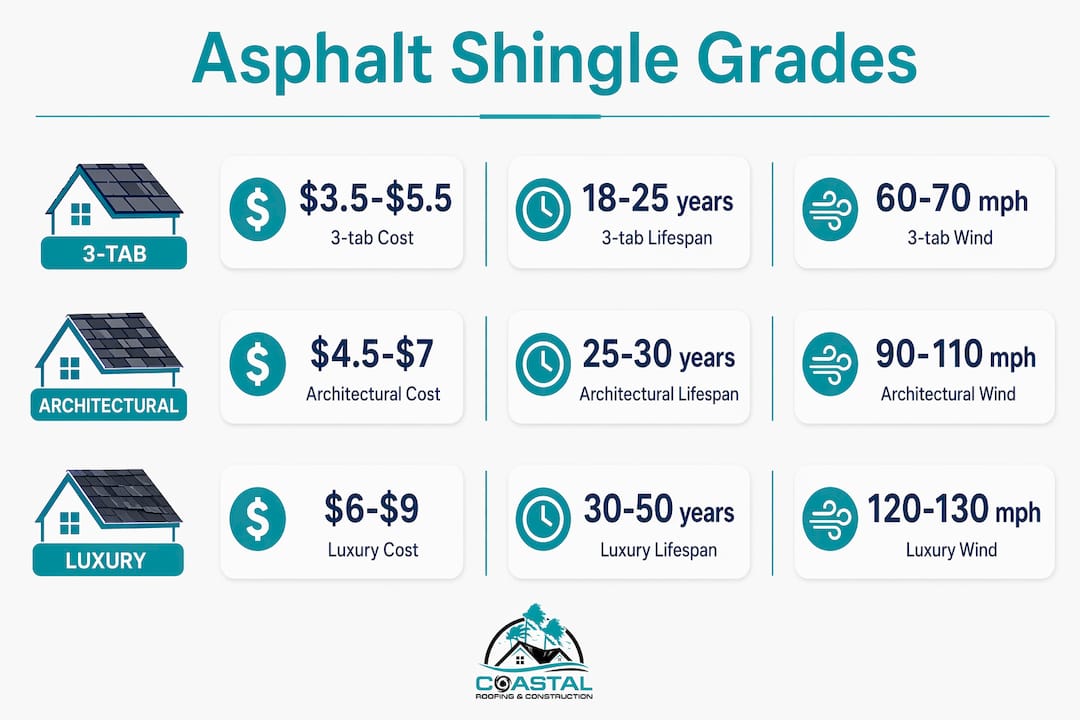
3-tab shingles are the entry-level option. They are a single flat layer with cutouts that create the appearance of three separate pieces. Installed costs run roughly $3.50–$5.50 per square foot, and lifespan typically reaches 15–20 years. Wind resistance tops out at 60–70 mph, which falls short of Florida building codes in most coastal counties. They work for tight budgets, short ownership timelines, or mild-weather regions without significant hail or hurricane exposure.
Architectural shingles
Architectural shingles, also called dimensional or laminated shingles, are the dominant choice on the market. Their multi-layer laminated construction creates a dimensional look that mimics wood shake without the maintenance burden. That extra layer also provides redundancy against storm damage that single-layer 3-tab shingles simply cannot match. Installed costs run $5.50–$8.50 per square foot, lifespans reach 25–30 years, and wind resistance ratings climb to 110–130 mph. For most homeowners, architectural shingles deliver the best balance of cost, durability, and curb appeal.
Luxury (premium) shingles
Luxury shingles sit at the top of the asphalt category. They are the thickest, heaviest option and are engineered to replicate the look of natural slate or wood shake. Installed costs range from $8.50 to $12+ per square foot, lifespans stretch 30–50 years, and wind resistance exceeds 130 mph. They suit high-value homes, long-term ownership, and homeowners who want premium aesthetics without switching to tile or metal.
Grade comparison at a glance
| Grade | Installed cost (per sq. ft.) | Lifespan | Wind resistance |
|---|---|---|---|
| 3-tab | $3.50–$5.50 | 15–20 years | 60–70 mph |
| Architectural | $5.50–$8.50 | 25–30 years | 110–130 mph |
| Luxury | $8.50–$12+ | 30–50 years | 130–150 mph |
Pro Tip: In Florida’s coastal counties, building codes often require wind resistance ratings of 130 mph or higher. Verify your local requirements before selecting a grade, because choosing a lower-rated shingle can void your permit and your warranty.
How does impact resistance influence asphalt shingle selection and value?
Impact resistance is a performance subcategory that cuts across all three grades. The industry standard is the UL 2218 test, which classifies shingles from Class 1 (lowest) to Class 4 (highest). Class 4 shingles meet the UL 2218 hail resistance standard and are the only rating that qualifies for meaningful insurance discounts in most states.
The upgrade cost for Class 4 shingles runs $800–$2,500 on an average 2,000-square-foot home. That sounds steep until you factor in the insurance side of the equation. Homeowners in hail-prone states like Texas and Oklahoma see insurance premium discounts of 20–30%, which can translate to $600–$900 in annual savings on a $3,000 policy. At that rate, the upgrade pays for itself within 3–5 years.
Key reasons to consider a Class 4 upgrade:
- You live in a region with frequent hail or severe thunderstorms
- Your current homeowner’s insurance policy offers a discount for UL 2218 Class 4 certification
- You plan to stay in the home long enough to recoup the upgrade cost
- You want to reduce the likelihood of storm damage claims that raise future premiums
One important clarification: UL 2218 Class 4 certification does not mean hail-proof. It means the shingle resists cracking under a standardized impact test. Large hailstones in extreme storms can still cause damage. The rating reduces risk and qualifies you for discounts. It does not eliminate risk entirely.
What factors should homeowners consider when choosing asphalt shingles?
Selecting the right shingle grade requires matching the product to your specific situation. Four factors drive the decision for most homeowners.
-
Budget and long-term value. The cheapest shingle costs more over time if it fails early. A 3-tab roof replaced after 18 years costs more in total than an architectural roof that lasts 28 years on the same house. Run the numbers before defaulting to the lowest upfront price.
-
Local climate hazards. Florida homeowners face a combination of hurricane-force winds, intense UV exposure, and high humidity. Architectural shingles are recommended wherever lifespan and damage resistance matter. In Tampa Bay, that means virtually every replacement project. Homeowners in shaded or humid environments should also look for factory-applied algae-resistant shingles to prevent the dark streaking that shortens roof life and kills curb appeal.
-
Ownership timeline and resale value. If you plan to sell within five years, a mid-grade architectural shingle gives you the best return. Buyers notice a new roof, and a 25-year architectural shingle reads as a meaningful upgrade on a listing. Luxury shingles make the most sense for homeowners who plan to stay 15 or more years and want a roof that outlasts multiple ownership cycles.
-
HOA and municipal requirements. Some homeowners associations specify approved shingle colors, profiles, or brands. Some Florida municipalities require minimum wind ratings that eliminate 3-tab shingles entirely. Check both before you select a product.
Pro Tip: Installation quality matters as much as shingle grade. In high-wind zones, a six-nail installation pattern is required to maintain warranty integrity. Many contractors default to four nails, which voids the wind warranty. Ask your contractor to confirm their nailing pattern before work begins.
How do you calculate the total cost of ownership for asphalt shingle roofing?
Total cost of ownership accounts for upfront installation, expected lifespan, maintenance, insurance impact, and warranty coverage. Comparing only the sticker price leads to poor decisions.
A straightforward way to compare grades is cost per year of service. A 3-tab roof installed at $5,000 and lasting 18 years costs roughly $278 per year. An architectural roof installed at $9,000 and lasting 28 years costs roughly $321 per year. The difference is about $43 per year, but the architectural roof delivers significantly better wind protection, aesthetics, and resale value for that marginal cost.
Add insurance savings to the equation and the math shifts further. A Class 4 architectural upgrade costing an extra $1,500 at installation, combined with a $700 annual insurance discount, produces a net gain within three years. After that, the homeowner pockets the savings every year the roof remains in service.
Key factors in a complete cost-of-ownership analysis:
- Upfront installation cost including labor, underlayment, and accessories
- Expected lifespan based on grade, climate, and installation quality
- Insurance premium impact for Class 4 upgrades in qualifying regions
- Warranty coverage including wind, algae, and workmanship terms
- Maintenance costs such as periodic inspections and minor repairs
Correct installation accessories also affect long-term cost. Starter strips, ridge caps, and synthetic underlayment are not optional extras. They are required components for preserving wind warranties and extending shingle lifespan. Cutting corners on accessories to lower the bid price is one of the most common ways homeowners end up with a warranty claim that gets denied.
For Tampa Bay homeowners, Coastal Roofing & Construction’s shingle roofing services include full accessory packages and manufacturer-certified installation, which protects both the product warranty and the wind warranty simultaneously.
Key Takeaways
Architectural shingles deliver the best cost-per-year value for most homeowners, and a Class 4 impact-resistant upgrade pays for itself within 3–5 years in hail-prone or storm-exposed regions.
| Point | Details |
|---|---|
| Three distinct grades | 3-tab, architectural, and luxury shingles differ in cost, lifespan, and wind resistance. |
| Architectural is the standard | Architectural shingles cover 75–80% of U.S. homes and balance cost, durability, and aesthetics. |
| Class 4 upgrade value | UL 2218 Class 4 shingles can reduce insurance premiums by 20–30%, offsetting upgrade costs in 3–5 years. |
| Installation determines warranty | Six-nail patterns and proper accessories are required to maintain wind and manufacturer warranties. |
| Match grade to ownership plan | Short-term owners benefit from architectural shingles; long-term owners should evaluate luxury grades. |
What I’ve learned after years of shingle installations in Florida
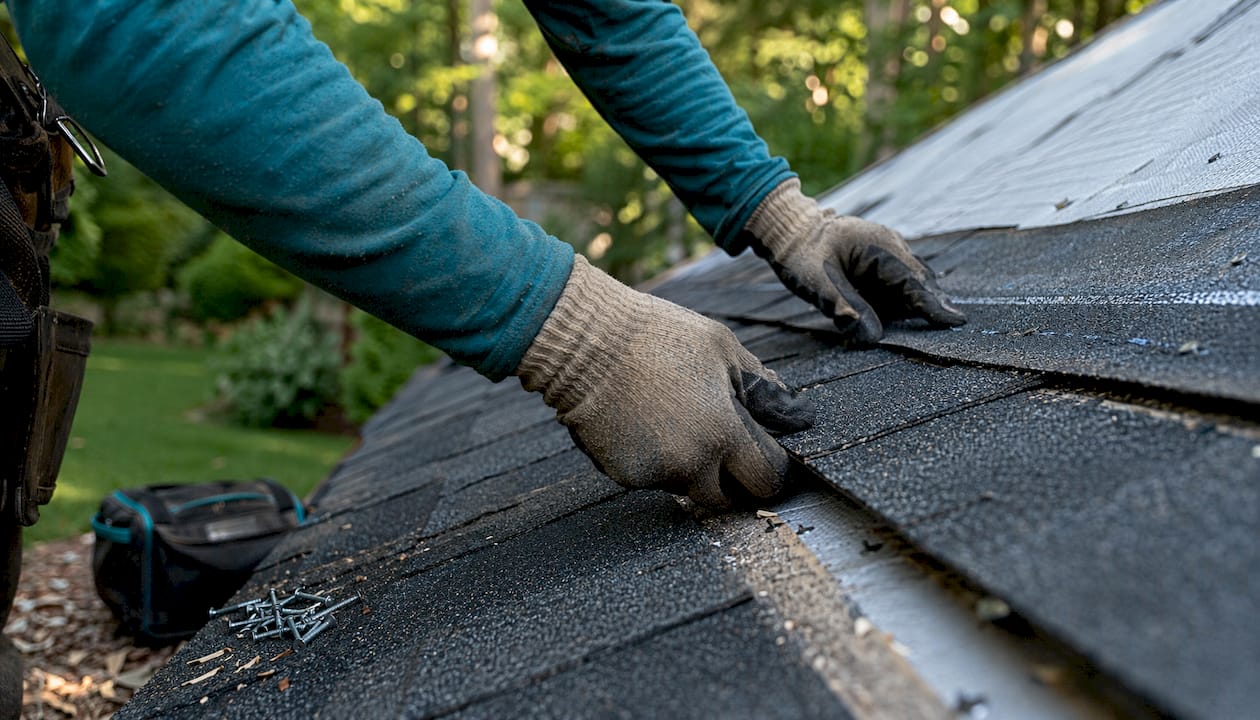
The most common mistake I see homeowners make is treating shingle selection as a purely financial decision and ignoring the installation side entirely. A premium architectural shingle installed with four nails instead of six, or without a proper synthetic underlayment, will fail in a Florida storm well before its rated lifespan. The shingle grade matters. The installation quality matters just as much.
The second pattern I notice is homeowners in Tampa Bay defaulting to 3-tab shingles because the bid is lower. That decision almost always costs more money over a ten-year window. Florida’s wind exposure, UV intensity, and humidity are genuinely harsh on roofing materials. A 3-tab shingle rated for 60–70 mph winds is not a serious option for a coastal home. Architectural shingles are the minimum I would recommend for any home in Pinellas, Hillsborough, or Pasco County.
On the luxury end, I think homeowners underestimate how much a premium shingle changes the look of a home. If you are in a waterfront neighborhood or a community where curb appeal drives property values, the jump from architectural to luxury shingles is worth a serious conversation. The cost difference per year of service is smaller than most people expect, and the aesthetic difference is significant.
My honest recommendation: get a Class 4 architectural shingle if you are in a storm-exposed area and your insurer offers a discount. Get a luxury shingle if you plan to stay in the home for 20 or more years and care about the visual result. Skip 3-tab entirely unless your budget leaves no other option.
— Ryan
Coastal Roofing & Construction can help you choose the right shingle
Choosing the right asphalt shingle grade is straightforward when you have the right contractor walking you through it. Coastal Roofing & Construction serves homeowners across the Tampa Bay area with manufacturer-certified installations backed by Owens Corning and GAF warranties.
The team at Coastal Roofing & Construction assesses your home’s wind exposure, reviews your insurance policy for Class 4 discount eligibility, and recommends the grade that delivers the best long-term value for your specific situation. You can see examples of completed shingle replacement projects in the portfolio, or get a full overview of the residential roof replacement process before scheduling your estimate. Contact Coastal Roofing & Construction for an honest assessment and a detailed quote tailored to your home.
FAQ
What is the most popular asphalt shingle type?
Architectural shingles are the most popular, installed on 75–80% of U.S. homes. They offer the best balance of cost, durability, and wind resistance for most homeowners.
How long do architectural shingles last in Florida?
Architectural shingles typically last 25–30 years under normal conditions. Florida’s UV exposure and storm activity can shorten that lifespan without proper installation and maintenance.
What does Class 4 impact resistance mean for shingles?
Class 4 is the highest rating under the UL 2218 hail impact test. Shingles with this rating qualify for insurance premium discounts of 20–30% in many states and resist cracking better under hail impact.
Are 3-tab shingles a good choice for Florida homes?
3-tab shingles are generally not recommended for Florida homes. Their 60–70 mph wind resistance rating falls below the wind loads common in coastal counties, and their shorter lifespan increases long-term replacement costs.
How does installation quality affect shingle performance?
Installation quality directly determines whether a shingle meets its rated wind resistance and warranty terms. A six-nail pattern, proper starter strips, and synthetic underlayment are required for full warranty coverage in high-wind zones.