
Roofing cleanup protects your family’s safety, prevents water intrusion and mold, preserves manufacturer warranties, and saves you from repair bills that can run ten times the cost of a simple maintenance visit. The single most important thing you can do right now: confirm that cleanup is written into your contract, and request a magnetic nail sweep across your entire yard and driveway within the first week after any roofing work. Coastal Roofing & Construction includes cleanup as a standard part of every project, not an add-on, and serves homeowners throughout the Tampa Bay area.
Table of Contents
- Why cleanup prevents expensive repairs and health hazards
- What does a thorough roofing cleanup actually cover?
- Florida-specific factors that raise the stakes for cleanup
- How often should you schedule cleanup and inspections?
- Which cleanup tasks can you do yourself, and which require a pro?
- What should a professional cleanup and inspection include?
- Concrete cost examples: what timely cleanup actually saves you
- How a professional roofing cleanup is executed, step by step
- Key Takeaways
- The real cost of treating cleanup as optional
- Coastal Roofing & Construction: local expertise, documented results
- Useful sources and further reading
Why cleanup prevents expensive repairs and health hazards
The cost escalation path for a neglected roof is predictable and painful. A small flashing gap or a clogged gutter costs a few hundred dollars to fix when caught early. If left unaddressed, water intrusion can lead to costly attic and decking repairs and may result in a premature full roof replacement, occurring years before the roof should have failed.
Roofs under active preventive maintenance typically last 25–30% longer than neglected ones, according to NRCA and manufacturer field research. That’s not a minor margin. On a quality Florida roof, that difference can mean several additional years before replacement.
The financial case in one sentence: documented maintenance and cleanup are the cheapest insurance policy your roof has.
Health risks compound the financial ones. Water that gets in through debris-clogged gutters or missed flashing doesn’t just damage wood. It feeds mold and mildew, which degrade indoor air quality and trigger respiratory problems. On the ground, stray nails from a tear-off are an immediate hazard: puncture wounds for kids and pets, blown tires in the driveway. Photo documentation of every cleanup step also matters for insurance claims, because insurers can and do dispute claims when maintenance records are absent.
Key risks from skipped cleanup:
- Mold and mildew growth from water intrusion through clogged gutters or missed flashing debris
- Nail and sharp-debris injuries to children, pets, and vehicle tires
- Voided manufacturer warranties when maintenance isn’t documented
- Insurance claim disputes tied to lack of maintenance records
- Accelerated granule loss and shingle deterioration from trapped organic debris
What does a thorough roofing cleanup actually cover?
A professional cleanup is more than tossing old shingles in a dumpster. Here’s what a complete job looks like:
- Magnetic nail sweep: A rolling magnetic sweeper covers the yard, driveway, sidewalks, and landscaping. This is non-negotiable. Even experienced crews miss nails, which is why the sweep needs to be documented.
- Gutter and downspout clearing: Granules and shingle fragments clog gutters fast and force water under the roof edge, damaging soffits and fascia.
- Valley and edge debris removal: Debris collects in roof valleys and along edges, trapping moisture and accelerating algae growth.
- Packaging and old material removal: Every scrap of underlayment, packaging, and old shingle material leaves the property.
- Dumpster management: A reputable contractor removes the dumpster within 1–3 days after completion. If it’s sitting in your driveway a week later, that’s a red flag.
- Landscaping protection and documentation: Tarps protect plants and flower beds during tear-off. Documenting landscape condition before and after work protects you if damage occurs.
- Attic check: A quick inspection from the attic access point confirms no debris fell through and no daylight is visible through the decking.
- Final walkthrough with photos: The crew walks the property with you and documents the finished state.
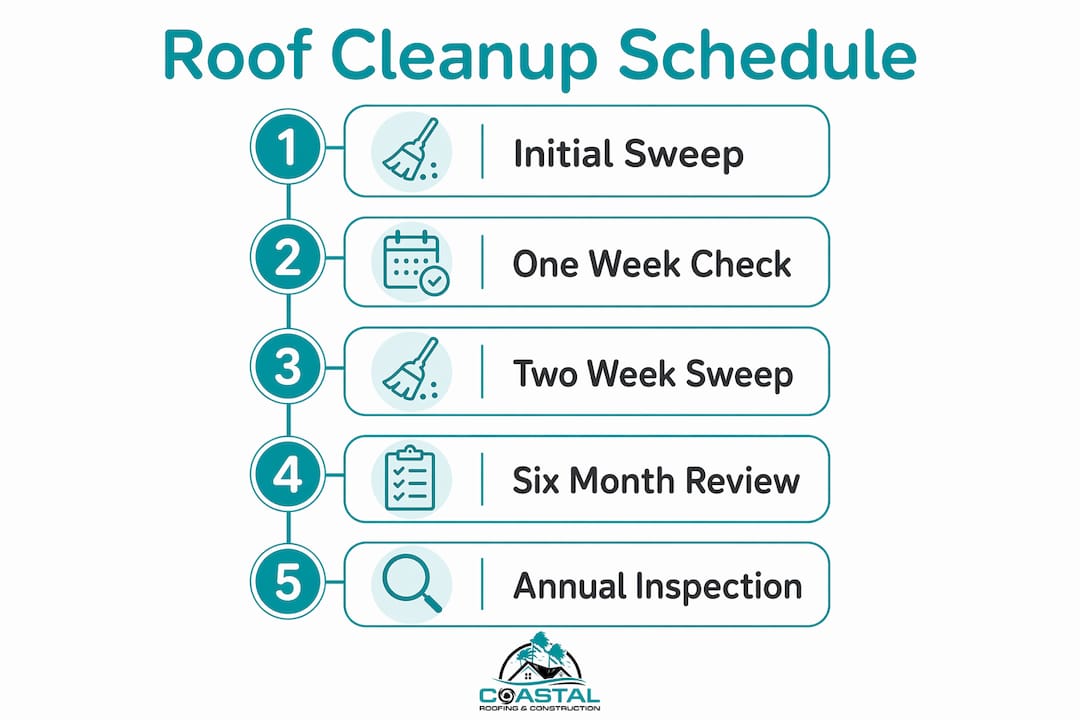
Pro Tip: Do your own secondary nail sweep one week after the job, then again two to three weeks later. Florida rain and mowing bring buried nails to the surface that the initial sweep missed.
Florida-specific factors that raise the stakes for cleanup
Florida’s climate makes cleanup more urgent than in most of the country. Salt air from the Gulf and Atlantic accelerates corrosion on metal flashings and fasteners. Any debris left sitting against those components holds moisture and speeds that process. A flashing that might last 20 years in a dry climate can fail in 10 when it’s constantly damp under a pile of organic debris.
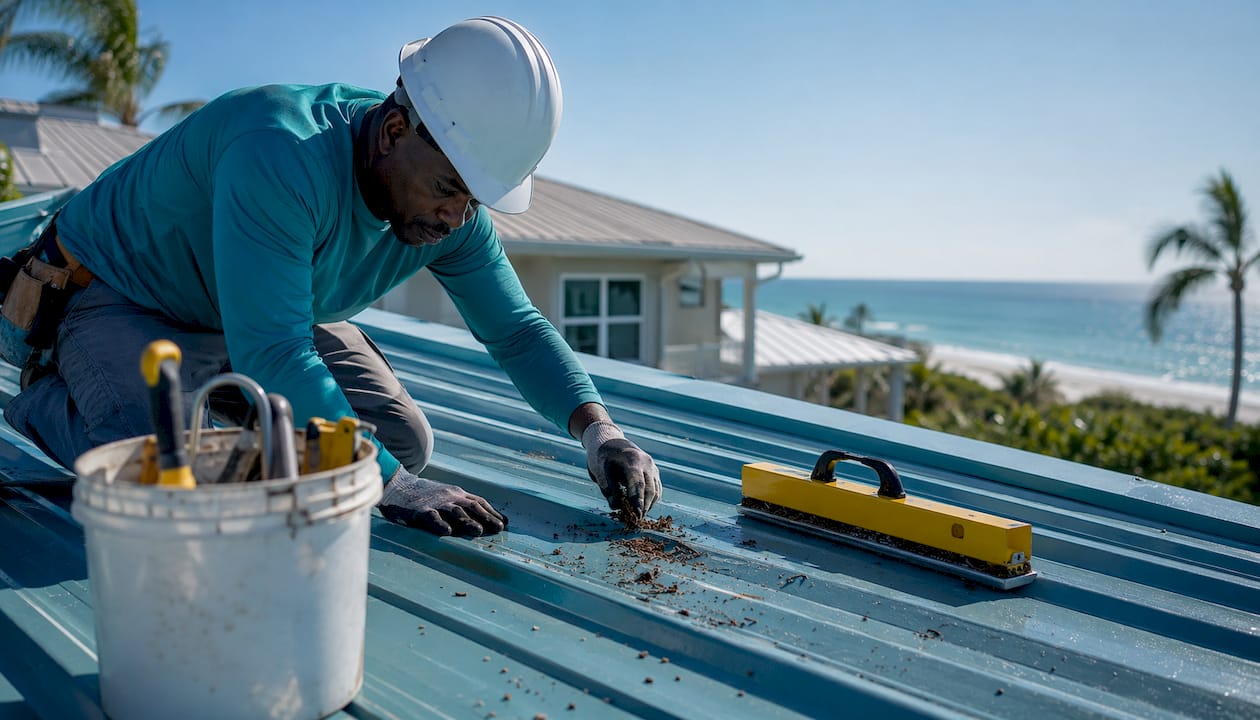
Summer rainfall in Tampa Bay is relentless. A gutter clogged by post-job granules after a June replacement can overflow by July, sending water into the soffit and attic. Add the algae and moss that thrive in Florida’s humidity, and leftover debris becomes a growth medium that actively degrades shingles.
Seasonal action list for Florida homeowners:
- Pre-storm (May–June): Clear gutters, secure any loose debris, and confirm flashings are sealed before hurricane season peaks.
- Post-storm (immediately after any significant wind event): Walk the perimeter for scattered debris, check gutters, and look for wind-driven damage to shingles or flashing.
- Fall (October–November): Schedule a professional inspection after the active storm season closes.
- Spring (March–April): Clear any debris that accumulated over winter and treat early algae growth before it spreads.
How often should you schedule cleanup and inspections?
For most Florida roofs, a professional maintenance visit once a year is the baseline. Roofs with heavy tree cover or those within a mile of salt water benefit from biannual attention. After any named storm or significant wind event, don’t wait for the scheduled visit.
Signs that require immediate action, not a scheduled appointment:
- Visible debris or granule accumulation in gutters or downspouts
- Interior water stains on ceilings or walls that weren’t there before
- Missing or lifted shingles visible from the ground after a wind event
- Exposed nails or metal fragments in the yard or driveway
- Daylight visible from inside the attic
- Gutters pulling away from the fascia or overflowing during light rain
Pro Tip: Start a dated photo file the day your roof is installed. Keep every inspection report and maintenance receipt. Visible interior damage usually means the problem has been developing for months. Records matter when you file a warranty or insurance claim.
Which cleanup tasks can you do yourself, and which require a pro?
Some tasks are genuinely safe for homeowners. Others carry real fall risk or can void your warranty if done wrong.
Safe DIY tasks from the ground or low-access areas:
- Picking up visible debris from the yard and driveway
- Running a handheld magnetic sweeper over the lawn and driveway
- Clearing gutters on a single-story home with a properly secured ladder and a spotter
- Checking the attic from a walkable access point for daylight or debris
Tasks that require a licensed professional:
- Walking the roof surface for any reason
- Repairing or resealing flashings and pipe boots
- Replacing damaged or missing shingles
- Any work covered by a manufacturer warranty (Owens Corning, GAF, and similar programs require certified installers)
- Any job on a steep slope or two-story home
Falls are the leading cause of homeowner injuries during roof work. A wet Florida roof after a summer storm is genuinely dangerous. The inspection findings that matter most, like failing pipe boots and lifted flashing, are only visible up close and require trained eyes to catch early.
Decision checklist: If the roof is more than one story, has a pitch steeper than 4:12, involves warranty-covered materials, or sits in a coastal storm zone, hire a licensed, insured contractor.
What should a professional cleanup and inspection include?
Before you release final payment, confirm the contractor delivered every item on this list:
- Written magnetic nail sweep documentation covering yard, driveway, sidewalks, and landscaping
- Gutter and downspout cleaning with confirmation of free drainage
- Debris haul-away and dumpster removal within three days of job completion
- Attic inspection report with photos confirming no debris and no daylight
- Sealed penetrations and flashing with fresh sealant where needed
- Written final walkthrough checklist signed by the crew lead
Credentials to verify before hiring:
- State contractor license and active insurance (general liability and workers’ comp)
- Manufacturer certifications: Owens Corning, GAF, or Tri County Metals for metal work
- Factory-trained installer status
- Storm-restoration experience, especially relevant in Tampa Bay
Cleanup should be spelled out in the contract, not assumed. A roofing contract that specifies magnetic sweeps, dumpster removal timeline, and photo documentation gives you legal standing if the crew cuts corners.
Concrete cost examples: what timely cleanup actually saves you
| Issue Stage | Typical Repair Range | How Cleanup Prevents Escalation |
|---|---|---|
| Small defect (cracked sealant, loose nail) | — | Caught during post-job walkthrough or annual inspection |
| Water intrusion (attic damage, wet insulation) | — | Prevented by clearing gutters and sealing penetrations |
| Premature replacement (systemic failure) | — | Avoided by documented maintenance extending roof life |
Annual maintenance for most homeowners runs in the low hundreds per year. That’s the entire cost to avoid the middle and bottom rows of the table above.
A practical Florida example: a homeowner in Clearwater skips post-storm gutter clearing after a July squall. Granules and debris block the downspout. By September, water is backing up under the drip edge and soaking the fascia. What would have been a $150 gutter cleaning becomes a $4,000 fascia and soffit repair. The storm didn’t cause the damage. The skipped cleanup did.
How a professional roofing cleanup is executed, step by step
Understanding the sequence helps you know what to watch for on-site and what the final documentation should look like.
- Site protection: Tarps go down over landscaping, flower beds, and any hardscape adjacent to the work zone before tear-off begins.
- Tear-off and material handling: Old shingles, underlayment, and flashing are removed and loaded directly into the dumpster, not piled on the lawn.
- Rolling magnetic sweep (first pass): The crew runs the magnetic sweeper across the full property immediately after tear-off.
- Gutter cleaning and valley clearing: Gutters are cleared of granules and debris; roof valleys are swept free of material.
- Debris haul-away: The dumpster leaves within one to three days. Landscaping tarps are removed carefully.
- Attic inspection and ventilation check: A crew member checks the attic for fallen debris and confirms ventilation is unobstructed.
- Final walkthrough and photo report: The crew documents the finished state with photos and walks the property with the homeowner.
Pro Tip: On multi-day jobs, ask for end-of-day sweeping each afternoon. Nails left overnight in a Florida driveway are a hazard by morning, especially on jobs that run into afternoon thunderstorms.
A good contractor also provides a recommended follow-up schedule in the written report. A six-month check-in is standard after a full replacement, giving you a documented baseline before the first storm season.
Key Takeaways
Roofs under active preventive maintenance last 25–30% longer than neglected ones, and the cost of annual upkeep is a fraction of even a single water-intrusion repair.
| Point | Details |
|---|---|
| Verify cleanup in writing | Confirm magnetic sweeps, dumpster removal, and photo documentation are in the contract before work begins. |
| Do secondary nail sweeps | Walk the yard with a magnetic sweeper one week and again two to three weeks after any roofing job. |
| Schedule regular maintenance | Annual professional inspections are the baseline for Florida roofs; biannual for coastal or heavily treed properties. |
| Know the cost escalation | Small defects cost — to fix; water intrusion repairs run —; premature replacement reaches —. |
| Coastal Roofing & Construction | Licensed, insured, and manufacturer-certified, serving Tampa Bay homeowners with cleanup, inspections, and storm-restoration services. |
The real cost of treating cleanup as optional
Most homeowners focus on the new roof and mentally close the file the day the crew leaves. That’s the moment the financial risk actually begins. A roof that isn’t documented, swept, and inspected after installation is a roof that will fail earlier than it should, and when it does, the warranty language will almost certainly include a maintenance requirement the homeowner never met.
The Tampa Bay coastal environment makes this sharper than most places. Salt air, summer humidity, and a storm season that runs six months a year mean the margin for deferred maintenance is thin. A missed nail sweep is a blown tire. A skipped gutter cleaning after a storm is a $4,000 fascia repair. A roof without a maintenance record is a warranty claim that gets denied.
Treating cleanup and maintenance as a financial protection strategy, not a courtesy from the contractor, is the mindset shift that separates homeowners who get 30 years from a roof from those who replace it at 18. Coastal Roofing & Construction is licensed, insured, manufacturer-certified with Owens Corning, GAF, and Tri County Metals, and family-owned. That combination means the cleanup standards are built into the process, not negotiated after the fact.
Coastal Roofing & Construction: local expertise, documented results
Florida homeowners who want cleanup done right the first time have a straightforward option in the Tampa Bay area. Coastal Roofing & Construction handles the full scope: roof inspections, preventative maintenance plans, storm-damage restoration, and manufacturer-certified installations across shingle, metal, tile, and flat roofing systems.

Every project includes magnetic nail sweeps, photo documentation, and a written final walkthrough, backed by licensing, insurance, and factory-trained installers certified by Owens Corning, GAF, and Tri County Metals. If you’ve just had roofing work done, or if your roof hasn’t been inspected since the last storm season, the next step is simple: request an inspection and get a documented baseline before the next hurricane season opens. Coastal Roofing & Construction serves Pinellas, Hillsborough, and Pasco Counties, including Clearwater, St. Petersburg, Tampa, and surrounding Gulf Coast communities.
Useful sources and further reading
- How to Clean Up After a Roof Replacement — Practical homeowner guide covering magnetic sweeps, dumpster timelines, and secondary nail sweep timing
- Why Preventive Maintenance Extends Roof Life — NRCA-aligned research on maintenance ROI and the 25–30% lifespan extension finding
- Roof Maintenance Guide: Protect Your Home — Annual maintenance cost comparisons and gutter-blockage risk explanations
- Why Proper Roofing Cleanup Is More Important Than You Think — Landscaping protection, local disposal rules, and documentation recommendations
- What Is Preventative Roof Maintenance and Is It Worth It? — Comprehensive breakdown of maintenance scope, warranty implications, and cost math
- Is Roof Cleaning Really Necessary? — Northwest Roof Maintenance guidance on soft washing, moss treatment, and cleaning frequency
- The Importance of Regular Roof Cleaning — Benton Roofing overview of algae, moss, and debris risks with cleaning frequency guidance