
Attic insulation does more than keep your home warm in winter. It acts as a thermal and air barrier between your living space and the roof structure above, and when it works properly, it protects your shingles, reduces moisture damage, and cuts your energy bills year after year. The role of attic insulation in roofing performance is direct: without adequate insulation and air sealing, heat escapes into the attic, stresses roofing materials, and creates conditions that shorten roof life. Here is what every homeowner should know before the next season hits.
Key benefits at a glance:
- Reduces heat transfer through the roof deck, lowering attic temperatures
- Prevents ice dams by keeping the roof surface uniformly cold in winter
- Limits moisture condensation that causes wood rot and mold
- Extends the lifespan of shingles and roof decking
- Lowers heating and cooling costs through better thermal control
- Supports proper attic ventilation by stabilizing airflow conditions
- Reduces strain on your HVAC system
1. How attic insulation protects your roof and improves home comfort
Proper attic insulation reduces the thermal stress that shortens roof life. When heat from your living space escapes into an under-insulated attic, it warms the roof deck unevenly. In winter, that uneven warmth melts snow near the ridge while the eaves stay frozen, creating ice dams that force water under shingles and into the structure. Proper attic ventilation reduces ice dam formation by minimizing heat buildup, but insulation is the first line of defense.
In summer, a poorly insulated attic in a Florida home can reach temperatures well above 130°F. That heat radiates down through the ceiling and forces your air conditioner to work harder, while simultaneously baking the underside of your roof deck. Shingles age faster when the deck beneath them stays hot for months at a stretch.
Moisture is the other threat. Heat escaping through ceiling gaps carries humid air into the attic, where it condenses on cold roof sheathing. Over time, that moisture causes rot in rafters and sheathing, and it feeds mold growth that spreads quietly until you have a structural problem. Good insulation, combined with air sealing, keeps that humid air where it belongs: inside the conditioned space.
Primary benefits for roofing and home comfort:
- Stabilizes attic temperature, reducing thermal cycling that degrades shingles
- Prevents moisture-driven rot in roof framing and sheathing
- Reduces ice dam risk in colder climates by keeping the roof deck cold and even
- Lowers indoor temperatures in summer, reducing AC load
- Protects roof structural integrity by limiting moisture exposure
Stat callout: EPA estimates that homeowners can save an average of 15% on heating and cooling costs by air sealing and adding attic insulation.
2. What types of attic insulation work best?
Three materials dominate residential attic insulation, and each fits a different situation. Choosing the right one depends on your attic design, climate zone, and budget.
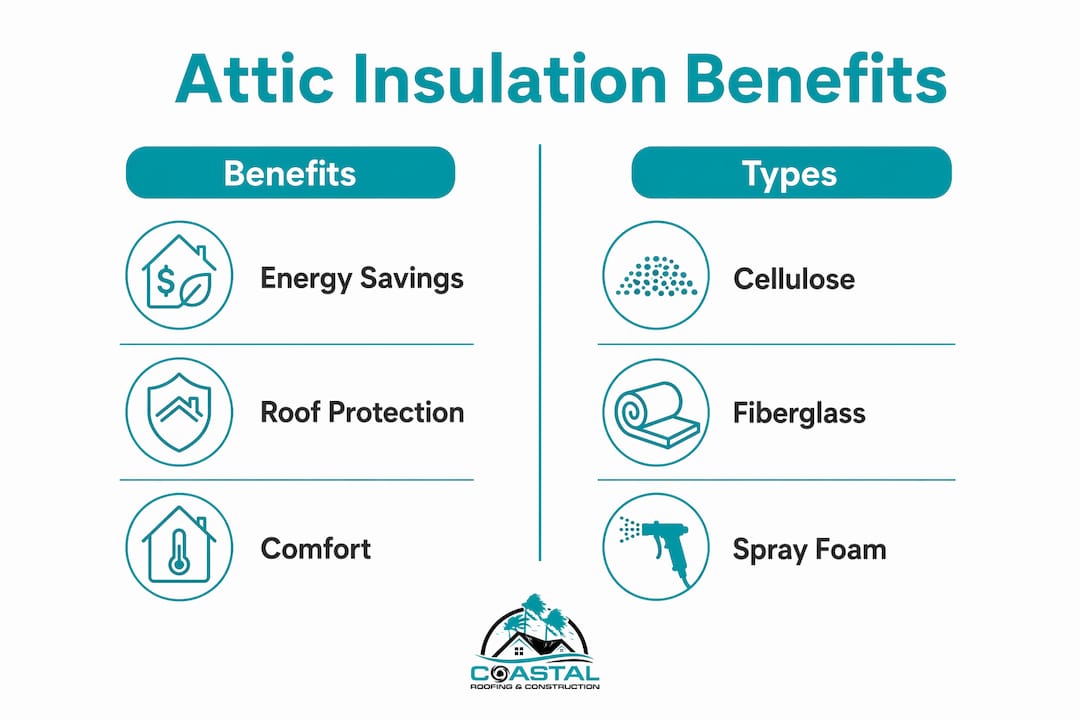
Blown-in cellulose is the best overall value for attic floors in most homes. It costs $0.60–$2.30 per square foot installed and delivers an R-value of 3.2–3.8 per inch. Cellulose settles about 20% after installation, so contractors typically over-install to compensate. It also has good air resistance compared to fiberglass batts, which gives it an edge in reducing convective heat loss.
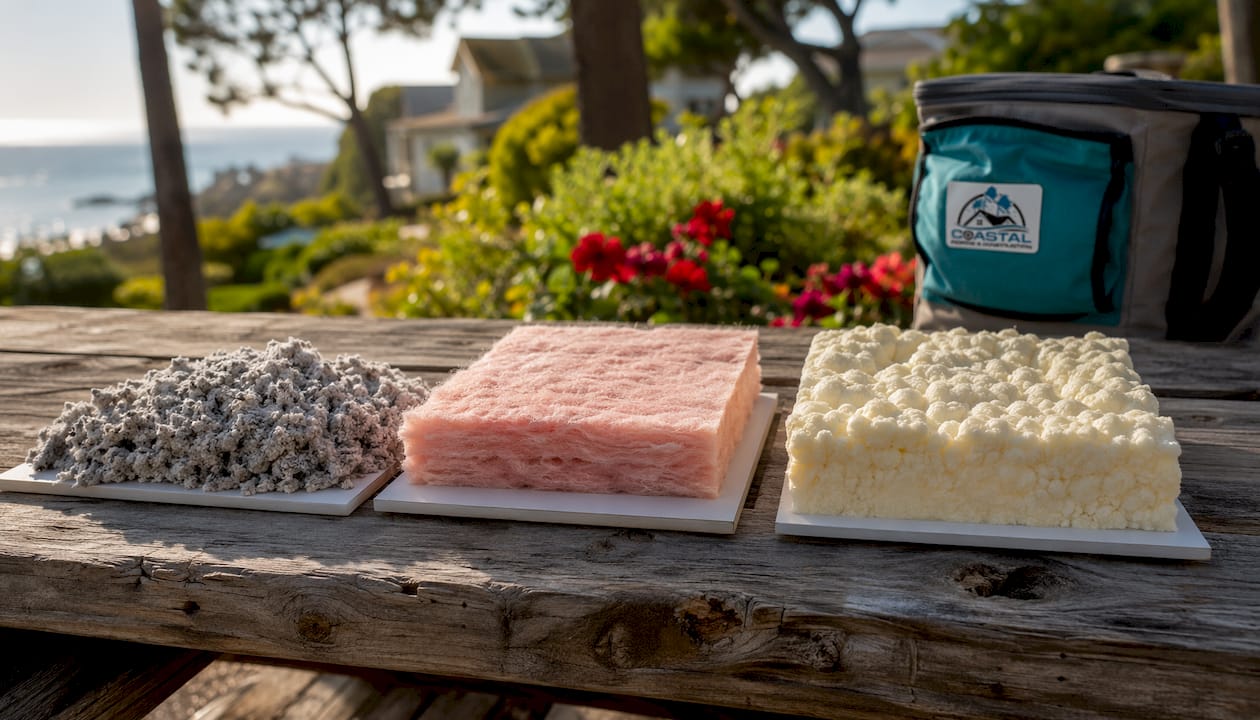
Blown-in fiberglass is lighter and does not settle as much as cellulose, but it offers a slightly lower R-value per inch. It works well in vented attics where you are adding depth over existing insulation. One practical note: fiberglass is more prone to air movement through the material itself, so pairing it with thorough air sealing matters more than it does with cellulose.
Spray foam is the go-to material for unvented attics and roof decks. Closed-cell spray foam is air-impermeable, meaning it seals and insulates in one step. It costs more per square foot than blown-in options, but in attics where HVAC equipment or ductwork sits in the attic space, the energy savings from conditioning that space often justify the higher upfront cost.
Rigid foam board (polyisocyanurate or EPS) is used above the roof deck during reroofing projects. It adds R-value without taking up interior space and reduces thermal bridging through the rafters.
Quick comparison by application:
- Attic floor, vented attic: blown-in cellulose or fiberglass
- Roof deck, unvented attic: closed-cell spray foam
- Above-deck during reroofing: rigid foam board (polyiso or EPS)
- Supplemental layer over existing insulation: unfaced fiberglass batts or loose fill
3. Vented vs. unvented attics: which design fits your home?
The two main attic designs differ fundamentally in where the insulation and air barrier sit, and that difference drives every other decision about materials and installation.
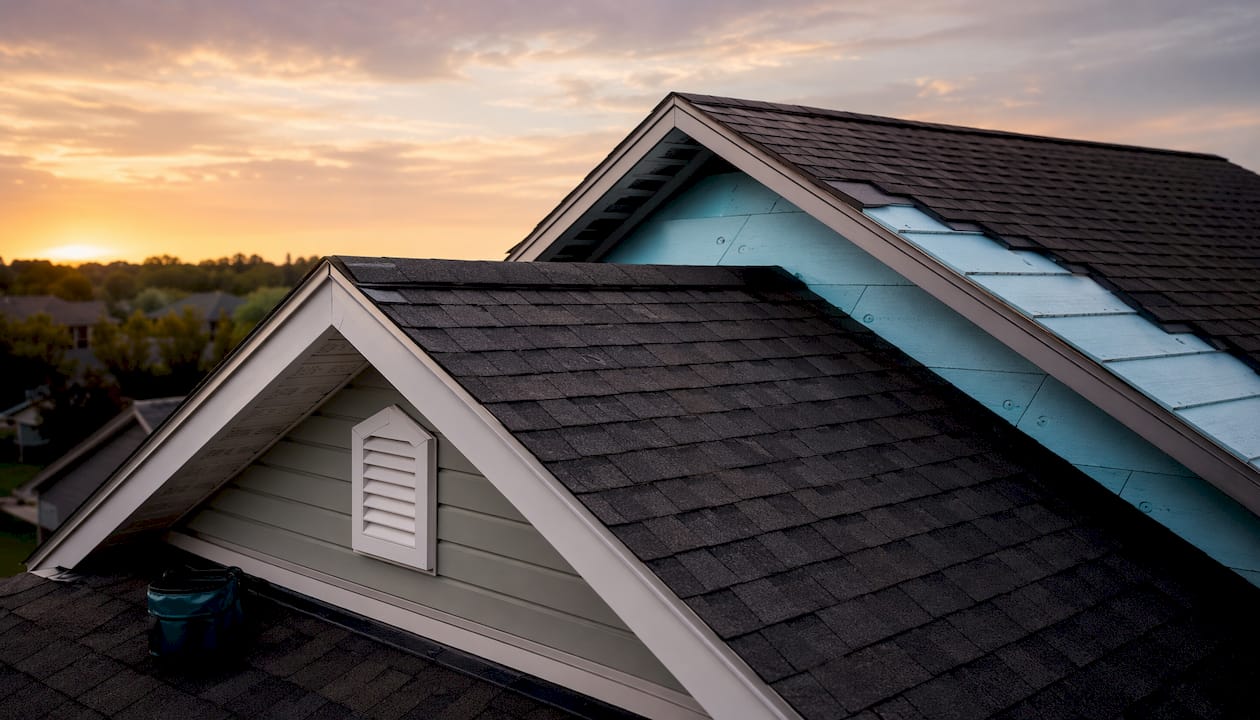
Vented attics place insulation on the attic floor, between and above the ceiling joists. Outside air flows continuously through soffit vents at the eaves and exits through ridge or gable vents at the top. The attic space itself stays close to outdoor temperature, which keeps the roof deck cold in winter (reducing ice dam risk) and allows moisture to escape. The Asphalt Roofing Manufacturers Association recommends a balanced vent ratio of 1:300 (one square foot of net free vent area per 300 square feet of ceiling), with more intake than exhaust to maintain proper airflow. Disrupting that balance leads to moisture buildup and premature roof failure.
Unvented attics move the insulation to the roof deck itself, sealing the attic into the conditioned envelope of the house. All attic vents are closed off. The thermal and air control layers sit at the roofline rather than the ceiling plane. This design solves two problems that vented attics cannot: it eliminates energy losses from ductwork sitting in an unconditioned space, and it handles complex ceiling geometries with many penetrations that make a truly airtight ceiling plane nearly impossible to achieve.
The tradeoff is cost and complexity. Spray foam on a roof deck costs more than blown-in insulation on an attic floor. But when HVAC equipment lives in the attic, conditioning the attic by insulating the roof deck can improve HVAC efficiency by 15–20% by eliminating duct losses. For Florida homes where the air handler often sits in the attic, that payback is real.
Design considerations at a glance:
- Vented attic: lower cost, works well when ceiling plane can be fully air-sealed, requires balanced soffit and ridge ventilation
- Unvented attic: higher upfront cost, best when HVAC is in the attic or ceiling geometry is complex
- Climate matters: hot-humid climates like Tampa Bay have different moisture dynamics than cold climates, and sealed attics can actually reduce moisture problems in Florida by keeping humid outdoor air away from ducts
- Energy efficient roofing in Florida often benefits from unvented designs given the heat and humidity
4. How to properly insulate your attic
Air sealing comes before insulation, every time. Skipping air sealing wastes 15–25% of the potential energy savings from adding insulation. The reason is physics: convective heat loss through gaps in the ceiling plane moves more heat than conduction through the insulation itself. Plugging those gaps first makes every inch of insulation you add work harder.
The primary air leak locations are top plates of interior walls, attic hatch frames, recessed light fixtures, plumbing and electrical penetrations, and duct boots where supply registers meet the ceiling. Use canned spray foam for gaps under an inch, and rigid blocking plus foam for larger openings around chases and dropped soffits.
Once air sealing is complete, the target R-value depends on your climate zone. The Department of Energy’s climate zone map places most of Florida in Zone 2, where the recommended attic insulation level for existing homes is R-38 to R-60. About 90% of US homes are under-insulated, and older Florida homes often fall well short of those targets.
Two installation details trip up a lot of DIY projects. First, never let insulation block soffit vents. Install baffles (also called rafter vents or vent chutes) at each rafter bay along the eaves to maintain a clear airflow channel from the soffit to the open attic. Second, keep insulation at least 3 inches away from recessed “can” lights unless the fixture carries an IC (insulation contact) rating. Covering a non-IC fixture with insulation is a fire hazard.
Installation checklist:
- Seal all top plates, penetrations, and attic hatch perimeter before adding insulation
- Install soffit baffles to protect ventilation channels
- Match insulation depth to your climate zone’s recommended R-value
- Keep insulation clear of non-IC recessed lights
- Inspect existing insulation for moisture damage before adding new material
- Prepare for roof replacement as an opportunity to address insulation gaps simultaneously
Pro Tip: When your roof is being replaced, ask your contractor about adding 2–4 inches of polyiso rigid foam above the roof sheathing before new shingles go down. This above-deck approach reduces thermal bridging through rafters, adds meaningful R-value without touching the attic interior, and costs far less than doing it as a standalone project later.
5. Energy savings and return on investment from better insulation
The numbers on attic insulation ROI are hard to ignore. ENERGY STAR data shows that a 1,500 square foot home upgrading from R-19 to R-49 insulation can save $200–$400 annually on heating and cooling, with a payback period of 2–5 years. That makes attic insulation one of the highest-ROI energy upgrades available to homeowners, ahead of window replacements and many HVAC upgrades.
The payback period varies by climate, existing insulation level, and whether you combine insulation with air sealing. Homes in heating-dominant climates see faster payback because the temperature differential between inside and outside is larger for more months of the year. In Florida, the savings come primarily from reduced cooling loads, and the benefit compounds when ductwork sits in the attic: every degree you lower the attic temperature reduces heat gain into those ducts.
Environmental impact follows the energy savings. Less energy consumed means a smaller carbon footprint, and the improvement is permanent as long as the insulation stays dry and undisturbed. Cellulose insulation also carries an environmental advantage: it is made largely from recycled paper, and its production requires less energy than fiberglass manufacturing.
Stat callout: Air sealing combined with attic insulation can reduce heating and cooling costs by 15–25% beyond insulation alone, per DOE research, making it the highest-priority step before adding any new insulation material.
Factors that influence your actual ROI:
- Current insulation level: homes with little or no insulation see the largest gains
- Climate zone: greater temperature swings mean greater savings potential
- Duct location: attic-located HVAC systems benefit most from insulation upgrades
- Installation quality: gaps, voids, and compressed insulation cut effective R-value sharply
- Air sealing completeness: partial air sealing leaves money on the table
6. Air sealing and insulation techniques that actually work
Air sealing and insulation work as a system, not as separate tasks. The primary convective heat loss sources in most attics are top plates of interior partition walls, framing penetrations for plumbing and wiring, attic hatches, and recessed lighting boxes. These gaps allow warm, humid interior air to bypass the insulation layer entirely and deposit moisture directly on cold roof sheathing.
The sequence matters. Seal first, then insulate. Applying blown-in insulation over unsealed gaps does not stop air movement; it just hides the problem. A contractor using a blower door test can identify the worst leaks before work begins, which focuses the air sealing effort where it delivers the most return.
For the attic hatch or pull-down stair, a pre-made insulated cover or a site-built rigid foam box placed over the opening from the attic side is the most effective fix. Attic hatches are often the single largest uninsulated surface in the ceiling plane, and they are easy to overlook.
Spray foam is the right tool for irregular gaps around pipes, wires, and top plates. For larger openings like dropped soffits above kitchen cabinets or open chases around chimneys, rigid foam board cut to fit and sealed at the edges with canned foam creates a durable, airtight cap. The ENERGY STAR attic insulation project guidelines recommend completing the air sealing project before adding any insulation, precisely because the two tasks require different access and different materials.
One technique that pays off in Florida specifically: sealing the top of interior partition walls. In older construction, these walls are often open at the top, creating a direct air path from the living space into the attic. Blocking these with rigid foam and spray foam at the perimeter addresses a leak that most homeowners never suspect.
Key Takeaways
Attic insulation protects your roof, cuts heating and cooling costs by an average of 15%, and extends roof life by controlling heat and moisture in the attic space.
| Point | Details |
|---|---|
| Air seal before insulating | Skipping air sealing wastes 15–25% of potential energy savings from insulation. |
| Match R-value to climate zone | Most Florida homes fall in DOE Zone 2, targeting R-38 to R-60 for attic insulation. |
| Insulation type depends on attic design | Blown-in cellulose suits vented attic floors; spray foam is required for unvented roof decks. |
| ROI is strong and fast | Upgrading from R-19 to R-49 in a 1,500 sq ft home saves $200–$400 annually, with a 2–5 year payback. |
| Ventilation balance protects the roof | A 1:300 vent-to-ceiling ratio with more intake than exhaust prevents moisture buildup and premature roof failure. |
Ready to upgrade your roof and insulation together?
A roof replacement is the best opportunity to address insulation gaps, add above-deck rigid foam, and set your home up for decades of lower energy bills. Coastal Roofing & Construction serves homeowners across Tampa Bay, from Clearwater and St. Petersburg to Palm Harbor and Lutz, with manufacturer-certified installations built for Florida’s heat and humidity. Whether you are replacing aging shingles or investing in a standing seam metal roof, the team at Coastal Roofing & Construction can assess your attic insulation needs as part of the project.
Explore recent roof replacement projects or learn more about residential roof replacement options in the Tampa Bay area.