
Replacement Cost Value (RCV) is defined as the full amount required to replace a damaged roof with new materials of similar kind and quality, without any deduction for depreciation. This is the standard the National Association of Insurance Commissioners uses to distinguish RCV from Actual Cash Value (ACV) coverage. For homeowners, the difference is not academic. ACV payouts can run 60–80% lower than actual replacement cost on roofs older than 15 years, leaving a funding gap that can reach tens of thousands of dollars. Understanding replacement cost value roofing explained in plain terms is the first step to protecting your budget before a storm, not after.
How does replacement cost value roofing coverage work vs. ACV?
RCV and ACV are the two primary loss settlement methods in homeowners insurance, and they produce very different payouts for the same damaged roof.
ACV coverage deducts depreciation from your payout based on your roof’s age and condition at the time of the claim. An asphalt shingle roof typically depreciates at roughly 5% per year. A 15-year-old roof could already be depreciated by 75%, meaning a $20,000 replacement job might yield only a $5,000 check before your deductible comes out. That gap is money you pay out of pocket.
RCV coverage pays the full cost to replace your roof with comparable materials at today’s prices, minus only your deductible. Age does not reduce the payout. A 15-year-old roof and a 3-year-old roof receive the same treatment under a true RCV policy, which is why switching to RCV coverage is considered a high-value financial upgrade for homeowners in storm-prone regions.

| Scenario | ACV Payout | RCV Payout |
|---|---|---|
| $20,000 roof, 5 years old, $1,000 deductible | ~$14,000 | $19,000 |
| $20,000 roof, 15 years old, $1,000 deductible | ~$4,000–$5,000 | $19,000 |
| $35,000 roof, 20 years old, $2,500 deductible | ~$3,500–$5,000 | $32,500 |
The table makes the financial stakes clear. On an older roof, ACV coverage can leave you responsible for $25,000 or more out of pocket on a single claim.
Pro Tip: Check your policy’s declarations page right now. Look for the phrase “loss settlement” or “roof payment method.” If it says ACV or references a roof surfacing schedule, call your agent before your next renewal.
One more nuance: some policies include endorsements that modify how RCV is paid. These endorsements, sometimes called roof payment schedules, can cap your payout based on roof age or material type even when the base policy says RCV. Read every endorsement page, not just the declarations summary.
What factors affect roofing replacement cost?
Knowing what drives roof replacement costs helps you evaluate whether your insurance estimate covers the full scope of work.
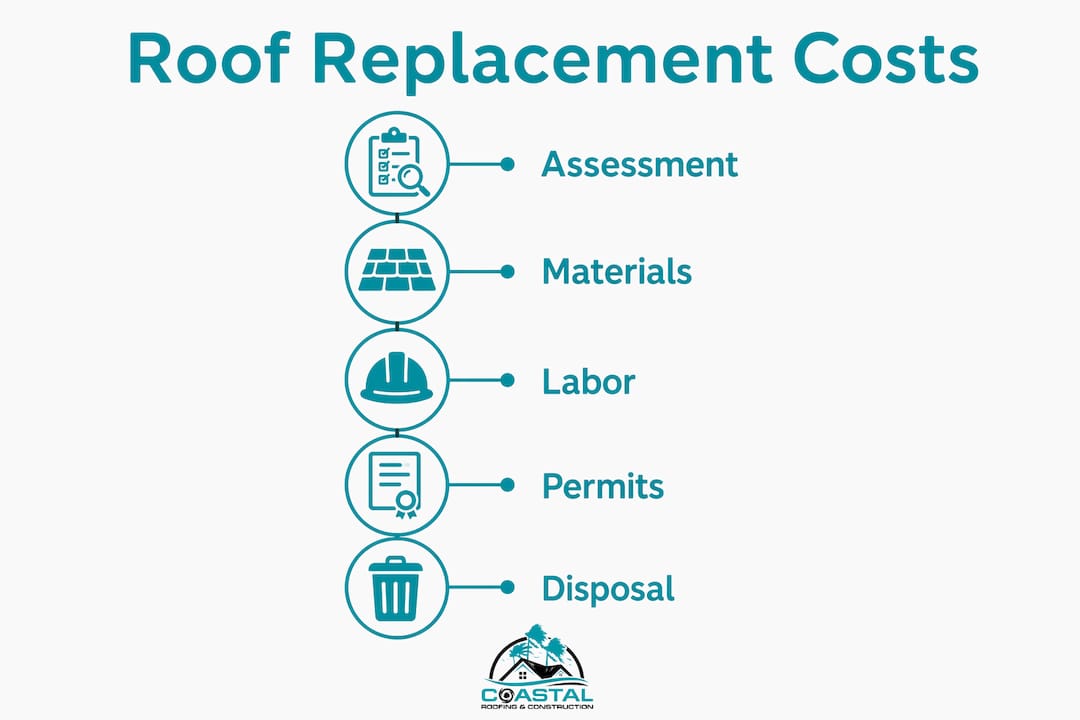
National averages for residential roof replacement currently range from $7,000 to $35,000 for standard asphalt shingles. Premium materials push costs significantly higher. Standing seam metal roofing runs $24,000 to $48,000 or more depending on roof complexity and square footage. Concrete and clay tile roofing falls in a similar premium range. These figures matter because your RCV coverage is only as good as the estimate it is based on.
Several cost factors commonly appear in contractor proposals but get left out of insurance adjuster estimates:
- Material type and grade: Architectural shingles cost more than three-tab; metal and tile cost more than both.
- Labor rates: Skilled labor in coastal Florida markets like Tampa Bay, Clearwater, and St. Petersburg commands higher rates than national averages.
- Permit fees: Most Florida jurisdictions require a permit for full roof replacement. Permit costs vary by county and are a legitimate line item.
- Tear-off and disposal: Removing and hauling away old roofing material adds cost that adjusters sometimes omit.
- Roof complexity: Steep pitches, multiple valleys, dormers, and skylights all increase labor time and material waste.
- Overhead and profit (O&P): Most full roof replacements involve multiple trades and qualify for O&P charges, but insurance adjusters frequently leave this line out of the initial estimate.
Adjuster estimates often omit permit fees, disposal costs, and specialized materials. That gap between the insurer’s number and the contractor’s number is real, and it is recoverable if you document it correctly.
Pro Tip: Ask your contractor for a fully itemized proposal that lists every cost category separately. Compare it line by line against the adjuster’s estimate. Any missing line item is a candidate for a supplemental claim.
Coastal Roofing & Construction provides detailed written estimates that break out materials, labor, permits, and disposal separately. That level of detail is not just good practice. It is the documentation your insurer needs to release full payment.
How does the RCV claims payment process work?
RCV policies pay in two stages, and missing the second stage is one of the most expensive mistakes homeowners make.
- Initial ACV payment. After your claim is approved, the insurer sends a first check equal to the ACV of your roof minus your deductible. This is not the full settlement. It is the starting payment to get repairs underway.
- Complete the replacement. You must hire a licensed contractor and complete the full roof replacement. Partial repairs or repairs that do not match the approved scope typically do not qualify for the second payment.
- Submit proof of completion. Send your insurer the final paid invoice from your contractor, along with any required documentation such as permit completion records or photos of the finished work.
- Receive recoverable depreciation. The insurer releases the withheld depreciation amount as a second check. This is the money that bridges the gap between your initial ACV payment and the full RCV settlement.
- Meet the deadline. Recoverable depreciation must be claimed within 12 to 24 months of the claim date, depending on your policy. Missing this window means forfeiting those funds permanently.
The two-stage process exists to prevent fraud, but it creates a real cash flow challenge for homeowners. You need enough upfront funds to start the project before the full settlement arrives. Working with an experienced contractor who understands the claims process makes this significantly easier. For a detailed look at how storm damage affects claims, reviewing documented examples before filing helps you set accurate expectations.
One common pitfall: homeowners who accept the first ACV check and do not complete the replacement lose the recoverable depreciation entirely. That withheld amount can represent $5,000 to $20,000 or more on a mid-range roof claim.
Why do your policy details matter more than you think?
Your policy’s declarations page and endorsements page together determine what you actually get paid. The base policy language and the endorsements can say very different things.
Here is what to look for when reviewing your policy:
- Loss settlement method: Confirm it says “replacement cost” not “actual cash value.” If it says ACV, you are not covered at RCV rates regardless of what your agent told you verbally.
- Roof surfacing schedules: These endorsements can override RCV language and cap your payout based on roof age or material type. A policy that says RCV on the declarations page may still pay ACV rates on a 20-year-old roof if a surfacing schedule endorsement applies.
- Material and age limits: Some policies exclude certain materials from RCV coverage entirely or reduce coverage percentages for roofs over a set age.
- Renewal changes: Insurers in storm-prone states like Florida are shifting toward ACV policies and adding roof payment schedules at renewal without always highlighting the change. Review your policy every year, not just when you buy it.
- Written confirmation: Ask your agent specific questions in writing. “Does my policy pay RCV on the roof with no age-based limitations?” A written answer creates a record.
The distinction between RCV and ACV is critical yet often overlooked. Homeowners who verify their loss settlement method annually are the ones who avoid five-figure surprises at claim time. For Florida homeowners specifically, the Tampa Bay roof replacement guide from Coastal Roofing & Construction covers local policy considerations worth reviewing before your next renewal.
Key Takeaways
Replacement cost value roofing coverage pays the full replacement cost minus your deductible, while ACV coverage deducts depreciation and can leave homeowners with a funding gap of 60–80% on older roofs.
| Point | Details |
|---|---|
| RCV vs. ACV gap | ACV payouts on roofs over 15 years old can be 60–80% lower than actual replacement cost. |
| Two-stage payment | RCV claims pay an initial ACV check first, then release recoverable depreciation after proof of completed work. |
| Depreciation deadline | Homeowners must submit final invoices within 12–24 months or forfeit recoverable depreciation permanently. |
| Policy endorsements | Roof surfacing schedules can override RCV language and cap payouts based on roof age or material. |
| Estimate gaps | Adjuster estimates often omit permits, disposal, and O&P; a detailed contractor proposal is required to recover these costs. |
What I’ve learned watching homeowners navigate RCV claims
Most homeowners I talk to assume their insurance will simply pay for a new roof. The reality is more layered, and the gap between assumption and payout can be financially devastating.
The most common mistake I see is homeowners cashing the first check and treating it as the full settlement. That first payment is the ACV amount, often a fraction of the actual replacement cost. The recoverable depreciation sitting in the second payment is real money, but it requires action. You have to complete the work, document it properly, and submit within the insurer’s timeframe.
The second pattern I notice is homeowners who do not realize their policy shifted at renewal. Florida insurers have been adding roof payment schedules and ACV endorsements quietly for years, especially after major storm seasons. A policy that covered you at full RCV three years ago may now include a surfacing schedule that effectively converts your roof coverage to ACV. Checking once when you buy the policy is not enough.
My advice is direct: treat your insurance policy like a contract you actually read, because it is. Pull the declarations page and every endorsement. If you see language about roof surfacing schedules or age-based payment limitations, call your agent and ask for a written explanation. If the answer is not satisfactory, shop for a policy that offers true RCV coverage without hidden caps. The premium difference is almost always worth it compared to the out-of-pocket exposure you carry under a capped or ACV policy.
— Ryan
Coastal Roofing & Construction: your partner through the replacement process
Navigating an RCV claim while managing a full roof replacement is a lot to handle. Coastal Roofing & Construction works with Tampa Bay homeowners through every stage, from the initial inspection and detailed estimate to final documentation for recoverable depreciation submission.

Coastal Roofing & Construction’s estimates are fully itemized, covering materials, labor, permits, disposal, and overhead, so your documentation matches what insurers need to release full payment. The team is manufacturer-certified with Owens Corning, GAF, and Tri County Metals, which means the replacement materials meet the quality standards your RCV policy requires. Browse completed roof replacements to see the quality of work firsthand, or visit the residential roof replacement page to request an estimate and start the process with a contractor who knows how to support your claim from start to finish.
FAQ
What is replacement cost value in roofing insurance?
Replacement Cost Value (RCV) is the amount required to replace a damaged roof with new materials of similar kind and quality at current prices, without deducting for depreciation. It is the most homeowner-favorable loss settlement method available.
How is roofing replacement cost calculated by insurers?
Insurers typically use estimating software to calculate material and labor costs based on current local pricing, roof size, and material type. Adjusters may omit line items like permits, disposal, and overhead, so comparing the estimate against a detailed contractor proposal is critical.
What is the difference between actual cash value and replacement cost for a roof?
ACV deducts depreciation from the payout based on roof age and condition, while RCV pays the full replacement cost minus your deductible. On a roof older than 15 years, ACV payouts can be 60–80% lower than the actual cost to replace it.
What happens if I don’t claim recoverable depreciation in time?
If you do not complete the roof replacement and submit final paid invoices within the insurer’s required timeframe, typically 12 to 24 months, you forfeit the recoverable depreciation payment permanently.
Can a roof surfacing schedule reduce my RCV payout?
Yes. Roof surfacing schedule endorsements can override RCV policy language and cap your payout based on roof age or material type, effectively converting your coverage to ACV rates even when your declarations page says RCV.
One Response