
For pure heat rejection, choose a light color like white, light stone, or pale tan with a high Solar Reflectance Index. If you want a dark color, pick one made with cool-pigment PVDF coating, which closes most of the temperature gap. Color alone won’t fix a hot house, though. It has to work with attic insulation and ventilation to actually change how your home feels inside.
TL;DR:
- Light colors like white or light stone with high Solar Reflectance Index keep roofs significantly cooler, reducing attic temperatures by 15 to 25°F.
- Dark roofs with cool-pigment PVDF coating can perform closer to mid-tone colors, shrinking heat absorption by 15 to 30% compared to traditional dark finishes.
- The effectiveness of roof color depends on attic insulation, ventilation, and climate, with cooling regions favoring high-SRI light colors and warmer areas tolerating darker shades.
- Regular cleaning and choosing PVDF coatings help maintain reflectance and color stability, especially in humid, coastal environments prone to dirt and algae buildup.
- Always verify SR, SRI, and coating specifics through manufacturer documentation and official certification resources before selecting a roof color.
Table of Contents
- What Makes Metal Roof Colors Heat Up or Stay Cool?
- How Do Cool Pigments and PVDF Coatings Change the Math?
- Which Metal Roof Color Actually Fits Your Climate?
- Do Lighter Roofs Really Hold Up Over Time?
- How Does a Roofing Contractor Actually Pick a Color for Heat?
- Getting the Balance Right Between Comfort and Curb Appeal
- Ready to Choose a Color That Performs as Good as It Looks?
- Where to Verify Metal Roof Color Ratings Yourself
- Sources
What Makes Metal Roof Colors Heat Up or Stay Cool?
Three numbers drive everything: solar reflectance, thermal emittance, and the Solar Reflectance Index that combines them.
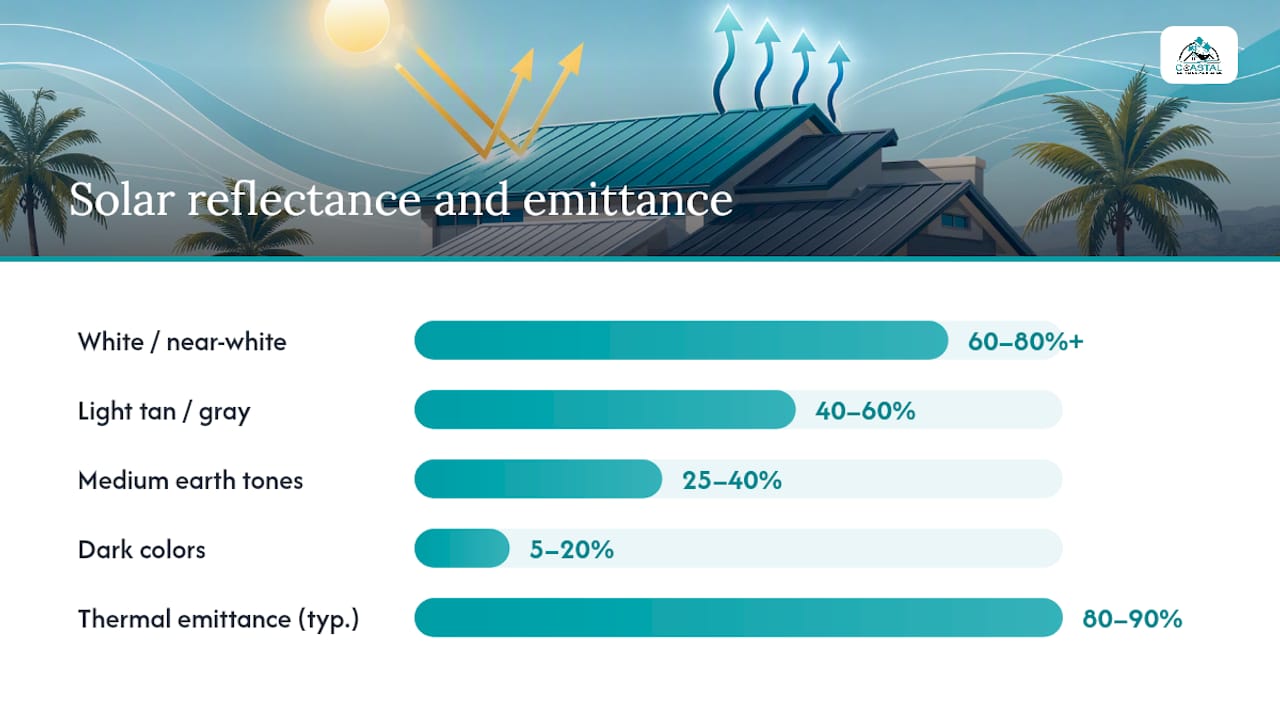
Solar reflectance (SR) measures the percentage of sunlight a surface bounces back instead of absorbing. A rating of 0 means the surface soaks up virtually all solar energy; a rating of 1 means it reflects almost all of it. White and light gray metal panels commonly have high solar reflectance, often much higher than standard dark brown or black finishes, which have lower solar reflectance. Thermal emittance (TE) measures how efficiently a material releases the heat it does absorb, radiating it back out rather than holding onto it. Most painted metal roofing has a naturally high emittance, typically 0.80 to 0.90, which is one reason metal performs differently than materials like asphalt shingles even in similar colors.
SRI merges both numbers into a single score from 0 to 100 that the Cool Roof Rating Council (CRRC) uses to rate roofing products. A bright white panel can score above 80 on the SRI scale. A standard dark bronze panel might score in the teens. That gap is not academic. It shows up directly on your roof deck and in your attic.
The mechanical chain is straightforward: higher solar reflectance means less solar energy gets absorbed into the panel in the first place. Less absorbed energy means a cooler metal surface. A cooler surface conducts less heat downward into the roof deck and attic space. A cooler attic means your air conditioner cycles less often to hold indoor temperature. Each link in that chain compounds the next, which is why color decisions on a metal roof carry more weight than most homeowners expect walking into the decision.
Here’s how that plays out by color family, based on typical manufacturer testing:
- White and near-white finishes: SR often 0.60 to 0.80+; among the coolest standard options available.
- Light tan, light gray, and pale stone tones: SR often 0.40 to 0.60; a strong middle ground for homeowners who want some color depth.
- Medium earth tones (terracotta, sandstone, sage): SR often 0.25 to 0.40; moderate performance, better than dark colors by a wide margin.
- Standard dark bronze, brown, charcoal, and black: SR often 0.05 to 0.20 without cool-pigment technology; the weakest performers on a conventional panel.
Field measurements back this up with real numbers. Light-colored roofs can run 30 to 60°F cooler at the surface than dark roofs on a hot afternoon, and attic temperature differences of 15 to 25°F between light and dark roofing are common in independent testing referenced by industry roofing guides. A controlled field study in tropical test housing found that painting metal roofs white reduced indoor temperatures by roughly 1 to 2°C compared with unpainted metal, a difference occupants noticed without any other change to the building.
Metal’s high thermal emittance matters here too. A metal roof releases absorbed heat faster than materials with lower emittance, so even a moderately reflective metal panel can outperform a similarly colored roof made from a material that traps heat longer. That’s part of why EPA guidance on cool roofing treats solar reflectance and thermal emittance as a pair, not as separate boxes to check. A roof needs both working together to actually cut surface temperature and reduce the heat load pushing into your living space.
How Do Cool Pigments and PVDF Coatings Change the Math?
Modern coating chemistry has largely broken the old rule that dark equals hot. Cool-pigment technology uses specialized mineral compounds that reflect near-infrared radiation, the invisible portion of sunlight that carries most of the solar heat load, even while the pigment absorbs visible light to produce a deep, saturated color. The result is a roof that looks charcoal or dark bronze to the eye but performs closer to a mid-tone panel in terms of heat absorption.
The numbers back this up. Cool-pigment formulations can shrink the surface-temperature gap between light and dark colors by roughly 15 to 30%, enough to make a dark roof a realistic option in a hot climate rather than a compromise you regret every July.
Coating chemistry matters as much as pigment choice. Two resin systems dominate the metal roofing market:
- PVDF (sold under brand names like Kynar 500 or Hylar 5000): premium fluoropolymer resin with superior resistance to fading, chalking, and UV breakdown; typically backed by 30 to 40 year color-retention warranties.
- SMP (silicone-modified polyester) and standard acrylics: lower-cost alternative with decent initial performance but faster color fade and chalking over time, often carrying shorter warranty terms.
Manufacturer color tables from producers like McElroy Metal list specific SR, TE, and SRI values for each color and coating combination, which is exactly where you should look before signing off on a panel choice. The difference between a PVDF cool-pigment dark bronze and a standard SMP dark bronze can be the difference between a roof that still looks new at year 20 and one that’s visibly chalked and faded by year 10.
Before approving any color and coating combination, ask your contractor or supplier for these five items in writing:
- Initial SR value for the specific color and coating combination
- SRI rating, ideally with CRRC product listing number
- Thermal emittance value
- Coating resin content, confirming PVDF percentage if PVDF is claimed
- Warranty length specifically for color retention, not just structural warranty
Pro Tip: Ask your contractor for the CRRC product listing number before you sign anything. It takes thirty seconds to look up on the CRRC directory and confirms the SR and SRI numbers on the spec sheet match what’s actually certified, not just what’s printed in a sales brochure.
Which Metal Roof Color Actually Fits Your Climate?
The right answer depends less on personal taste and more on where you live and how your attic is already built. In cooling-dominated climates like coastal Florida, the Gulf Coast, or the desert Southwest, the math strongly favors high-SRI light colors or cool-pigment dark finishes. Cooling costs run most of the year in these regions, and every degree shaved off attic temperature translates into real, repeated savings rather than a one-season benefit.
In mixed or colder climates, the calculation shifts. A dark, low-SRI roof that absorbs more winter sun can modestly reduce heating demand during cold months, which partially offsets the summer cooling penalty. That trade-off rarely wins outright in a genuinely hot climate, but it’s worth acknowledging if you split time between hot summers and cold winters.
Insulation levels change how much any of this matters. Technical modeling of roof color and heat gain shows the color effect can be treated almost like an added R-value credit, but that credit shrinks fast as insulation improves. A home with older R-19 attic insulation feels a much bigger swing between a dark roof and a light one than a home with R-38 or better insulation, where the extra insulation is already blocking most of the heat transfer regardless of what’s happening on the surface above it. If your attic insulation is thin, roof color carries outsized weight in your comfort and cooling bills. If it’s already well insulated, color still helps, but the incremental gain is smaller.
Aesthetics and HOA rules complicate the clean version of this decision, and that’s fine. Nobody should install a stark white roof they hate looking at every day just to chase the highest SRI number available. Cool-pigment light earth tones (sandstone, warm gray, light clay) deliver most of the reflectance benefit of white while reading as more traditional against a Florida coastal home’s design aesthetic. Cool charcoal and cool bronze PVDF finishes give you a genuinely dark look without the older-generation heat penalty.
Before finalizing a color, work through this sequence:
- Identify your dominant climate need: cooling-dominated, heating-dominated, or genuinely mixed
- Have your attic insulation and ventilation inspected, since this determines how much color actually matters for your specific house
- Pull the CRRC listing and confirm the SRI number for your top color choices
- Confirm whether the coating is PVDF, SMP, or standard acrylic, and match that to your durability expectations
- Set a realistic maintenance plan, since even a high-SRI color loses performance if it’s never cleaned
Do Lighter Roofs Really Hold Up Over Time?
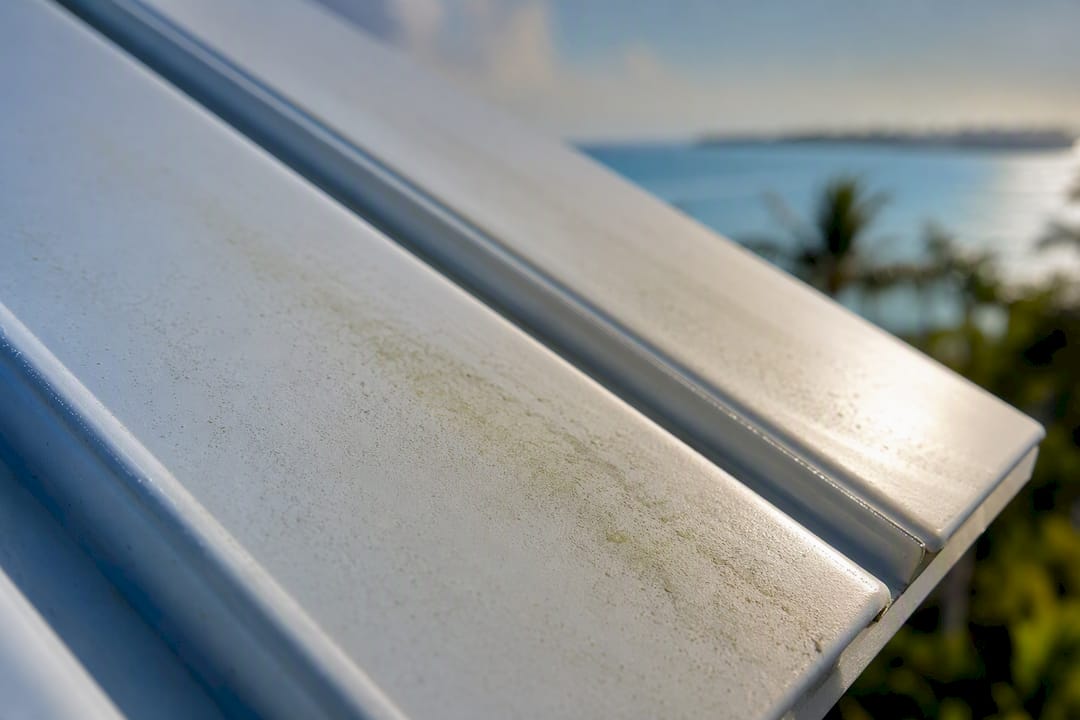
Light-colored metal roofs deliver the best heat performance on day one, but they also show dirt, pollen, and algae streaking faster than darker colors, especially in humid, coastal environments where airborne salt and moisture accelerate soiling. That buildup isn’t just cosmetic. A dirty white roof gradually loses reflectance as grime coats the surface, quietly eroding the SRI number that made the color attractive in the first place.
Coating chemistry determines how gracefully a color ages. PVDF finishes typically hold their color and gloss for 30 to 40 years with minimal chalking, while SMP and standard acrylic coatings tend to fade and chalk noticeably faster, sometimes within 10 to 15 years in intense sun exposure. A metal roof insulation and ventilation system that manages moisture properly also helps protect the coating from the inside, reducing the condensation exposure that can accelerate underside corrosion over decades.
A simple maintenance rhythm keeps reflectance closer to its rated performance:
- Rinse the roof surface every 6 to 12 months in coastal or heavily wooded areas to remove salt film, pollen, and organic buildup.
- Schedule a full visual inspection annually, checking for streaking, panel seam issues, and fastener condition.
- Budget for professional soft-washing every few years rather than pressure washing, which can damage coating integrity.
None of this is expensive compared to the roof’s total lifespan cost, but skipping it means a light roof gradually performs more like a medium-toned one.
Pro Tip: Take dated photos of your roof color right after installation and keep a copy of the printed SR value from your invoice. If you ever need to file a fade or color-retention warranty claim years down the road, that documentation is what turns a dispute into a straightforward resolution.
How Does a Roofing Contractor Actually Pick a Color for Heat?
A contractor who takes cool-roof performance seriously runs through the same checklist on every metal roofing project, regardless of what color the homeowner initially requests. That checklist looks like this:
- Pull the CRRC listing for the exact color and coating combination being quoted, not a generic version of that color.
- Confirm PVDF resin content in writing when PVDF is being sold, since resin percentage varies by manufacturer and product line.
- Verify the panel substrate (steel, aluminum) since substrate can slightly affect how coating performs over decades.
- Review the warranty terms specifically for color retention and chalking, separate from the structural warranty.
- Walk the homeowner through expected maintenance needs based on the home’s exposure to salt air, tree cover, or heavy pollen.
Coastal Roofing & Construction applies this process on every metal roofing project across the Tampa Bay area, drawing on manufacturer certifications with Owens Corning, GAF, and Tri County Metals to match coating specs to Florida’s sun exposure and humidity.
Consider a typical waterfront home in Madeira Beach or Treasure Island. Salt air accelerates soiling, and full sun exposure runs nearly year round. The practical recommendation in that scenario is usually a light, cool-pigment color with a PVDF finish, paired with a semi-annual rinse schedule and confirmed attic ventilation. That combination addresses heat gain, coastal weathering, and long-term coating life at the same time, rather than optimizing for just one factor and ignoring the rest.
Getting the Balance Right Between Comfort and Curb Appeal
The strongest argument for cool-pigment technology is that it lets homeowners stop treating energy performance and aesthetics as opposing choices. A decade ago, picking a dark roof in a hot climate meant accepting a real heat penalty. That’s no longer strictly true for a properly specified PVDF cool-pigment panel, which changes the whole conversation from “light or dark” to “which coating and which SRI number.”
My honest read: chase the system, not just the swatch. A high-SRI color on a poorly insulated attic with no ridge ventilation will still leave you with a hot upstairs bedroom in August. A modest-SRI cool-pigment color paired with solid insulation and proper airflow can outperform a “perfect” white roof installed on a leaky, unventilated attic.
If you’re prioritizing decisions in order, I’d rank them: climate first, insulation and ventilation second, coating type and SRI number third, and exact shade last. Get the first three right and the color becomes a genuine aesthetic choice rather than a gamble on your summer electric bill. Whatever you land on, verify the SR and SRI numbers in writing and have a certified metal roofing installer confirm the spec sheet matches what actually gets ordered.
— Ryan
Ready to Choose a Color That Performs as Good as It Looks?
Some roofing contractors provide homeowners with a written spec check on solar reflectance, SRI, and PVDF resin content before ordering panels, removing guesswork about whether a color actually carries cool-pigment technology or just a marketing name.
Factory-trained and certified teams handle everything from standing seam metal roof installation to coating verification and long-term maintenance planning for homes in the region. Whether choosing a bright reflective finish or a cool-pigment dark tone for a coastal build, they can walk you through the actual numbers on the spec sheet, not just the paint chip. Browse our completed metal roofing projects to see color and coating choices in real Florida sun, then request a metal roofing quote to get a spec-verified recommendation for your home.
Where to Verify Metal Roof Color Ratings Yourself
Three resources are worth bookmarking if you want to double-check any contractor’s claims. The CRRC product directory, accessible through ENERGY STAR’s cool roof program page, lets you search rated SR and SRI values for specific commercial roofing products by manufacturer and color. The EPA’s cool roofing guidance explains the underlying science and program context in plain language if you want the “why” behind the ratings. For product-specific numbers, manufacturer PVDF color-spec pages like McElroy Metal’s list SR, TE, and SRI values by exact color name, which is the fastest way to confirm what your contractor’s quote actually promises.
Sources
- Using cool roofs to reduce heat islands | EPA
- Cool roofs | ENERGY STAR
- Effect of roof colour on indoor temperature—experimental study (PMC)
- Cool Metal Roofing – Kynar | McElroy Metal
- Metal Roof Color and Heat | Gulf Coast Metal Roof Guide