
Tear off vs overlay roofing describes the two primary methods of replacing a residential roof: completely stripping all existing layers down to the deck before installing new materials, or laying new shingles directly over the old ones. The industry terms are “full tear-off replacement” and “roof overlay” (also called a re-roof). Each method carries real differences in cost, lifespan, warranty coverage, and code compliance. Choosing the wrong one for your situation can cost you thousands more over the life of your roof. This guide gives you the facts to make a confident, informed decision.
What is tear-off roofing and when is it necessary?
Tear-off roofing is defined as the complete removal of all existing roofing layers down to the bare roof deck before new materials are installed. Every shingle, underlayment layer, and piece of flashing comes off. The exposed deck is then inspected, repaired where needed, and prepared for a fresh installation.
The deck inspection is the single biggest advantage of a full tear-off. Overlay roofing prevents full deck inspection, which means water damage, rot, and structural problems go undetected until they become catastrophic failures. A tear-off eliminates that risk entirely. Contractors can replace damaged sheathing, upgrade ventilation, and install new flashing before a single new shingle goes down.
Tear-off also resets your roof’s code compliance. A tear-off allows updated ventilation, flashing, and moisture protection to meet current 2026 IRC standards. An overlay cannot achieve this because it builds on top of whatever was already there.
When is tear-off required?
- Two existing layers already present. IRC Section R908.3 prohibits more than two total roofing layers, making tear-off mandatory when two layers already exist.
- Visible deck damage or soft spots. Rot, mold, or sagging decking requires full removal to repair properly.
- Warranty requirements. Major shingle manufacturers, including Owens Corning and GAF, require installation on a clean deck for full system warranty coverage.
- Insurance or permit conditions. Some Florida insurers and local jurisdictions require tear-off documentation before issuing new coverage or permits.
- Significant storm damage. After hurricane or hail events, hidden structural damage makes a full tear-off the only responsible choice.
Pro Tip: Ask your contractor to photograph the deck before new underlayment goes down. That documentation protects you if a warranty claim arises later.
A full tear-off costs more upfront, but it delivers a longer service life of 20–30 years for asphalt shingles, full manufacturer warranty eligibility, and a clean slate for any needed structural repairs. For Florida homeowners dealing with intense heat, humidity, and hurricane seasons, those advantages are not minor.
What is overlay roofing and when does it make sense?
A roofing overlay, also called a re-roof, is defined as installing new shingles directly over one existing layer of roofing without removing the old material. The process is faster and generates less labor and disposal cost. That speed and savings attract many homeowners facing tight budgets or short timelines.
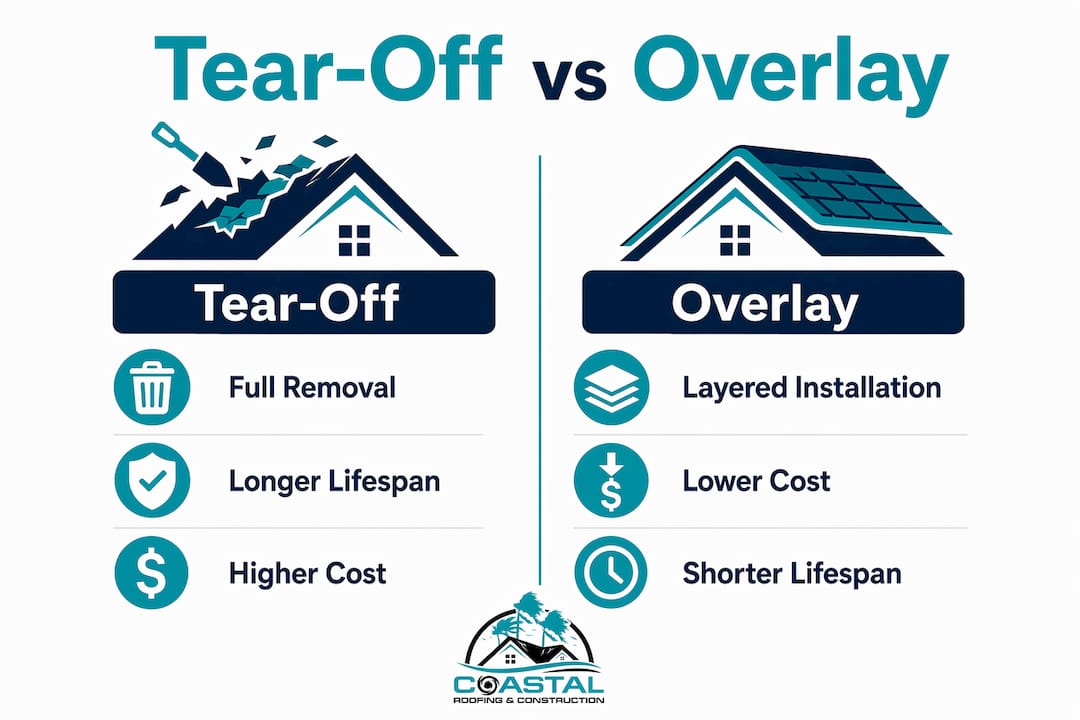
An overlay typically saves homeowners 20–40% on upfront costs compared to a full tear-off. For a 2,000 square foot home, that translates to roughly $3,000–$6,000 in savings. The project also finishes faster because crews skip the removal and disposal phase entirely.
However, the tradeoffs are significant. Overlay roofs trap heat and moisture, shortening shingle lifespan by 20–40% and accelerating plywood sheathing decay. Poor ventilation caused by the added layer creates a heat buildup that degrades shingles from below. You pay less today, but your roof wears out faster.
Conditions where overlay is a reasonable choice
- Only one existing layer is present. Most jurisdictions allow a maximum of two total layers, so one existing layer is the baseline requirement.
- The existing deck is confirmed sound. If a professional inspection shows no rot, moisture damage, or soft spots, the risk of hidden problems is lower.
- Budget constraints are real and immediate. An overlay buys time when a full replacement is not financially possible right now.
- The home is being sold soon. If you plan to sell within a few years and the existing roof is structurally acceptable, an overlay can improve curb appeal without a full investment.
One technical detail most homeowners miss: fastener length is critical in overlays. Fasteners must penetrate through both the new shingles and the old layer into the deck below. Improper fastener penetration reduces wind resistance and can cause shingles to peel off in high winds. In Tampa Bay, where tropical storms are a seasonal reality, this is not a detail to overlook. You can learn more about overlay installation basics before discussing options with your contractor.
How do tear-off and overlay compare on cost, lifespan, and value?
The cost difference between methods is real, but the lifespan gap changes the math significantly over time.
| Factor | Full Tear-Off | Overlay |
|---|---|---|
| Upfront cost | Higher (full labor + disposal) | 20–40% less upfront |
| Expected lifespan | 20–30 years | 15–20 years |
| Manufacturer warranty | Full system warranty eligible | Often voided or limited |
| Deck inspection | Complete | None |
| Resale impact | Positive | Often flagged by inspectors |
A full tear-off replacement lasts 20–30 years, while overlays deliver a reduced lifespan of 15–20 years. That gap means you may replace an overlay roof one full cycle sooner than a tear-off. When you add a second replacement cost to the overlay’s total lifetime expense, the upfront savings often disappear.
Warranty coverage is another area where overlays fall short. Major shingle manufacturers require installation on a clean roof deck for full warranty validity. An overlay typically voids or severely limits the manufacturer’s system warranty. That means if shingles fail prematurely, you bear the replacement cost alone.
Home buyers and inspectors often view overlay roofs as red flags, which can decrease resale value and generate negative notes in inspection reports. Buyers may request price reductions or demand a full tear-off as a condition of sale. A tear-off replacement, by contrast, is a documented upgrade that supports your asking price.
Pro Tip: When comparing quotes, ask each contractor to break out the disposal and labor cost separately. That number tells you exactly what the overlay is saving you, and whether the tradeoff is worth it for your specific roof.
Overlays also add 2–4 lbs per square foot of dead load to the roof structure. In older Tampa Bay homes, that additional weight can stress roof framing that was never designed for two full shingle layers. A structural engineer or experienced contractor can assess whether your framing handles the added load safely.
What do building codes and manufacturer rules say about each method?
Building codes set the legal floor for what is allowed. The International Residential Code, specifically IRC Section R908.3, limits residential roofs to a maximum of two total roofing layers. If your home already has two layers, a full tear-off is not optional. It is legally required before any new roofing can be installed.
Florida jurisdictions often adopt local amendments that tighten these limits further. Some counties in the Tampa Bay area restrict overlays to one existing layer, effectively requiring tear-off in more situations than the base IRC allows. Checking with your local building department before signing a contract is the right move.
Manufacturer requirements add another layer of compliance. Owens Corning, GAF, and most major shingle brands specify in their warranty documentation that shingles must be installed over a clean, properly prepared deck. Installing over existing shingles typically voids the full system warranty, leaving you with a product warranty only, which covers manufacturing defects but not installation-related failures.
Permit and insurance factors also favor tear-off. Many Florida homeowners’ insurers now require documentation of a full tear-off replacement before issuing or renewing coverage on a new roof. If your insurer has this requirement and you choose an overlay, you may find yourself unable to get the coverage you expect. Hidden water damage risks from overlays compound this problem, since undiscovered moisture damage can lead to mold and structural claims that insurers may dispute if the deck was never inspected.
For a full picture of what a compliant roof replacement in Tampa Bay involves, reviewing local code requirements alongside your contractor’s recommendations is the most reliable approach.
Key Takeaways
Tear-off roofing delivers longer lifespan, full warranty eligibility, and complete deck inspection, making it the stronger long-term investment for most homeowners despite its higher upfront cost.
| Point | Details |
|---|---|
| Lifespan difference | Tear-off roofs last 20–30 years; overlays average 15–20 years due to trapped heat and moisture. |
| Upfront cost savings | Overlays save 20–40% upfront, but shorter lifespan often erases those savings over time. |
| Warranty impact | Major manufacturers require a clean deck; overlays typically void full system warranty coverage. |
| Code compliance | IRC Section R908.3 caps roofs at two total layers; two existing layers make tear-off mandatory. |
| Resale value | Buyers and inspectors flag overlay roofs negatively; tear-off replacements support stronger offers. |
Why I always recommend starting with a deck inspection
After years of working on roofs across the Tampa Bay area, the single most common regret I hear from homeowners is this: “I wish I had done the full tear-off.” They chose the overlay to save money, and within a few years they were dealing with leaks, mold, or a second replacement that cost more than the original tear-off would have.
The overlay’s appeal is real. Saving $3,000–$6,000 upfront is not nothing. But that savings evaporates fast when you factor in a shorter roof life, a voided warranty, and the cost of repairing deck damage that was sitting under the old shingles the whole time. Professional roofers consistently warn that overlays hide deck damage, which leads to leaks, mold, and costly repairs shortly after installation.
Florida’s climate makes this even more critical. The heat, humidity, and storm exposure here accelerate every weakness in a roofing system. A deck with even minor moisture damage will deteriorate much faster under a second shingle layer than it would in a drier climate. What looks like a minor issue during a visual inspection can become a full structural repair within a few years.
My honest recommendation: budget for the tear-off. If the budget is genuinely tight, talk to your contractor about phasing the project or exploring financing. A residential roof replacement done right the first time is always cheaper than doing it twice. And in a coastal Florida market, a properly documented tear-off replacement is a real asset when it comes time to sell.
— Ryan
Coastal Roofing & Construction can help you choose the right method
Deciding between a tear-off and an overlay is not a decision you should make based on price alone. The right answer depends on your current roof’s condition, your local code requirements, your insurer’s documentation rules, and your long-term plans for the home.

Coastal Roofing & Construction serves homeowners throughout Pinellas County, Hillsborough County, and Pasco County with thorough roof inspections, honest assessments, and manufacturer-certified installations. Whether your project calls for a full shingle roof replacement or a more complex system, the team at Coastal Roofing & Construction brings the code knowledge and craftsmanship to get it right. Browse completed projects in the project portfolio or contact Coastal Roofing & Construction directly for a personalized estimate and inspection.
FAQ
What is the main difference between tear-off and overlay roofing?
Tear-off roofing removes all existing layers down to the deck before installing new materials, while overlay roofing installs new shingles directly over one existing layer. Tear-off allows full deck inspection and qualifies for complete manufacturer warranties; overlay does not.
Is a roofing overlay allowed under current building codes?
IRC Section R908.3 allows overlays only when one existing layer is present, since the code caps total roofing layers at two. Many Florida jurisdictions adopt stricter local amendments, so always verify with your local building department before choosing an overlay.
How much does a roofing overlay cost compared to a full tear-off?
An overlay typically costs 20–40% less upfront than a full tear-off, saving roughly $3,000–$6,000 on a 2,000 square foot home. However, the shorter lifespan and potential warranty voidance often make the overlay more expensive over the full life of the roof.
Does an overlay void my shingle warranty?
Major shingle manufacturers, including Owens Corning and GAF, require installation on a clean roof deck for full system warranty coverage. Installing over existing shingles typically voids or severely limits that warranty, leaving you responsible for premature failure costs.
Will an overlay affect my home’s resale value?
Home buyers and inspectors commonly flag overlay roofs as a concern, and inspector reports noting multiple layers can reduce offers or trigger buyer requests for a full tear-off. A documented tear-off replacement is generally viewed as a positive upgrade by buyers and appraisers.