
A metal roof maintenance checklist is a structured set of biannual tasks that protects your home investment and keeps your roof performing for 40 to 70 years. The National Roofing Contractors Association recommends formal inspections every spring and fall, plus additional checks after major storms. Consistent biannual maintenance is the single most effective way to prevent premature roof failure. Coastal Roofing & Construction sees this firsthand across Tampa Bay: the homeowners who follow a structured upkeep routine almost never face emergency repairs. The ones who skip it often do.
1. How often should you inspect your metal roof?
Formal inspections twice per year are the industry standard: once in spring after winter weather, and once in fall before temperatures drop. That schedule gives you a clear picture of any damage before it compounds. You should also do a visual check from the ground after any storm involving hail or high winds.
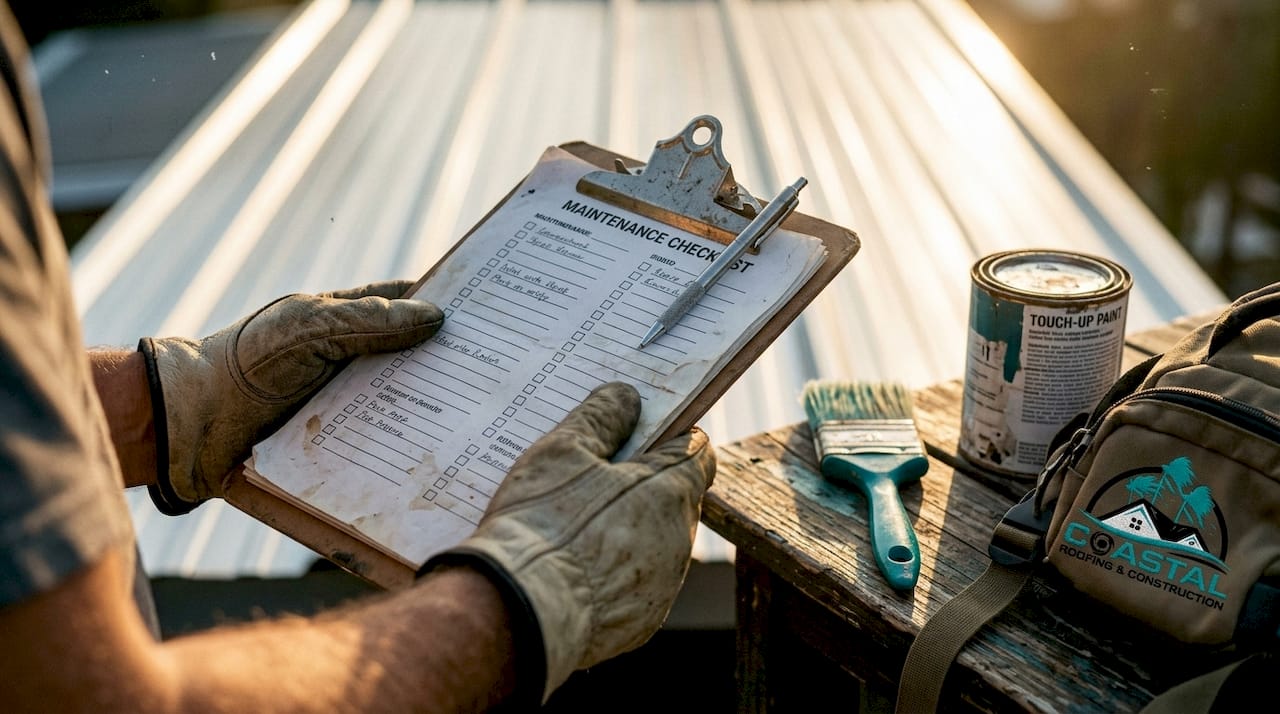
Ignoring this schedule carries real financial consequences. Emergency repairs from neglected issues can cost $12,000 or more. Catching a failed sealant or loose fastener early costs a fraction of that.
The focus of each inspection depends on your roof type. Exposed-fastener systems require close attention to fastener tightness and neoprene washer condition. Standing seam systems need careful checks at the seams, clips, and flashings. Both types require inspection of:
- Fastener tightness and washer integrity
- Sealants around all roof penetrations
- Panel surfaces for scratches, dents, or rust spots
- Flashings at chimneys, vents, and walls
- Valleys and gutters for debris buildup
Pro Tip: Check your attic interior during every inspection. Daylight penetration or stains on the underside of the roof deck are early signs of seal failure, often appearing before any visible leak inside the home.
2. Spring maintenance tasks
Spring is your most important maintenance window. Winter weather stresses every component of a metal roof, and spring gives you the chance to catch damage before summer storms arrive. A thorough spring inspection takes less than 60 minutes and covers the tasks most likely to prevent leaks.
Work through these steps in order:
- Clear all debris from the roof surface, gutters, and valleys.
- Inspect every fastener for tightness and check neoprene washers for cracking.
- Examine all sealants around pipe boots, vents, and skylights for cracking or shrinkage.
- Look for scratches or chips in the paint coating and apply touch-up paint immediately.
- Check flashings at every wall, chimney, and penetration for separation or rust.
- Inspect the attic interior for stains, daylight gaps, or condensation.
Touch-up paint matters more than most homeowners realize. Bare metal exposed by a scratch begins oxidizing quickly in Florida’s humid salt air. A $10 can of color-matched paint applied within the season prevents a rust spot that could require panel replacement later.
Pro Tip: Photograph every area of concern during your spring inspection. Date the photos and store them with your roof warranty documents. This record protects you during insurance claims and helps you track whether a problem is growing.
3. Summer maintenance tasks
Summer maintenance focuses on cleaning and vegetation control. Heat and humidity accelerate algae and mildew growth on metal panels, especially in shaded areas. Overhanging branches drop debris, trap moisture, and scratch panel surfaces when they rub in the wind.
Trim any tree branches that hang within six feet of the roof surface. This single step reduces debris accumulation, limits moisture retention, and eliminates a common source of surface scratches. Check the roof coating condition while you are up there. Fading or chalking is cosmetic, but peeling or bubbling signals a coating failure that needs professional attention.
For cleaning, use a mild detergent mixed with water and a soft-bristle brush or a low-pressure garden hose. Vinegar diluted with water removes mildew effectively. Rubbing alcohol cuts through tree sap without damaging the coating. Neither method harms the panel finish when used correctly.
4. Fall maintenance tasks
Fall preparation determines how your roof handles winter. The goal is to clear everything that traps moisture and to verify that all mechanical components are tight before cold weather arrives.
Work through this fall checklist:
- Clear leaves and debris from gutters, downspouts, and roof valleys completely.
- Re-tighten any fasteners that show movement or backing out.
- Inspect snow guards for secure attachment if your roof has them.
- Verify attic insulation levels and check that soffit-to-ridge ventilation is unobstructed.
- Replace any cracked or dried sealant around penetrations. Silicone-based sealants perform best on metal roofs across wide temperature swings.
- Look for any panel fasteners that show rust staining around the washer.
Proper attic insulation and ventilation prevent ice dams, which cause significant water damage in colder climates. For Florida homeowners, balanced ventilation still matters because it controls moisture and heat buildup that degrades roofing components from the inside out.
| Season | Primary focus | Key tasks |
|---|---|---|
| Spring | Damage assessment | Fasteners, sealants, touch-up paint, attic check |
| Summer | Cleaning and vegetation | Algae removal, branch trimming, coating check |
| Fall | Winter preparation | Gutters, fasteners, sealants, ventilation |
| Winter | Monitoring only | Ground-level visual checks, safe snow removal |
5. Winter maintenance tasks
Winter maintenance is mostly observation. Do not walk on a metal roof in freezing conditions. Ice makes panels extremely slippery, and cold metal is more susceptible to denting from foot traffic.
Monitor from the ground for ice dam formation along the eaves. If snow accumulates, use a plastic roof rake with a telescoping handle to pull snow off the lower edge. Never use metal tools on a metal roof surface. Metal rakes scratch the coating and create the exact rust entry points you spent the rest of the year preventing.
If you notice icicles forming unevenly along the roofline, that pattern signals a ventilation or insulation problem worth addressing in spring. Uniform icicles are normal. Uneven ones indicate warm spots where heat is escaping through the roof deck.
6. Safe cleaning techniques and rust prevention
Pressure washing above 1,200 PSI forces water beneath seams and panel laps, causing leaks and stripping protective coatings. This voids most manufacturer warranties. The correct cleaning method uses soft-bristle brushes and low-pressure mild detergent solutions.
Rust prevention starts with prompt attention to any bare metal. The moment a scratch or chip exposes raw steel, the clock starts on oxidation. Sand the area lightly, clean it with a damp cloth, apply a rust-inhibiting primer, and finish with color-matched touch-up paint. This four-step process stops rust before it spreads.
Galvanic corrosion is a less obvious threat. It occurs when two dissimilar metals contact each other in the presence of moisture. Copper flashing against a steel panel, or aluminum fasteners in a steel roof, will accelerate corrosion at the contact point. Use fasteners and accessories that match your panel metal.
For widespread coating failure, professional elastomeric coating application can extend roof life by 10 to 15 years. Fix any active leaks before applying a coating. Coatings protect sound roofs; they do not seal leaks.
Pro Tip: Professional metal roof cleaning costs $300 to $600 depending on roof size and complexity. For homeowners uncomfortable on a roof, that cost is well worth the safety benefit and the assurance that no coating damage occurs.
7. Common mistakes that shorten metal roof life
Most metal roof failures trace back to a small set of repeated mistakes. Recognizing them is the first step to avoiding them.
- Pressure washing with excessive force. Water forced under seams causes leaks that look like panel failures but are actually installation damage from cleaning.
- Ignoring fastener maintenance on exposed-fastener systems. Neoprene washers degrade after 10 to 15 years and become the most common leak point on these roofs. Budget for washer replacement on schedule.
- Walking on panel ribs. Always step on the flat area of a panel, never the raised rib. Rib damage is permanent and creates a stress point for future cracking.
- Using incompatible metals. Mixing copper, aluminum, and steel components without isolation barriers causes galvanic corrosion that eats through panels faster than weather alone.
- Skipping gutter cleaning. Clogged gutters back water up under the eave edge, where it contacts the roof deck and causes rot or rust from below.
- Delaying small repairs. A failed sealant costs $20 to fix. Left alone for two seasons, it becomes a leak that damages decking, insulation, and interior finishes. Knowing when storm damage appears and acting quickly is what separates a $50 repair from a $5,000 one.
The “I’ll get to it later” approach is the most expensive maintenance strategy available. Schedule your two annual inspections on the calendar in january, before the year fills up.
Key takeaways
A metal roof lasts 40 to 70 years only with consistent biannual maintenance covering inspections, cleaning, fastener checks, and timely repairs.
| Point | Details |
|---|---|
| Inspect twice per year | Schedule spring and fall inspections, plus checks after any major storm. |
| Fasteners are the weak link | Exposed-fastener systems need annual washer checks; replace washers every 10–15 years. |
| Clean at low pressure | Never exceed 1,200 PSI; use soft brushes and mild detergent to protect coatings. |
| Fix scratches immediately | Touch-up paint on bare metal stops rust before it spreads to surrounding panels. |
| Attic checks matter | Interior stains or daylight gaps signal seal failure before leaks reach living spaces. |
What I’ve learned after years of metal roof inspections
Homeowners consistently underestimate how manageable metal roof maintenance actually is. The tasks on this checklist require basic tools, a few hours per year, and a willingness to get on a ladder twice annually. That is genuinely all it takes to protect a roof that should outlast the mortgage.
The biggest misconception I encounter is that metal roofs are maintenance-free. That idea comes from comparing metal to asphalt shingles, which visibly degrade and need replacement every 15 to 20 years. Metal roofs do not shed granules or curl at the edges, so the damage is less obvious. But fasteners back out, sealants dry and crack, and coatings chip. None of those failures announce themselves loudly.
Record-keeping is the habit most homeowners skip and later regret. A simple folder with dated inspection photos, repair receipts, and warranty documents takes five minutes to maintain and saves hours during an insurance claim or a home sale. Buyers and adjusters both respond well to documented roof care.
Schedule your professional inspection before peak storm season, not after. Contractors book up fast after hurricanes and major weather events. Getting on the calendar in march or april means you have expert eyes on your roof before the hardest months of the Florida year.
— Ryan
Coastal Roofing & Construction’s metal roof services
Coastal Roofing & Construction provides professional metal roof inspections and preventative maintenance for homeowners across the Tampa Bay area, including Clearwater, St. Petersburg, Palm Harbor, and Seminole.

A professional inspection from Coastal Roofing & Construction covers every item on this checklist, plus a written report of findings and recommended repairs. The team is manufacturer-certified with Tri County Metals and trained to spot the early warning signs that most homeowners miss. If your metal roof is due for an inspection or you want expert guidance on metal roofing care, contact Coastal Roofing & Construction for a consultation. You can also review common maintenance questions on the Coastal Roofing FAQ before your appointment.
FAQ
How often should a metal roof be inspected?
Metal roofs require at least two formal inspections per year, in spring and fall, plus a visual check after any storm with hail or high winds. This schedule catches small issues before they become costly repairs.
What cleaning method is safe for metal roofs?
Use a soft-bristle brush or low-pressure garden hose with mild dish soap and water. Never use a pressure washer above 1,200 PSI, as it forces water under seams and strips protective coatings.
How long does a metal roof last with proper maintenance?
A well-maintained metal roof lasts 40 to 70 years. Consistent biannual maintenance covering fasteners, sealants, and surface coatings is what makes that lifespan achievable.
When should sealants around roof penetrations be replaced?
Replace cracked or dried sealant every 5 to 10 years. Silicone-based sealants are the best choice for metal roofs because they stay flexible across wide temperature ranges.
What are the signs that a metal roof needs professional attention?
Widespread coating failure, active leaks, rust spreading beyond a small spot, or fasteners that will not hold tightness all require a licensed roofing contractor. A professional can also identify problems during an inspection that are not visible from the ground.