
Reflective roofing is defined as a roofing system engineered to reflect a high percentage of solar energy and emit absorbed heat quickly, rather than storing it as warmth inside your home. Traditional dark roofs absorb up to 90% of solar radiation, turning your attic into an oven on a Florida summer afternoon. Reflective roofing, also called a cool roof, works the opposite way. Cool roofs reflect 65% or more of solar energy and emit at least 80% of absorbed heat. That combination keeps roof surface temperatures dramatically lower and reduces the strain on your air conditioning system throughout the hottest months of the year.
How does reflective roofing work to reduce heat and cooling costs?
Two physical properties determine how well a reflective roof performs: solar reflectance and thermal emittance. Solar reflectance, sometimes called albedo, measures how much sunlight a surface bounces back instead of absorbing. Thermal emittance measures how quickly the roof radiates any heat it does absorb back into the atmosphere rather than pushing it into your home.
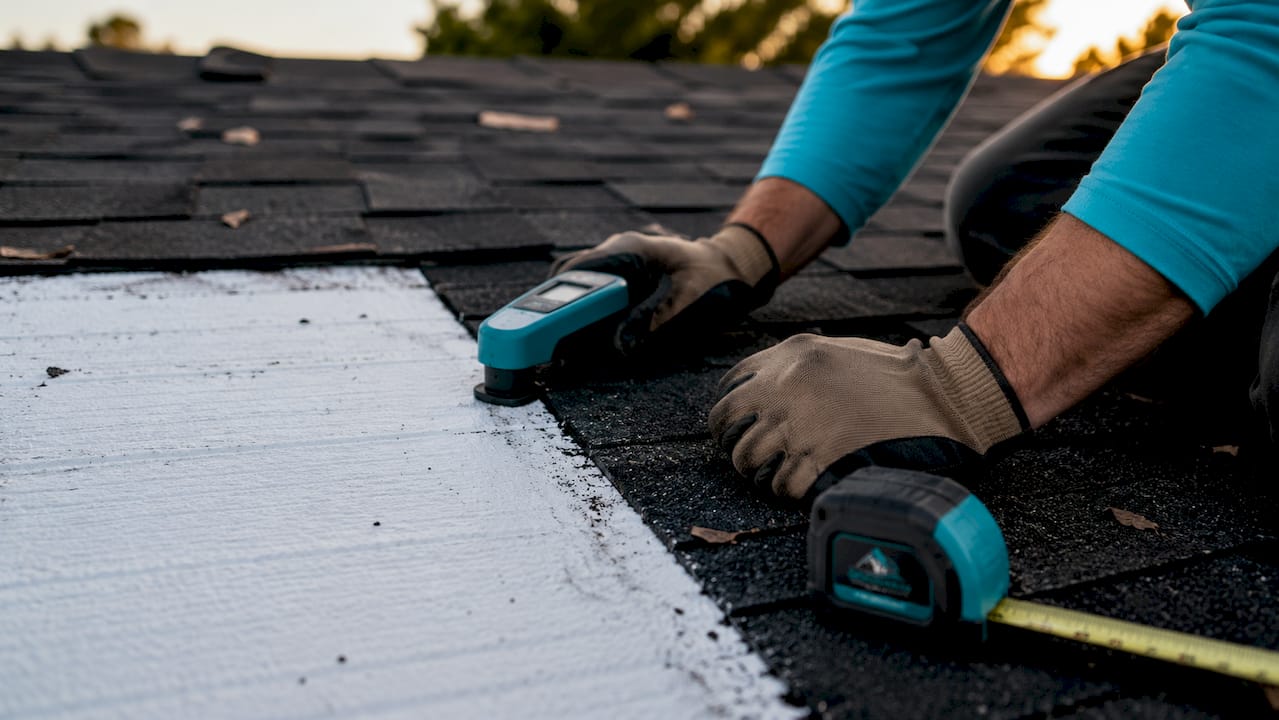
A standard dark asphalt shingle roof has a solar reflectance of roughly 5%–15%. A high-performance reflective coating can reach solar reflectance between 65% and 85%. That gap is enormous in practice. On a hot, sunny day, a reflective roof surface can run 50°F to 60°F cooler than a conventional dark roof. That temperature difference directly reduces how much heat flows through your ceiling and into your living space.
Pro Tip: Do not confuse a cool roof with a cold roof. The goal is not to make the surface cold. The goal is to prevent the roof from acting as a heat-soaking sponge that radiates warmth into your home long after the sun goes down.
Less heat flowing into the building means your air conditioner runs less. Energy savings from reflective roofs range from 10% to 30% depending on your local climate and your home’s air conditioning efficiency. For a Florida homeowner running central AC for eight or nine months a year, that range translates to real, measurable savings on every utility bill.
What materials are used in reflective roofing for homes?
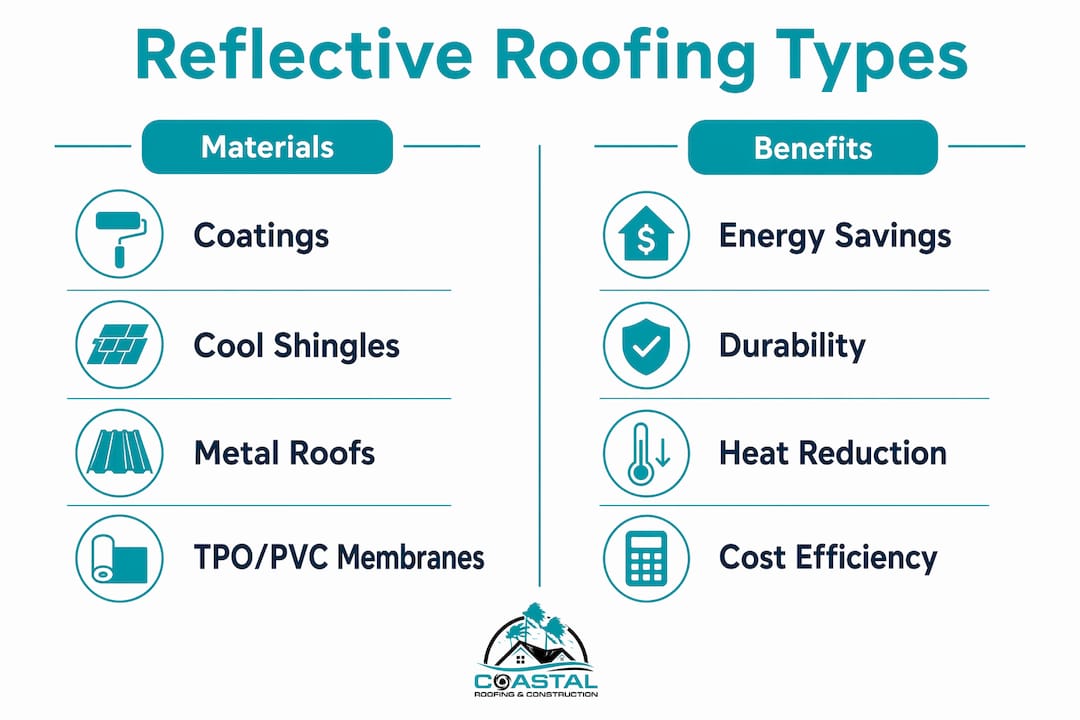
Reflective roofing is not a single product. It is a performance category that includes several different materials, each suited to a different roof type and budget.
Reflective coatings
Reflective coatings are the most affordable entry point. These are engineered products that are thicker and more flexible than standard exterior paint. Special pigments and formulas deliver high reflectivity and durability that generic white paint cannot match. Coatings are applied over an existing roof surface and typically cost $1–$3 per square foot, with a lifespan of 10–15 years before reapplication is needed.
Cool-colored shingles
Cool-colored asphalt shingles use granules treated with infrared-reflective pigments. They look like standard architectural shingles from the street but reflect more of the solar spectrum than conventional granules. Manufacturers like Owens Corning and GAF offer certified cool shingle lines that meet Cool Roof Rating Council standards. Reflective shingles reflect less solar energy than white membranes, but they give homeowners aesthetic flexibility without sacrificing all the performance benefits. You can read more about shingle roofing options to compare product lines.
Metal roofing with reflective pigments
Metal roofing is one of the strongest performers in the reflective roofing category. Standing seam metal roofs with light-colored or specially pigmented finishes combine high solar reflectance with exceptional durability. Metal roofing costs $7–$15 per square foot and carries a lifespan of 40–70 years. That long service life makes the higher upfront cost easier to justify, especially in Florida’s intense sun. Coastal Roofing & Construction specializes in residential metal roof installation and can help you select the right finish for maximum reflectance.
TPO and PVC membranes
For flat or low-slope roofs, white single-ply membranes like TPO (thermoplastic polyolefin) and PVC are the standard reflective choice. These membranes cost $5–$12 per square foot and last 15–30 years. Their bright white surface delivers some of the highest solar reflectance values available in any roofing product category.
What are the benefits of reflective roofing for residential properties?
The advantages of a reflective roof go well beyond a lower electricity bill. Here is what homeowners consistently gain from making the switch.
- Lower cooling costs. Reduced heat transfer into the home cuts air conditioning demand by 10%–30%, depending on climate and system efficiency.
- Extended roof lifespan. Constant thermal expansion and contraction from heat cycling degrades roofing materials over time. A cooler roof surface experiences less of that stress, which extends the life of shingles, membranes, and coatings.
- Better indoor comfort. Upper floors and rooms directly below the roof stay noticeably cooler during summer, even before the AC kicks on.
- Reduced urban heat island effect. Neighborhoods where many homes use reflective roofing collectively lower ambient outdoor temperatures. That benefits everyone on the block, not just individual homeowners.
- Solar panel compatibility. Pairing reflective roofing with solar panels increases photovoltaic efficiency. PV cells lose performance when they overheat. A cooler roof surface keeps panel temperatures lower and protects long-term energy output.
Pro Tip: If you are planning a solar installation, schedule your reflective roofing upgrade first. A new roof under the panels is far more disruptive and expensive to install after the solar array is in place.
The climate factor matters here. Reflective roofing delivers its strongest returns in hot, sun-intense regions. Florida homeowners in Tampa Bay, Clearwater, and St. Petersburg are in one of the best climates in the country to benefit from this technology. Studies from Lawrence Berkeley National Lab confirm that cool roof investment value is highest in climates with long, hot cooling seasons.
What are the costs, maintenance needs, and limitations of reflective roofing?
Understanding the full picture before you invest is the right approach. Reflective roofing has real limitations, and ignoring them leads to disappointment.
-
Reflectance declines over time. Dirt, dust, and biological growth reduce a coating’s solar reflectance by approximately 0.13 over three years. That decline raises roof surface temperatures by roughly 20°F. Energy codes now evaluate aged reflectance values rather than initial ratings for this reason.
-
Coatings require periodic reapplication. A reflective coating lasts 10–15 years. Budget for reapplication as part of your long-term maintenance plan, just as you would budget for repainting exterior surfaces.
-
Coatings are not structural repairs. Applying a coating over a damaged or wet roof traps moisture and accelerates system failure. A professional inspection of your existing roof is required before any coating application. Coastal Roofing & Construction always assesses roof condition before recommending a coating or replacement.
-
Climate determines value. Reflective roofing is most cost-effective in hot, sunny climates. Homeowners in cooler northern states may not recover the premium cost through energy savings alone. For Tampa Bay homeowners, this limitation rarely applies.
-
Maintenance preserves performance. Annual cleaning to remove algae, mold, and debris restores reflectance and extends coating life. Understanding how local climate affects coating performance helps homeowners set realistic maintenance schedules.
| Material | Cost per sq ft | Lifespan |
|---|---|---|
| Reflective coatings | $1–$3 | 10–15 years |
| TPO/PVC membranes | $5–$12 | 15–30 years |
| Metal roofing | $7–$15 | 40–70 years |
Proper surface preparation is the single most important factor in coating longevity. Application on a clean, sound surface determines whether a coating performs for 10 years or fails in two. This is not a DIY project. The difference between a certified reflective coating and a bucket of white latex paint is the difference between a warranted system and a wasted afternoon.
Key Takeaways
Reflective roofing is the most cost-effective way for Florida homeowners to reduce cooling loads, extend roof life, and improve indoor comfort in a hot, sun-intense climate.
| Point | Details |
|---|---|
| Core mechanism | Reflective roofs bounce back 65%+ of solar energy and emit absorbed heat quickly. |
| Temperature impact | Roof surfaces run 50°F–60°F cooler than conventional dark roofs on sunny days. |
| Energy savings | Cooling costs drop 10%–30% depending on climate and AC system efficiency. |
| Material options | Coatings, cool shingles, metal roofing, and TPO/PVC membranes each suit different roof types. |
| Maintenance matters | Annual cleaning and timely reapplication preserve reflectance and protect long-term performance. |
Why reflective roofing is worth taking seriously in Florida
I have seen homeowners dismiss reflective roofing as a gimmick, assuming it is just a coat of white paint with a premium price tag. That skepticism is understandable, but it misses what the technology actually does. A certified reflective coating is an engineered product with specific pigment formulas, flexibility ratings, and tested solar reflectance values. White latex paint from a hardware store does none of that.
The bigger misconception I run into is the idea that a cool roof will make a home feel cold. It will not. What it does is prevent the roof from acting as a slow-release heat battery that warms your attic all night. In Florida, where nighttime temperatures stay high and AC systems run around the clock, that distinction matters more than almost anywhere else in the country.
The honest caveat is this: reflective roofing works best as part of a broader approach. Pair it with proper attic insulation, good ventilation, and quality windows, and the energy savings compound. Treat it as a standalone fix for a poorly insulated home, and you will be underwhelmed. The roof is one layer of a system. When that system is well designed, a reflective roof makes a real and lasting difference. You can explore more on this topic through the Coastal Roofing & Construction blog for additional guidance on building a complete energy-efficient roofing system.
— Ryan
Reflective roofing options from Coastal Roofing & Construction
Coastal Roofing & Construction works with Tampa Bay homeowners to assess their current roof, identify the right reflective solution, and install it to manufacturer specifications.
Whether your home is a candidate for a reflective coating, cool-colored architectural shingles, or a standing seam metal roof with a high-reflectance finish, the team at Coastal Roofing & Construction has the certifications and field experience to do the job right. Explore completed roof replacement projects to see the quality of work firsthand, or request a consultation to discuss residential roof replacement options suited to your home, budget, and energy goals.
FAQ
What is reflective roofing in simple terms?
Reflective roofing is a roofing system designed to bounce sunlight away from your home instead of absorbing it as heat. It keeps roof surface temperatures significantly lower, which reduces cooling costs and improves indoor comfort.
Is reflective roofing energy efficient?
Yes. Reflective roofs reduce cooling costs by 10%–30% depending on climate and air conditioning efficiency. The savings are highest in hot, sun-intense climates like Florida.
What types of reflective roofing materials are available?
The main options are reflective coatings, cool-colored asphalt shingles, white TPO or PVC membranes for flat roofs, and metal roofing with reflective pigment finishes. Each suits a different roof type and budget.
How long does reflective roofing last?
Lifespan depends on the material. Reflective coatings last 10–15 years before reapplication, membranes last 15–30 years, and metal roofing lasts 40–70 years.
Does reflective roofing require special maintenance?
Annual cleaning to remove dirt, algae, and biological growth is the most important maintenance task. Neglecting it can reduce solar reflectance by approximately 0.13 over three years, raising roof temperatures by around 20°F.